El Ciudadano
Original article: “Se nos viene una temporada muy nefasta”: experto advierte coletazo económico en Chile por guerra en Asia Occidental
Expert Warns of Economic Fallout for Chile from Western Asia War: «A Very Grim Season Ahead»
The joint offensive by the United States and Israel against Iran, followed by the nation’s retaliation, has opened the door to a potential war in Western Asia. According to Pablo Álvarez, a PhD in Social Sciences and an expert in contemporary Middle Eastern history, this conflict could have significant economic repercussions for countries like Chile, which are highly dependent on foreign trade.
In the early hours of Saturday, U.S. and Israeli forces executed Operation “Epic Fury,” aimed at eliminating some of the most influential leaders in Iran, including the Supreme Leader of the Islamic Revolution, Ayatollah Seyed Ali Khamenei, and President Masud Pezeshkian.
In retaliation, Iranian forces launched missiles and drones at Israel and U.S. bases across various countries in the region, resulting in bombings in Jerusalem, as well as in the United Arab Emirates, Qatar, Kuwait, Saudi Arabia, and Bahrain.
This military conflict has sparked intense political debate in Chile. President Gabriel Boric’s government condemned the escalation and called for respect for sovereignty and the territorial integrity of states, as well as adherence to international law.
The Ministry of Foreign Affairs stated in a release, «These actions, in a highly tense regional context, can have consequences for regional stability and international security.» As a result, «Chile calls for an end to the violence, ensures the protection of civilians, and reiterates its firm commitment to nuclear non-proliferation.»
«Chile reaffirms its adherence to the principles and purposes enshrined in the Charter of the United Nations and to international humanitarian law, particularly regarding the respect for sovereignty and territorial integrity of states, the prohibition of the use or threat of force, the obligation to resolve international disputes by peaceful means, and the protection of civilian populations,» it stated.
Conversely, the incoming administration of José Antonio Kast praised the actions undertaken by the U.S. and Israel.
«Chile must always ally itself with nations that promote freedom and democracy; therefore, we appreciate the effort to restore nuclear security and the unwavering respect for international law,» read a statement from the Office of the President Elect (OPE).
«We express concern over the hostilities unfolding in the Middle East and the extent to which these may affect civilian populations and cause innocent casualties,» the statement added.
«We also condemn the indiscriminate attacks by the Iranian regime on various countries in the region,» it concluded.
Middle East History Expert: «A Very Grim Season Ahead»
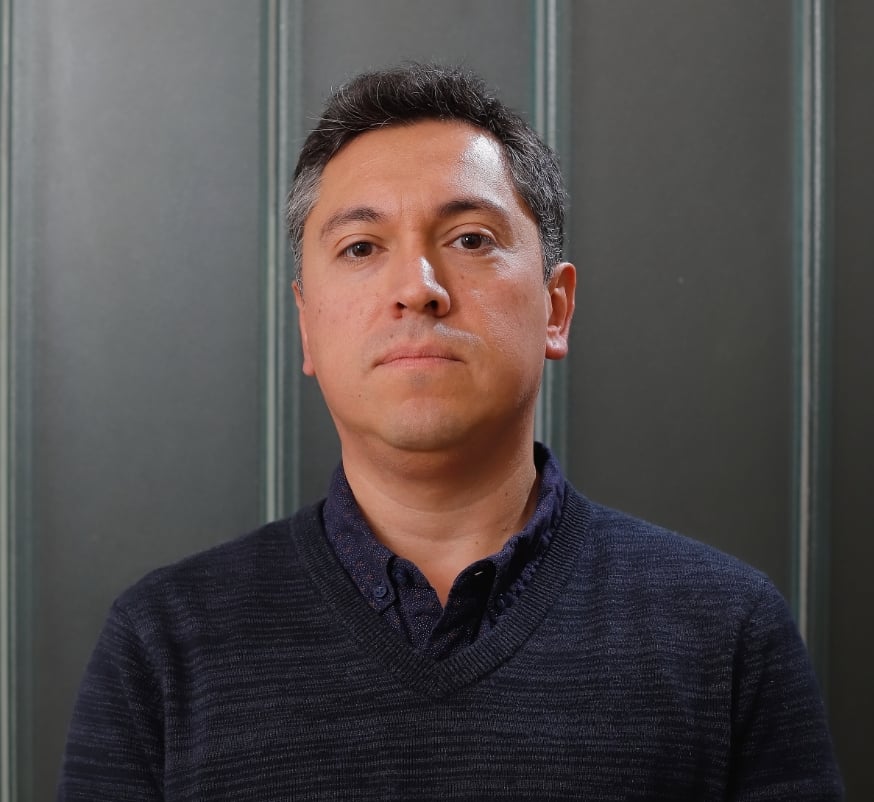
In an interview with Diario U. de Chile, academic Pablo Álvarez, a specialist in contemporary Middle Eastern history and its ties to Latin America, detailed the immediate impacts that are already starting to emerge on the global economic horizon as a result of the war in Western Asia, warning that Chile could be adversely affected by the consequences of such a significant crisis.
“Chile is a small country, somewhat remote, but highly dependent on international trade; thus, as the international economy gets strained, it naturally affects us,” he cautioned.
“It is difficult to predict the conflict’s consequences because we are somewhat far away, but clearly, there are obvious factors. For example, the price of hydrocarbons, the international oil price, the implications for international transit, the tourists heading to the Middle East, and international relations,” explained the doctor in Social Sciences from the University of Chile, outlining the initial links of a chain reaction that will inevitably hit the finances of Chileans and the stability of their production matrix.
The academic stressed that, despite its geographical distance, the country is not shielded from the impacts of military conflict.
“The global repercussions will be enormous; the prices of hydrocarbons will continue to rise, instability will increase, and international trade will be severely impacted. Hence, we face a very, very, very grim season,” he warned regarding the challenging period he believes the local economy will face due to the aftermath of the war in Western Asia.
According to the expert, resolving the confrontations will be unlikely in the short term.
“This will continue to reverberate, it will keep escalating, because it will take a long time to resolve,” he stated, pointing out that the ongoing political and military instability in the region will persistently pressure international markets and create a detrimental climate for investment and growth.
Dangerous Erosion of International Law
Beyond the economic impact, the academic raised a fundamental concern: the weakening of international law and multilateral institutions. For Álvarez, the unilateral military actions by Western powers set a dangerous precedent that erodes the fragile foundations of global coexistence.
When asked about the statements from the Office of the President Elect that characterized Iran’s response to the aggression as an overreaction and praised the efforts of the United States and Israel to «restore nuclear security,» the academic criticized the adopted approach.
In his opinion, the principle governing Chile’s foreign policy should be the unwavering defense of international law.
“The international community is built on international law and international institutions. And this—Israel and America’s war on Iran—clearly lacks any foundation in international law,” he asserted categorically, distancing himself from the position that justifies military action.
«It’s Concerning That Kast Lacks Knowledge of International Relations»
In this context, the expert directly criticized the Republican and his closest circle, noting a fundamental lack in their approach to foreign policy. The uncritical support of the actions of a foreign power, without regard for international law or Chile’s national interests, is viewed by Álvarez as an error that highlights a deficiency in understanding the subject.
“It is troubling to see the elected president lacks knowledge of international relations and does not surround himself with knowledgeable people, yet simultaneously expresses opinions that seem unfortunate,” he indicated.
For the expert in contemporary Middle Eastern history, this is not merely a miscalculation but a worldview that dangerously oversimplifies the complexity and magnitude of a conflict like the one unfolding in Western Asia.
“It seems to me that he knows little about what he is talking about, and there’s a certain Western bias: ‘I’m on the side of the good, and the good are on this side of the world. In other words, Iran is like the bad guy in this movie’,” Álvarez suggested.
In his view, this perspective, which divides the international landscape into forces of good and evil, obstructs a realistic and fact-based analysis, which is detrimental to an accurate understanding of politics and international relations.
“Dividing the world this way into good and bad is very negative for international relations,” he maintained.
In his opinion, the logic of civilizational blocs—“Christian West” versus “diabolical Islam”—is more reflective of ideological myths than of strategic analysis based on concrete interests, he argued to the cited media outlet.
However, this vision clashes with the reality of a multipolar world where power relations and economic interests dictate the dynamics.
“In international relations, it is all about interests, and countries must follow policies that align with their interests, not with myths,” he emphasized, marking a clear distance from the stance of Chile’s next president.
Álvarez expressed concern over the “automatic alignment” of José Antonio Kast with the administration of former President Donald Trump. This stance, which some may see as a demonstration of ideological support, is to the expert a sign of weakness and subordination.
“I find it striking that the position is that of a true neoconservative. He aligns himself with the stance of Western countries, with the Christian Western world, saying ‘we are with the forces of good’,” he stated to Diario U. de Chile.
For the academic, this posture could harm a country like Chile, whose foreign policy history has been characterized by adherence to multilateralism and international law.
In the expert’s view, the weakening of the multilateral system and its institutions—including the UN Security Council—adds to the gravity of the equation and warned that without a recognized and respected arbiter, powers tend to act unilaterally, further eroding global institutionalism and plunging the world into a state where the law of the strongest prevails.
In this context, support for military action is, at the very least, an alarming signal.
“For a country like ours, it is essential that international institutions function,” he emphasized while insisting that Chile’s foreign policy should prioritize the defense of international law over ideological alignments.
Only in this way can Chile face the “very grim season” that lies ahead, protecting its interests and its population from the repercussions of a war in Western Asia.
La entrada Expert Warns of Economic Fallout for Chile from Western Asia War: «A Very Grim Season Ahead» se publicó primero en El Ciudadano.
🔥 Ver noticia completa en ElCiudadano.cl 🔥