El Ciudadano
Original article: El mejor alumno de Trump y Netanyahu: Milei festeja ataques a Irán y queda como excepción regional
Milei is the only leader in Latin America who celebrated U.S. and Israeli attacks on Iran.
Argentinian President Javier Milei, in his desperate bid to maintain a favorable position with the White House, has become the sole Latin American leader to openly celebrate the joint attacks by the United States and Israel against Iran and the assassination of the Islamic nation’s Supreme Leader Ali Khamenei.
The isolation of Milei in this stance is particularly striking when considering the regional political landscape. Not even governments that are traditionally viewed as the closest to Washington—such as El Salvador, Costa Rica, Ecuador, or Paraguay—joined in the celebrations for the consequences of the offensive ordered by President Donald Trump and Israeli Prime Minister Benjamin Netanyahu. These administrations, all staunch allies of the White House, opted to criticize only the Iranian counterattacks, refraining from mentioning the U.S.-Israeli military action that sparked the conflict.
Conversely, a broad range of Latin American countries, including Mexico, Brazil, Chile, Peru, Colombia, Uruguay, and Bolivia, among others, rejected the war as a whole and raised their voices in calls for peace in the Middle East, highlighting Argentina’s exceptional position.
Milei’s Libertarian Celebration
The libertarian government wasted no time aligning with the narrative of the Trump administration. Mere minutes after the Republican mogul announced the operation against the Persian nation via his social media, the Office of the President of Argentina issued a statement supporting and celebrating the action.
«The Office of the President celebrates the joint operation carried out by the United States and Israel today that resulted in the elimination of Ali Khamenei, Supreme Leader of the Islamic Republic of Iran, and one of the most evil, violent, and cruel individuals in the history of mankind,» read the statement issued by the Argentinian government.
The language chosen by Milei’s administration leaves no room for ambiguity and represents a much more emphatic stance than that adopted by any other Latin American government, including those sharing the same right-wing political ideology as the Argentinian president.
This unconditional support for the joint operation led by Washington and Tel Aviv aims to solidify Milei’s image as the «best student» in the region in the eyes of the White House, a role the Argentinian president has cultivated since taking office and seeks to reinforce amid rising international tensions.
Stances of Washington’s Allies
While Milei opted for celebration, other traditionally pro-U.S. Latin American governments chose a more diplomatic path. The prevailing strategy among these countries involved condemning only the Iranian reprisals while omitting any mention of the initial bombing by the U.S. and Israel against the Persian nation.
Ecuador expressed its solidarity with the peoples and governments of Middle Eastern countries affected by the attacks, as per the administration of Daniel Noboa, steering clear of any reference to the joint aggression from Washington and Tel Aviv and denouncing instead Tehran’s response.
Costa Rica took a similar stance, particularly emphasizing the violation of international law. The government of Rodrigo Chaves vehemently condemned «the attack perpetrated by Iran» against U.S. diplomatic facilities in Riyadh, Saudi Arabia.
In its argument, the Costa Rican Foreign Ministry added: «This act against an embassy constitutes a serious violation of the 1961 Vienna Convention on Diplomatic Relations and international law.»
Paraguay also expressed its rejection of Iran’s reprisals following the initial bombing. The Foreign Ministry termed these counterattacks an «Iranian aggression» against several countries in the region, including Qatar, Kuwait, Saudi Arabia, Jordan, the United Arab Emirates, and Bahrain—nations in the Gulf affected by the escalating conflict.
Significantly, El Salvador has remained silent. Thus far, neither the Salvadoran Foreign Ministry nor President Nayib Bukele—another Latin American leader aligned with Trump—has commented on the war in the Middle East, an omission that sharply contrasts with the exuberance of libertarian Javier Milei.
Majority Latin American Call for Peace
Against the backdrop of Argentina’s exceptionalism and the selective condemnations from more cautious allies, the majority’s position in Latin America has been to condemn the war and extend a call for peace.
Brazil, the region’s largest power, issued an official note in which its Foreign Ministry called «upon all parties to respect international law and exercise maximum restraint to avoid an escalation of hostilities and ensure the protection of civilians and civilian infrastructure.»
Brazil’s Foreign Minister, Mauro Vieira, was more explicit, stating in an interview with Net TV: «We condemn the initial attack by the United States and Israel, but we also urge caution to prevent deaths occurring in third countries.»
From Mexico, President Claudia Sheinbaum raised the tone of criticism by questioning not only the initial U.S. bombing but also the role of the United Nations amid the crisis. In a press conference, she suggested a reflection that transcended geopolitical alignment: «It’s not about whether one agrees with one regime or another. It’s the civilian population that pays the price. The bombing of a girls’ school. In all countries, in the end, it is the people who suffer.»
Bolivia, now a U.S. ally, reaffirmed its «commitment to peace» and requested in an official statement the «unrestricted respect for human rights, which must prevail under all circumstances.»
The administration of Colombian President Gustavo Petro condemned the «use of force» in the Middle East and urged the international community to act swiftly to halt the escalation of the conflict.
Petro warned that «humanity is on the brink of falling into the abyss» and criticized the intensification of attacks launched by the U.S. and Israel under the operation dubbed «Epic Fury.»
The Colombian president stated that this is not merely a local conflict between Tehran, Tel Aviv, or the U.S., but a «global risk in which all humanity could be affected by an escalation towards nuclear confrontation,» underscoring the importance of fostering dialogue rather than responding with more missiles.
He also called for Latin America to promote peace and avoid alignments that deepen international confrontation. On his social media account, he insisted that «nuclear weapons should not proliferate and must all be destroyed,» lamenting the death of minors due to bombing.
In Peru, the recently installed administration of José María Balcázar also refrained from explicitly supporting Trump, opting for a position of diplomatic prudence. The Peruvian Foreign Ministry requested that actions be «avoided that could escalate the situation and prioritize dialogue and diplomatic mechanisms as a way to restore stability and peace in the region.»
Honduran President Nasry Asfura chose a middle path marked by ambiguity. On social media, he posted a message expressing his support «for countries defending their security» and demanded an «immediate de-escalation» in the region.
«When latent threats exist and danger is imminent, self-defense by states becomes inevitable,» he added.
The government of Uruguay chose to condemn all bombings, without distinction. In an official statement, it expressed its «extreme concern over the military attacks against Iran» by the United States and Israel, as well as «the Iranian military response, which includes targets in neighboring countries’ territories.»
In a particular political context, Venezuela also issued its stance on the crisis. The Venezuelan government, following the kidnapping of President Nicolás Maduro during a U.S. military operation, is now led by interim leader Delcy Rodríguez, who called upon the «international community and the involved states to revert to negotiation and avoid further escalation of confrontation.»
Nevertheless, the Venezuelan Foreign Ministry’s statement included an element that other countries omitted: an explicit reference to civilian casualties. «Reports and images of attacks on civilian installations within Iranian territory, causing innocent civilian casualties, including school-aged students, have caused distress,» it denounced.
Cuban President Miguel Díaz-Canel was among the harshest critics of the military operation against the Islamic Republic. «The attacks perpetrated by Israel and the United States, violating Iran’s sovereignty and territorial integrity, constitute a flagrant violation of international law and the United Nations Charter,» stated the Cuban leader.
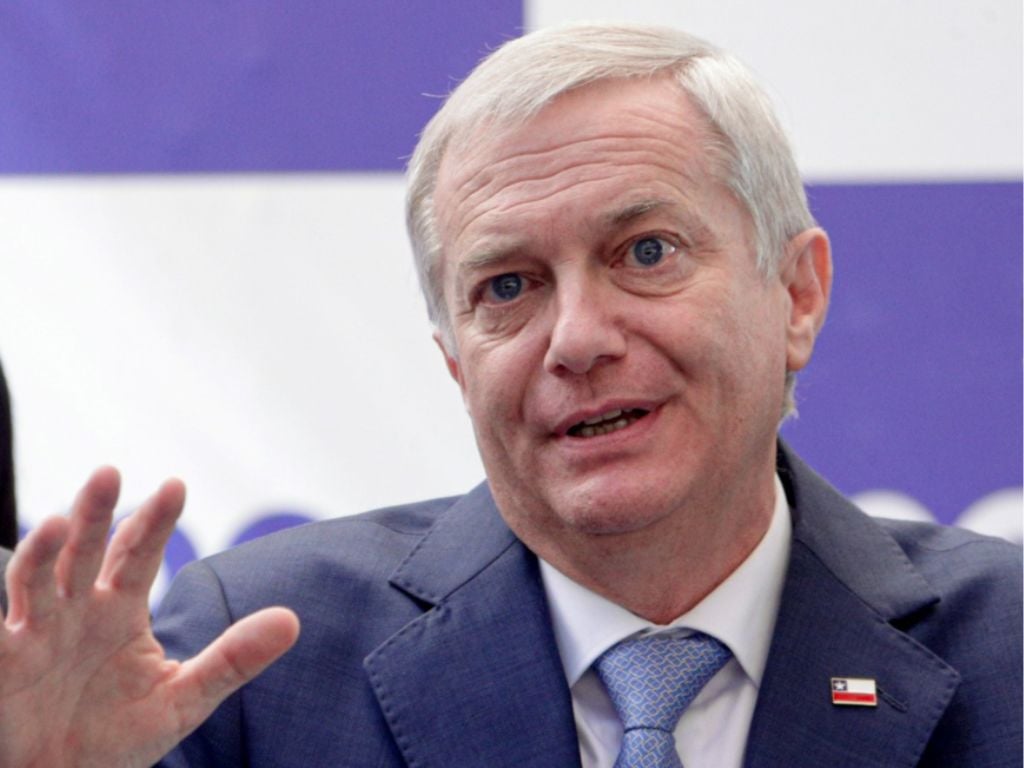
Chile’s Position May Change with Kast’s Arrival at La Moneda
Chile expressed its concern regarding the military escalation in the Middle East and condemned the attacks against Iran. In its official declaration, the government of President Gabriel Boric stated: «Chile calls for an end to violence, ensuring the protection of civilians, and reiterates its firm commitment to nuclear non-proliferation,» establishing a clear position within the majority bloc.
However, Republican José Antonio Kast will assume the presidency next Wednesday, the 11th, and has already indicated that he will radically change La Moneda’s position regarding the conflict.
The Office of the President-Elect published a statement outlining the future direction of Chile’s foreign policy: «Chile must always be an ally of nations that promote freedom and democracy, and consequently, we value the efforts to restore nuclear security and strict respect for international law.»
This text serves as a clear reference to the argument put forth by Donald Trump to justify the attack: that the Islamic Republic was secretly enriching uranium in violation of its international commitments. With Kast’s arrival at La Moneda, Chile could adopt a stance similar to Argentina’s under Milei’s leadership.
Argentina as a Regional Exception
The map of Latin American positions regarding the crisis in the Middle East leaves Javier Milei’s Argentina in a relatively isolated situation within the region. Even the governments ideologically closest to Washington have not replicated the explicit celebration of the bombing against Iran, opting for communication strategies that allow them to maintain alignment with the United States without exposing themselves to the criticisms that might arise from open support for a controversial military action.
This Argentinian exceptionalism is a reflection of Milei’s strategy to position himself as the «best student» of the White House in the region, a role the Argentinian president has cultivated since his electoral campaign and now seeks to reinforce amidst an international crisis.
La entrada Milei Stands Out in Latin America by Celebrating U.S.-Israel Attacks on Iran se publicó primero en El Ciudadano.
🔥 Ver noticia completa en ElCiudadano.cl 🔥