El Ciudadano
Original article: El regreso de «Torito» Callulaf y otros relatos provincianos, de Jaime Huenún: Un pequeño laboratorio de literatura superviviente
By Cristian Salgado Poehlmann
I begin with a bold assertion. The Return of ‘Torito’ Callulaf and Other Provincial Tales – the debut narrative work from the essential poet Jaime Huenún Villa (Valdivia, 1967) – is a collection of short stories that presents itself as a surprising exploration.
It may seem trivial, as it is commonly agreed that most poets transition successfully to prose. However, that is far from universally true. One need only recall the literary ventures of Raúl Zurita, Friedrich Hölderlin, and Novalis. What is truly significant is that Huenún’s stories are deeply engaging.
As a reader, I must point out that the 16 pieces in this collection evoke the glorious Imaginary Lives (1896) by Marcel Schwob for two reasons. First, these aren’t traditional short stories. Instead, they resemble profiles or perhaps mere snapshots of experiences.
Through these narratives, we learn about life in and around the community of Nueva Esperanza, located in Osorno, and its bar, owned by the author’s parents, where Huenún toiled.
“From sunrise to sunset, we worked for three consecutive days, with barely a few short breaks to catch a breath and rest our exhausted bodies. Truly horrifying days when we had to sell as much as possible to ‘make the year’,” recounts Juan in “Antiguamente” as he reflects on the labor “during the nationalist holidays in September” alongside his “violent huilliche father” and his “sparkling and tireless mother.”
The patrons who frequented the bar Esperanza provide the raw materials for The Return of ‘Torito’ Callulaf and Other Provincial Tales. Huenún primarily writes about the last three decades of the 20th century.
The second signal of a connection to Schwob’s work lies in the narrative perspective within The Return of ‘Torito’ Callulaf and Other Provincial Tales. The text specifically seeks to fictionalize memories, creating an imaginary or utopian narrator who attempts to bridge a past subject (the one who lived the experience) with the one recalling it (the one responsible for putting that lived experience onto paper).
If I recall correctly, Freud suggests that many distant memories are constructs of imagination—during such introspections, one sees oneself as part of the scene, unlike direct experience (as Roberto Merino would say).
Regarding Schwob’s collection, Borges notes: “he invented a curious method. The protagonists are real; the events may be fabulous and often fantastic. The peculiar flavor of this work lies in that ebb and flow.” The writing in The Return of ‘Torito’ Callulaf and Other Provincial Tales lies at a threshold of times and processes, between remembered truth and poetic invention.
The eponymous last tale in the book, “Hating the Champion,” says: “This became abundantly clear on Sunday, June 1, 1980. That day, at 5:15 AM Chile time, Turra had to face the world champion at the Prefectural Gymnasium in Kochi, a mustached Japanese fighter with an afro, unknown in these parts. The Osornino gladiator had already fought for the world title three times and had three times manfully cried over his honorable defeats. The fourth time is a charm, everyone said, hoping that his iron right would crush the presumptuous and ill-favored jaw of the Japanese. In the neighborhood, no one slept that night, eagerly waiting for the satellite broadcast from the exotic Eastern land.” What is real and what isn’t is left to the reader’s sagacity.
“Around six in the evening, my grandmother hanged the dog,” Jaime, both narrator and bartender, says in the second story of the collection, through which we unravel why it becomes necessary to hang the animal from an apple tree. “Temófila” draws us into the dreadful huitranalhue and its ordurous horrors overflowing with viscera. “Pantera” is straightforward: pure and terrifying alcoholism. And so it goes.
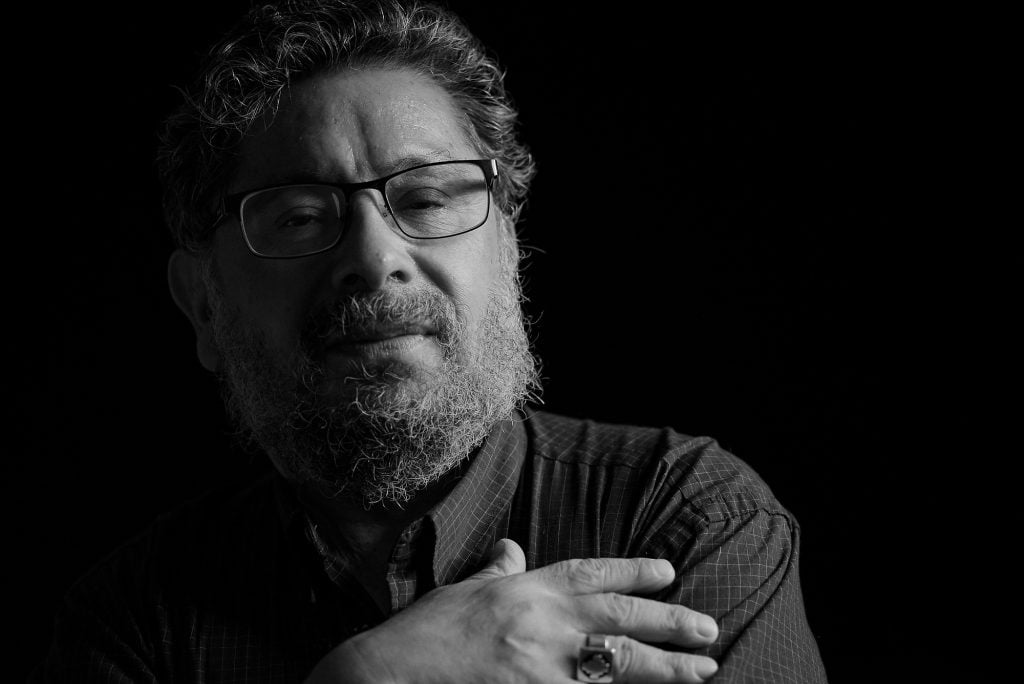
Our common experience of literature is determined by the language and rhythm of phrases. Like the streets we traverse—blocks and intersections—these are places of encounter where we recognize, compare, and reinvent ourselves. Here is where our psychological movements begin. The exit. Perhaps that’s why many writers associate walking with their creative process.
There are writers who project their vision with greater visual depth and others with less. I refer to those who stretch their sentences to make them uniform and flat, irrespective of length. Others, however, favor cliffs, fissures, and cuts.
In this regard, the phrasing in the stories of The Return of ‘Torito’ Callulaf and Other Provincial Tales possesses the allure of a language and rhythm that never becomes dull, consistently filled with linguistic wonders.
Huenún’s storytelling adopts a distinctly everyday tone, resonating with the southern region’s terminology while remaining universally relatable. He artfully interweaves worlds without stumbling, showcasing his years of poetic audacity.
In my memory as a book commentator, most books appear as closed objects unto themselves. I recognize my obsession with their architecture. Yet from the pages of The Return of ‘Torito’ Callulaf and Other Provincial Tales, I began to glimpse something even more intriguing. It pertains to the reading of the world that a written piece allows us to perform.
“Reading others’ worlds to relate them to our own and to understand varied expressions,” as Colombian Ana García states. She continues: “Before speaking, we perceive our surroundings in images, actions, odors, tastes, sounds, and then we comprehend what we wish to convey. To undertake this process, it is essential to know these stimuli through the senses; only then can we create a context for the emerging word, laden with intimate and collective meaning for our interlocutor.”
Beyond its artifices, I realize that The Return of ‘Torito’ Callulaf and Other Provincial Tales is an exceptional collection precisely because it is infused with a kind of word that I dare call magical. This occurs in many pieces of Huenún’s latest book: a remarkable expressive potential.
Contrary to a diary of mourning, The Return of ‘Torito’ Callulaf and Other Provincial Tales is a celebratory work, as it fights against and triumphs over the storm of death and oblivion. This is a commendable achievement, as much of the discourse from marginalized groups settles for lamentation.
The Return of ‘Torito’ Callulaf and Other Provincial Tales also challenges conventional reading practices. I again quote Ana García: “We have concentrated so much on expressing the world in a mechanically memorized manner that we have overlooked the material existence and its acknowledgment through the senses to grasp the world through experience. Insufficient tools are available to relate to texts from perception; we think that reading a text’s primary goal is understanding, forgetting that reading is also about feeling.”
Another—let’s say—virtue of these tales is that they manage to extrapolate the reading experience through aesthetic pleasure—the joy that words provide—helping us recognize that, as Paulo Freire said, no reading is definitive. When we approach any text, we are re-reading the world.
In the context of digital writing, this has likely also diminished the power to evoke images that awaken perceptions. Against this reality, Huenún wields oral tradition as a weapon, paradoxically, in a printed collection of stories.
Featuring a straightforward, almost linear structure—with few and simple embellishments, such as temporal jumps—the stories of The Return of ‘Torito’ Callulaf and Other Provincial Tales evoke tales that have always existed by the fire and its brews, serving as a remembrance of a community that refuses to disintegrate.
The legend, the reclamation of small histories, which over time become sacred, precisely through the repetition of that small act of storytelling. My impression is that Huenún fully understands the potential of voice as an instrument and memory as a reservoir of small stories, turning this book into a small laboratory of enduring literature.
It would not have been unusual for The Return of ‘Torito’ Callulaf and Other Provincial Tales, had it been published by another publisher and with a bit of manipulation, to be marketed as a “fragmented, contemporary coral novel whose independent chapters connect with each other. It demands extreme and active reading skills.”
However, LOM adheres to traditional practices, which is appreciated. The commercialization of publications, given that short story collections do not sell well, is a battle worth waging.
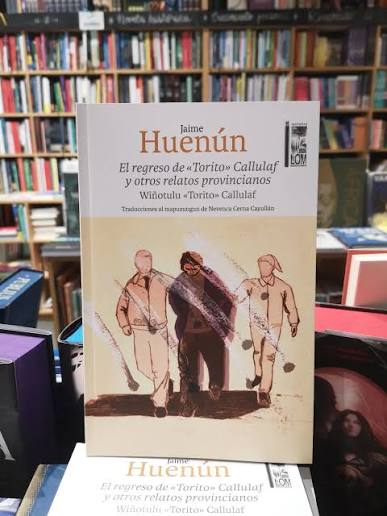
La entrada The Return of ‘Torito’ Callulaf: Jaime Huenún’s Captivating Collection of Provincial Tales se publicó primero en El Ciudadano.
🔥 Ver noticia completa en ElCiudadano.cl 🔥