El Ciudadano
Original article: Un pueblo en busca de su Izquierda y la derrota de V. Orbán en Hungría
By Leopoldo Lavín Mujica
As Hungary closed its polls on Sunday, Péter Magyar—a right-leaning leader emerging from within the established system—defeated Viktor Orbán, ending sixteen years of national-conservative dominance. Meanwhile, Europe hastily celebrated what appeared to be a setback for illiberal right-wing forces and the restoration of the rule of law.
This defeat marks the dethroning of Viktor Orbán, a pivotal figure in the Western far-right’s crusade alongside the likes of Trump, Vance, Kast, Milei, and Bolsonaro, after sixteen years of corrupt and kleptocratic rule. However, it is a defeat that is partly ideological: the rot and oppressive governance styles were eroded, but the underlying conditions that made such governance possible remain.
Magyar does not represent a structural break but rather an internal correction. His victory reflects the decline of illiberalism rather than the rise of an alternative project. This highlights a critical issue: when the opposition lacks a coherent program, even change manifests as a mutation within the same political spectrum. In Hungary, the left—fragmented and weakened, such as the Hungarian Socialist Party which endorsed Magyar—ended up tactically aligning itself behind the lesser evil.
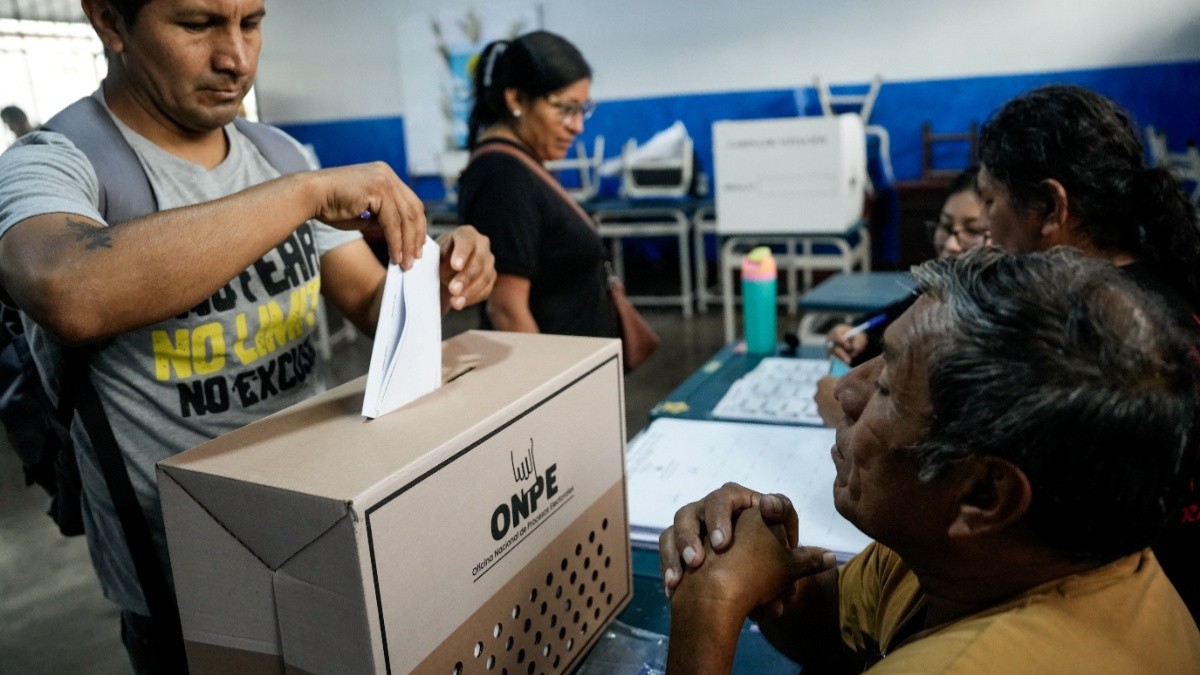
In a parallel scenario in Peru, the first round of voting on April 12 displayed a less dramatic yet more revealing image. Keiko Fujimori led with just around 17% of the vote, while the left struggled to secure its place in the second round within an extraordinarily fragmented system where no force can build majorities. There is no hegemonic right here; instead, there is something disturbing: the hegemony of a right-wing common sense.
Hungary and Peru are not mirrors of each other. In Hungary, the alternation in power serves to correct the excesses of Orbán’s conservative authoritarianism. In Peru, fragmentation hinders the construction of anything new. However, both share a decisive trait: the absence of a left capable of contesting power with a recognizable project. It’s not that the right wins; it’s that the left fails to be an alternative.
The Disquieting Diagnosis
Chile is said to lack an opposition. Not a real one. What exists are «fragments, inertia, empty structures that survive more by habit than by conviction.»
Self-criticism has been replaced by denial. Parties promote profiles that are functional to the current political structure, which concentrates on insipid debates rather than on the nation. Loyalty is prioritized over project and new leadership. Meanwhile, the labor movement remains inert and absent after years of placing hope in the goodwill of progressive governments; the student movement is disoriented; and the women’s movement, alongside the FA, has lowered its guard.
This diagnosis is critical. Its primary cause has a name: the transformative project that mobilized an entire generation—born from the mass protests of 2019 that laid the groundwork for the social rebellion culminating in Boric’s candidacy—has been diluted from within the government itself, ultimately leading to a process of ‘normalization to the Tironi’, meaning abandoning a program of structural transformations for adaptation to the existing neoliberal order.
If the constitutional process failed twice, it was essential—especially from the left—to regain the initiative. It could have happened. The promised reforms progressed slowly, yielding minimal results. The security agenda, which the progressive world systematically underestimated due to a lack of proposals from the left, became the dominant topic of debate, and the government was slow to respond credibly. It lacked the capacity to meet demands from a social perspective that proposed a narrative different from the rightist agenda.
The result is that the Chilean left and progressivism currently have no narrative or project to offer, let alone a mobilizing program. They cannot reclaim what they have done because their own voters are disappointed. They cannot propose a transformative project because they squandered it. They have just governed. They cannot, either, act as if nothing has happened in the face of the danger of a vacuum.
Lessons from France: The Unyielding Left
However, if the diagnosis is accurate, the conclusion cannot be resignation. The scenario described in Hungary and Peru—where disputes are settled within the right because the left has vanished as an alternative—is not an inevitable fate. It is the result of political decisions—or their absence.
France illustrates this. The blow dealt to the fascistic far-right by Orbán’s defeat is significant. Jean-Luc Mélenchon’s France Insoumise (LFI) is precisely the type of force that comparative analysis suggests is weakened or absent in many countries. LFI is a left that does not attempt to occupy the center for convenience but openly champions a break from the established order. Its agenda includes incisive fiscal redistribution, popular sovereignty, questioning treaties deemed neoliberal, and autonomous foreign policy. It is a clear and recognizable program.
LFI has achieved what few European lefts manage today: to anchor a loyal electorate—youth, urban working classes, communities of immigrant origin, educated youth without housing—precisely because it did not abandon its project when governing became challenging.
The key is not to moderate and capture the center. It is to have a coherent narrative about the concrete problems citizens face: purchasing power, housing, security, sovereignty. And to present clear, dignified, and strong leaders against the onslaughts from the overwhelming media power of the far-right. Additionally, there must be economic planning: a concept scorned by neoliberal rightists.
No one claims that this path is easy, nor that LFI is free from contradictions. But it proves that the left can establish itself as an alternative if it retains its own project. The question for Chile is whether it is willing to make the effort.
The Program Exists: It Needs to Be Raised
Here comes the concrete aspect. One of the most pointed criticisms of the left and the so-called Chilean progressivism today is that it has lost the ability to operate with programmatic ideas in a structurally changed environment.
It is rightly asked what the opposition thinks about artificial intelligence, platforms, the transformation of work, geopolitics, unemployment, and the enrichment of the top 5% of the population avoiding taxes. These are pertinent questions. But there are also immediate debates, here and now, where the left should take a clear stance and is not doing so. The tax debate is one of them.
The Kast administration has proposed to reduce the corporate tax from 27% to 23% and return to the full integration of corporate taxes with shareholder dividends. These measures sound technical but carry enormous political and distributive consequences. Analyzed coldly, the numbers do not withstand scrutiny.
The reduction would represent a loss of around $2 billion annually for the state. The impact on growth, according to the very Fiscal Space Expert Committee, would only be visible over a ten-year horizon—and only “in the high range” of estimates. In the most optimistic scenario, the increased revenue from a larger GDP would barely offset the initial loss: net gain close to zero. In less favorable scenarios, revenue simply declines without a real counterpart.
Moreover, Chile already has a low corporate tax rate compared to its geographical neighbors. Peru, Argentina, Brazil, and Australia have higher rates. The proposed reduction does not significantly strengthen the country’s competitive position, especially since the copper industry—the bulk of exports—has specific taxation, and the manufacturing sector is small. The measure mainly benefits shareholders of large companies, not the economy as a whole.
It is well known that capital owners have infinitely more tools than wage workers to reduce their actual tax burden—retaining profits, overestimating costs, sophisticated tax planning. Full integration does not level the field; it tilts it even more towards those who already have the advantage.
This is not ideology. These are facts. And the opposition should state this aloud, with arguments, without complexes.
What Is at Stake
Resisting the corporate tax cut is not merely a tax position. It is the difference between having the resources to finance dignified pensions, quality public health, and universal education or not. It is choosing between a caring state and a market that promises to favor a few. Ultimately, it is about the type of country one wants to be.
The Chilean left has available traditions—the social-democratic, social-Christian, progressive republican, smaller leftist movements, the ambiguous new progressivism of the FA, the capabilities of the PC—with which to construct a contemporary response to the challenges of the 21st century.
The ideas exist: what is lacking is the will to translate them into a program, to defend them with conviction, to accept that politics without substance neither guides nor does it more than administer its own decay. The method lies in orientation and debate congresses. With presentations and theses exposed to party membership.
The lesson from Hungary is not that the left should surrender and cede space to a so-called “moderate” right, as Monedero, the co-founder of Podemos, says. It is that when the opposition lacks a project, power fills the void on its own. Magyar won partly because he managed to articulate the anti-Orbán vote, yes. But also because there was no progressive alternative capable of doing so against him.
Chile cannot afford that luxury. Not with the tax debate looming. Not with a repressive security agenda, under a conservative Kast government seeking to dismantle all social programs geared towards women, workers, and students; and without any coherent response. Not with artificial intelligence reshaping the job market while no one in the opposition has anything substantial to say about it.
The Time for Definitions
This is not about going back to the past. It is about understanding that the electoral defeat of Chilean progressivism was not a climatic accident or a bad streak. It was the consequence of Boric’s team governing without enough transformation, promising without delivering, and losing the capacity to clearly identify who the adversaries are and what opposes them.
Rebuilding the opposition does not start with candidacies. It begins with an honest question: Why do we want to govern again, with what program, with what leadership, and what will we do differently? Without answers to that, any candidacy will be viewed as a continuation of disenchantment. And the void will continue to be filled by others.
The program exists. The arguments are available. The urgency is real. What is lacking is the decision to raise it.
Leopoldo Lavín Mujica
La entrada A Nation Seeks Its Left: The Defeat of V. Orbán in Hungary and Its Implications se publicó primero en El Ciudadano.
🔥 Ver noticia completa en ElCiudadano.cl 🔥