El Ciudadano
Original article: Un Seyed incrustado en el centro del corazón (III)
By Pablo Jofré Leal
In this final installment of the trilogy dedicated to the martyr leader of the Islamic Republic of Iran, Seyed Ali Jamenei is referred to as “the highest echelon of humanity,” similar to how the “Che” defined extraordinary individuals who transcend through their commitment to humankind. He was a man who solidified Iran’s geopolitical identity based on principles of resistance and sovereignty against Western influence, thereby affecting the dignity and sovereignty of resistance movements across nations.
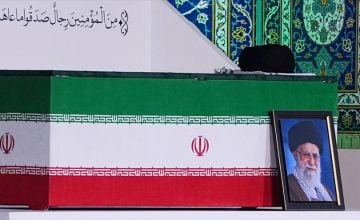
The figure of Ayatollah Seyed Ali Jamenei, Supreme Leader of the Islamic Republic of Iran, cannot be understood through conventional political standards. After his assassination on February 28, 2026, during a joint military operation by the United States and the Zionist regime, his legacy transcended the borders of West Asia and established itself as a symbol of resistance for the Global South. Jamenei’s life exemplifies the historic clash between two opposing forces: the hegemonic “arrogance”—embodied by the Washington-Tel Aviv axis—and sovereign “resistance.”
Born in Mashhad to a low-income Shia family, Jamenei was shaped by the theological discipline of Qom. Under the teachings of Imam Khomeini, he adopted the doctrine of Velayat-e faqih (guardianship of the Islamic jurist), a principle that would guide his vision of an autonomous state. His youth was marked by persecution under the Pahlavi monarchy, influenced by thinkers such as Sayyid Qutb, who outright rejected Western hegemony. His calls to combat Zionism, particularly his strong opposition to the Pahlavi regime, resulted in arrests, internal exile, and torture.
Jamenei’s career was a continuous test of resilience. In 1981, he survived an assassination attempt by the pro-Western group People’s Mujahideen (MKO), which left him with paralysis in his right arm. This steadfastness was solidified during his presidency, where his constant presence at the fronts of the “Imposed War” against Iraq cemented his image as a leader who not only directed from the pulpit but also accompanied troops in the trenches.
Jamenei: The Architect of Asymmetric Resistance
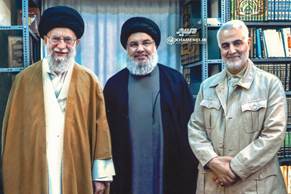
Under Ayatollah Seyed Ali Jamenei’s leadership (1989-2026), Iran moved away from conventional military dependency, outpaced technologically by the West, to build a sophisticated structure of asymmetric power. Through the Quds Force and in strategic alliance with General Qasem Soleimani, Jamenei institutionalized the “Axis of Resistance.” This network, which includes Hezbollah in Lebanon, forces in Syria, militias in Iraq such as Al Hashad al Shabi and Ketaeb Hezbollah, along with the Ansarollah movement in Yemen, has enabled Iran to project sovereignty against decades of sanctions and economic blockades.
This structure is not merely a military alliance but a necessary response to constant siege, allowing Iran to «turn threats into opportunities,» using its deterrent capabilities not for aggressive territorial expansion, but as a shield against neocolonial aggression. Jamenei’s strategic brilliance lies in understanding that power is no longer measured solely by the size of conventional armies but by the ability to mobilize wills through a shared ideological identity that transcends national borders.
The concept of “dignity” in Jamenei’s vision is not an abstract idea; it is a political exercise: the inalienable right of a people not to be subordinated. The “negative” image crafted by Western media is, in essence, part of a “hybrid war” designed to fragment any autonomy project in West Asia. This project, over the 48 years of the Islamic Revolution, has Iran and the prominent figure of Seyed Ali Jamenei as its main reference point.
A key aspect of Iranian resistance under Jamenei has been technological self-sufficiency. By developing its own drones and ballistic missiles (capable of striking accurately without depending on external supplies), Iran broke the monopoly of the global arms market. This provides a replicable model of technical sovereignty for the peoples of the Global South: if a country can manufacture its own defenses, economic coercion loses much of its effectiveness.
Another fundamental point during Seyed Ali Jamenei’s leadership has been the collapse of the narrative that it was impossible to defeat the Israeli Zionist regime and the United States in a large-scale war (recall that the Lebanese resistance had already defeated Zionism in 2000 and in the June 2006 war). Asymmetric resistance has shown that hegemonic power has feet of clay.
Iran and its Axis’s capacity to resist and counterattack directly has shattered the myth of the military invulnerability of Zionism. This has altered regional psychology; Israel is no longer seen as an unattainable power but as a vulnerable actor entirely dependent on external support to maintain its expansionist stance. Without Washington and countries like Germany, Israel is merely a removable entity.

Ultimately, Jamenei’s legacy is solidified in the transition to a multipolar world. Iran’s asymmetric resistance has evolved from a mere survival mechanism to the backbone of a new regional bloc that challenges the unipolar order, positioning itself as the last bastion preventing the consolidation of U.S. and Israeli hegemony in West Asia.
The attack of 2026, interpreted by the international community aligned with the multilateral bloc—including Russia and China—as an attempt to “decapitate” Iranian sovereignty, has countered the expectations of its aggressors. The martyrdom of Jamenei has acted as a catalyst for national and regional cohesion.
By being martyred just before the sacred month of Ramadan, his figure has rightfully been elevated to that of a political leader and symbol of transnational resistance, with undeniable geopolitical impact. His martyrdom has united the fervor of patriotic love among the Iranian people and reaffirmed their determination for Iran to remain the core of a bloc that challenges Western hegemony.
Iran is the Vanguard of Resistance
The role of the Islamic Republic of Iran in the current global landscape and the profound impact left by the martyred leadership of Seyed Ali Jamenei transcends the borders of West Asia, establishing itself as a political and moral vanguard. In the worldview of the “Global South,” the Persian nation is not just a strategically relevant state actor but a living symbol of unyielding dignity: it has demonstrated that subordination to the dictates of hegemonic powers is not a historical inevitability, but a situation that can and must be reversed.
Following Jamenei’s legacy, the Islamic Republic of Iran has emerged as the main guarantor of self-determination against the onslaught of neocolonialism and 21st-century supremacy. The supposed “threat” that Iran poses to the “hegemonic and arrogant” Western powers does not lie in its material capabilities: economic, energy, military, or nuclear, but in its very existence as an autonomous project.
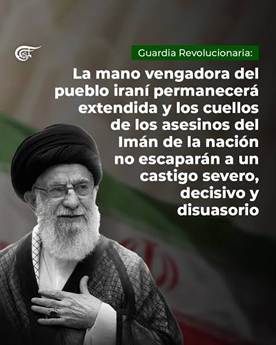
Its necessary presence challenges the dependency framework that imperial powers—led by the United States and its strategic partner, the Israeli Zionist regime—seek to impose on Southern countries, making Tehran an unavoidable reference for all those striving to reclaim their national sovereignty.
The assassination of the Supreme Leader, executed by the alliance between Washington and its regional proxy, not only represents an unprecedented act of aggression but accelerates a dynamic that its perpetrators seem to underestimate: the radicalization of resistance. Far from dismantling the revolutionary project, the removal of key figures—under a policy of “maximum pressure” that has claimed the lives of leaders like Qasem Soleimani, nuclear scientists, civilians, and innocent victims of tragedies like the school incident in Minab—has become a catalyst for a collective will that does not accept forgetfulness or surrender.
This hostile policy responds to a structural logic aimed at preventing the emergence of any pole that could alter U.S. hegemony. However, this crime, which has generated profound rejection in vast sectors of global public consciousness, has not only failed in its objectives of submission but has reinforced Iran’s legitimacy as a fundamental pillar in the struggle against Zionism and interventionism.
The Islamic Republic, with its unwavering stance, remains the ultimate frontier in deciding whether the right of peoples to self-determination will prevail over the hegemony of a world order that increasingly lacks the capacity to offer an alternative other than imposition and chaos.
In conclusion, the life of Seyed Ali Jamenei—from his humble origins to his tragic death—as I have tried to portray in this trilogy of articles, defines a narrative arc of resistance. His legacy is not only that of a theologian or statesman but of a strategist who transformed “dignity” into an institutional pillar, challenging superpowers and leaving an indelible mark on the complex political landscape of the 21st century.
By Pablo Jofré Leal
Journalist. International Analyst.
Article for Hispantv.
The views expressed in this column are solely those of the author(s) and do not necessarily represent the opinions of El Ciudadano.
Continue Reading:
La entrada A Seyed Embedded in the Heart of Humanity (III) se publicó primero en El Ciudadano.
🔥 Ver noticia completa en ElCiudadano.cl 🔥