El Ciudadano
Original article: “La narrativa de invasión o cambio de gobierno en Venezuela es un discurso ya viejo y sin sustento”: analista Boris Teillier sobre Machado y Trump
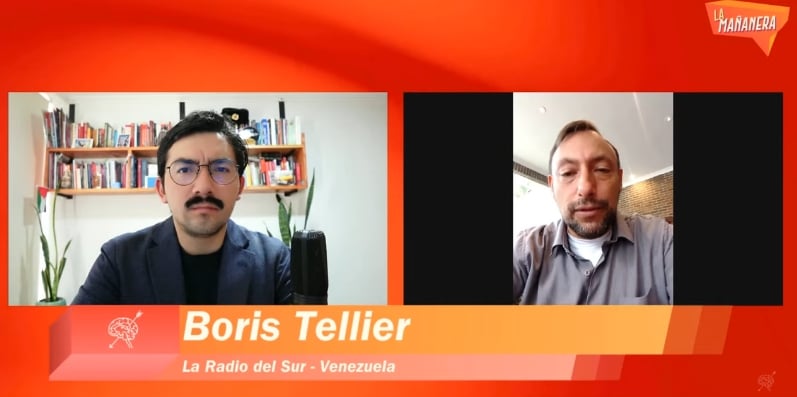
Amidst a «tense normalcy» in the streets of Caracas and a festive holiday atmosphere, political analyst and journalist Boris Teillier Espinoza, co-host of the radio program Amor América on Radio del Sur, dissected the implications of President Donald Trump’s aggressive rhetoric towards Venezuela.
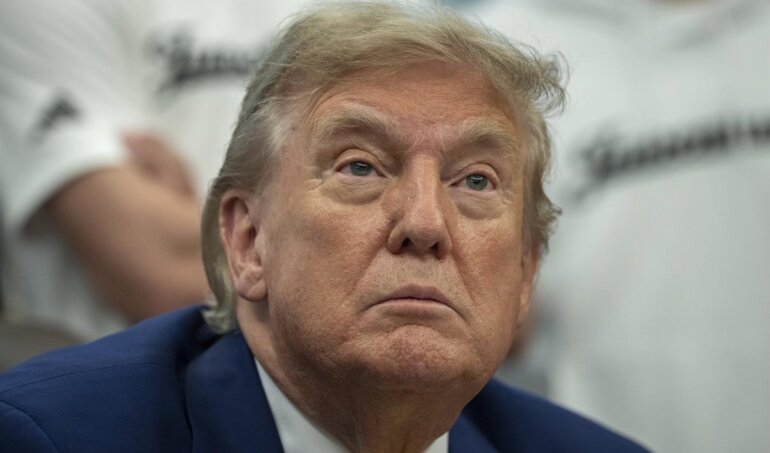
In an interview with the program La Mañanera, hosted by El Ciudadano’s director Javier Pineda Olcay, Teillier stated that the narrative promoting an invasion or radical government change in the Caribbean nation, advanced by both the Republican mogul and far-right opposition leader María Corina Machado, lacks real substance and asserted that Washington’s true aim is Venezuela’s oil.
He emphasized a division within the Venezuelan opposition and a consensus in the National Assembly to defend the sovereignty of the Latin American nation.
Oil: The «True Objective» Behind Trump’s Rhetoric
From Caracas, where he has lived for 20 years, the Chilean journalist contextualized the escalating pressure that began in September with attacks on fishing vessels and the characterization of the Venezuelan government as a «narcoterrorist» regime. He noted that Trump’s statements on December 17 ordering a «total and complete blockade of all sanctioned tankers entering and leaving» Venezuelan territory marked a turning point in the harshness of his discourse, further showcasing that the ultimate goal is to seize the crude oil and natural resources of the Latin American country.
“Yesterday, pressure rose to a point that truly reveals what lies behind this constant aggression policy, which is Venezuela’s oil and other natural resources,” Teillier asserted.
“Trump declares, without any facade or shame, that Venezuelan oil is his property and that Venezuela has stolen the oil,” he emphasized.
The analyst recalled two pivotal moments in the nationalization of the resource: in the 1970s under Carlos Andrés Pérez and the “second moment” during Hugo Chávez’s presidency, where nationalization radically altered the business model, prioritizing mainly Venezuelan interests.
For Teillier, Trump’s argument is “completely fallacious” and exposes the real motivation: “This is not about democracy or drug trafficking; it is simply about Venezuelan oil.”
The Fractured Opposition: Machado’s Far-Right vs. Nationalist Right
One of the highlights of his intervention was the analysis of the internal political reaction. Teillier reported that on the same day as Trump’s statements, the National Assembly held a special session where a cross-party agreement was reached to defend Venezuelan sovereignty.
“One of the main opposition leaders, Bernabé Gutiérrez of Acción Democrática, supports the policy to defend national sovereignty,” Teillier mentioned. “Regardless of whether they agree with the national government or not, the great consensus that emerged yesterday is about defending the sovereignty of the nation and its resources,” he emphasized.
According to the analyst, this support includes opposition figures such as former presidential candidate Henrique Capriles and the governor of Cojedes state, José Alberto Galíndez, who controls eight municipalities.
“Thus, we can clearly see two rights,” he explained. On one side, “a far-right connected to American interests” around María Corina Machado, who, Teillier reminded, “has repeatedly stated that one of the first measures she would take if given control and power in Venezuela would be to hand over the oil assets to the United States.”
“This is a right very much aligned with Trump’s interests; it is an extension of Trump’s party, while on the other hand, there’s a national right that defends national interests and resources in a sovereign manner,” he clarified.
The «Old Narrative» and the «Normalcy on the Streets» of Venezuela
When asked about the Venezuelan people’s reaction, Boris Teillier described an atmosphere of normalcy a week before Christmas, with open businesses and bustling shopping centers, showing no signs of scarcity or panic buying.
“This responds to two elements,” he argued. “One, this narrative of an invasion or a radical government change is an old discourse that lacks real support. That is, María Corina does not have a real organized social base.” Secondly, he pointed out that “these threats have remained in the realm of discourse.”
“Obviously, the national government has generated a whole policy, and the right-wing is also involved. Several right-wing leaders have stated they are ready to defend the sovereignty of the homeland with arms, including Acción Democrática, Vanguardia Progresista, and other political actors on the right. There is indeed a preparation to defend the most sensitive areas, all related to national electrical service, the oil industry, and strategic areas of both the economy and healthcare systems. Because we know that the irrationality of American imperialism does not measure the cost of lives, be it children or the elderly, nor does it measure the destruction of schools and hospitals,” he expounded in the interview with La Mañanera.
However, he acknowledged the existence of a “normalcy with very strong pressure in the discourse and also the military presence of the United States in the Caribbean.”
Modern Piracy and the Paradox of the Tanker Blockade
Regarding the concrete threat of covert actions, Teillier referred to the recent assault and seizure by the U.S. of a Guyanese-flagged tanker capable of carrying over 1,800,000 barrels of crude.
“In the oil trade, you hire services, you contract services of large tankers, and oil is even traded at sea. At one point, the vessel may have a destination to Russia, but renegotiation can take place mid-sea, and that tanker was seized,” he declared.
“We are living through a period of piracy once again,” he stated, mentioning that the whereabouts of the crew remain unknown. He recalled a similar incident involving a Venezuelan plane seized in Argentina and taken to the United States.
Nevertheless, he pointed out a paradox concerning Trump’s blockade announcement regarding tankers entering or leaving Venezuela. “Paradoxically, Chevron continues to trade Venezuelan oil and is still transporting heavy crude to U.S. refineries,” he noted.
For Teillier, this underscores that “behind this grand, eloquent, and maximalist discourse put forth by Trump, there exists a space, a strip where trade and productive dynamics continue.”
In conclusion, the journalist indicated that in light of Trump’s threats, several tankers destined for Iran and Russia are expected to arrive in Venezuela in the coming weeks, further heightening tensions regarding whether the United States will try to intervene with these vessels.
Below, you can watch the complete La Mañanera program aired this Thursday, where our director also spoke with Marcelo Acevedo, president of the Judicial Workers’ Organizations.
La entrada Analyst Boris Teillier Debunks Trump’s Invasion Rhetoric on Venezuela, Highlights Oil as the True Target se publicó primero en El Ciudadano.
🔥 Ver noticia completa en ElCiudadano.cl 🔥