El Ciudadano
Original article: Aysén: Rechazan por segunda vez solicitudes de Espacios Costeros de comunidades indígenas, ignorando fallo de la Suprema y propuestas de conciliación
Aysén Commission Rejects Indigenous Coastal Space Requests Again, Overlooking Supreme Court Ruling and Conciliation Efforts
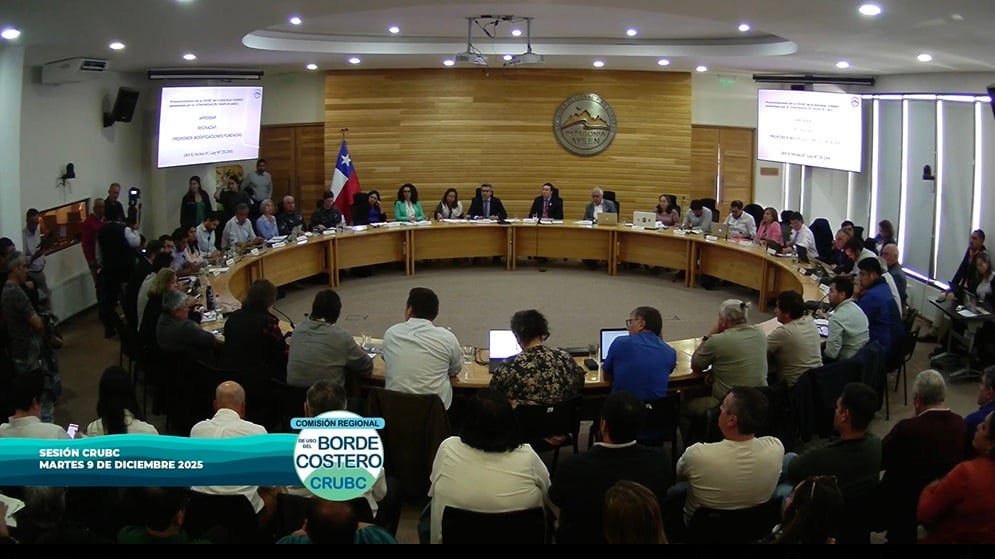
The Indigenous communities of Antünen Rain and Pu Wapi have raised concerns following the second rejection of their requests for Marine Coastal Spaces for Indigenous Peoples (ECMPO) related to Islas Huichas and Weywen Wapi (Cisnes) by the Regional Coastal Use Commission (CRUBC) of Aysén.
This decision was announced on December 9, 2025, less than a month after the Supreme Court upheld Protection Resources filed by the communities after a previous rejection in February 2024. The country’s highest court explicitly ordered a revised procedure to be conducted, emphasizing that the reasons for rejection «cannot and must not be merely economic.»
Despite the clear judicial mandate to reconcile and protect recognized customary uses, the CRUBC of Aysén has again opted for rejection, failing to adhere to the spirit of Law No. 20.249.
Additionally, the CRUBC session took place despite dissent from several commissioners, including the Presidential Delegate and Provincial Delegates, who expressed disagreement with the voting process or requested a postponement to gather further information.
Ignored Compatibility Proposals
This latest denial occurs amidst a context where the communities had shown a sincere willingness for dialogue, presenting proposals to define the polygons recognized by CONADI.
- For the ECMPO Islas Huichas, the Antünen Rain community proposed reducing the recognized area from 393,772.839 hectares to 214,523 hectares.
- For the ECMPO Weywen Wapi (Cisnes), the Pu Wapi community proposed reducing the recognized area from over 227,000 hectares to 105,563 hectares.
The communities also submitted four initial commitments toward compatibility, demonstrating a deeper willingness for dialogue, which included the relinquishment of pending concessions, recognition and respect for artisanal fishing rights, assessment for relinquishing areas with proposed public infrastructure, and the establishment of a Tripartite Technical Table (involving public services, productive sectors, and communities).
These proposals, submitted on December 7, 2025, explicitly aimed to reconcile customary uses with other coastal uses, particularly with salmon aquaculture and Management Areas (AMERB). A formal request for a dialogue instance was made to Regional Governor Marcelo Santana but was denied on December 4, 2025, just days before the vote.
The attached territorial analysis that accompanied the proposals showed that the main tensions focus on aquaculture concessions, with 10 concessions pending and 36 requesting relocation in the case of Islas Huichas, and 4 concessions pending and 14 requesting relocation in the case of Weywen Wapi, within the recognized area. The proposed reduction aimed to address these overlaps.
The communities regret that the CRUBC, whose primary mandate is the harmonization of uses along the coast, has ignored both the Supreme Court ruling and their concrete efforts for informed and good-faith dialogue.
“The scale of damage caused by rejecting ECMPOs to favor the salmon industry is underestimated. The Supreme Court was clear: the State must respect legal procedures and community rights. However, we see that the Regional Government does not uphold that ruling. It is concerning because institutions are supposed to guarantee rights, not ignore them. For us, the vote in CRUBC is a democratic test: it shows whether the State is willing to comply with its own regulations,” states Nelson Millatureo, President of the Indigenous Community Antünen Rain.
Meanwhile, the lawyer from the Citizen Observatory, Felipe Guerra shared the following analysis from a human rights perspective:
“The CRUBC’s decision to reject these ECMPOs for the second time is illegal and constitutes a blatant disregard for the Supreme Court’s ruling, which ordered a substantiated pronouncement in strict compliance with the Lafkenche Law, reconciling various coastal uses with its protective intent: safeguarding Indigenous customary uses. By ignoring the communities’ delimitation proposals and insisting on unfounded rejection, the Commission repeats the same flaw already corrected by the Court itself.”
The communities are now considering legal action following this second rejection, which delays a process that, according to regulations, should have been completed in approximately 6 months, but has now exceeded seven years.
Watch the broadcast:
La entrada Aysén Commission Rejects Indigenous Coastal Space Requests Again, Overlooking Supreme Court Ruling and Conciliation Efforts se publicó primero en El Ciudadano.
🔥 Ver noticia completa en ElCiudadano.cl 🔥