El Ciudadano
Original article: CIDSUR invita a seminario abierto en Temuco para proyectar aprendizajes a 6 años del Estallido Social en Chile
Since 2010, the Centro de Investigación y Defensa Sur (CIDSUR), a non-profit organization based in Temuco, Araucanía region, has been dedicated to investigating and documenting human rights violations, providing specialized legal defense to indigenous and non-indigenous individuals, minors, and adults who, due to their participation in activities related to social protest and territorial defense, have seen their fundamental rights undermined by state agents.
Over the past fifteen years, a multidisciplinary team composed of professionals from law, anthropology, psychology, sociology, social work, and communications has contributed from their respective fields to emblematic cases in recent history. Notable among these are the cases of Alex Lemún, Luchsinger-Mackay, Camilo Catrillanca, and Operación Huracán, as well as cases involving victims of the civic-military dictatorship and those affected by the 2019 social outbreak in La Araucanía.
To commemorate this ongoing work, the Research Unit and the Extension and Communications area invite you to the IV CIDSUR Seminar titled «Six Years After the Social Uprising in Chile: Memories, Learnings, and Projections of Collective Experiences,» taking place on Thursday, December 18, and Friday, December 19, in Temuco, at Sitio de Memoria Miraflores 724. The seminar runs from 4:00 PM to 8:00 PM on Thursday and from 5:00 PM to 8:00 PM on Friday.
This invitation aims to create a space for reflection and analysis on shared experiences in the country during the 2019 Social Uprising, providing tools for thinking about the future, informed by an analysis of the media and institutional moment we are witnessing, where the meaning of the protest process that arose during the October 2019 uprising is contested.
The seminar is open to the entire community without prior registration. It is aimed at civil society, students, professionals, and academics, as well as any individual or group particularly interested in research and the defense of social protest.
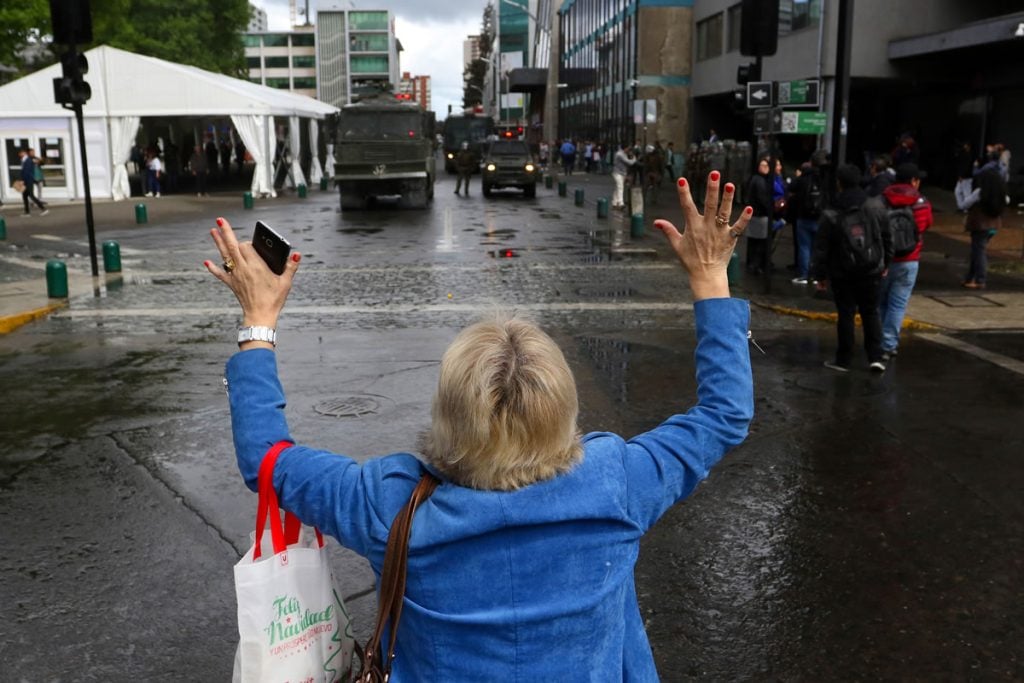
“On one hand, there is an attempt to establish a narrative that delegitimizes social manifestations and their legal, political, and sociocultural effects under slogans like ‘octubrismo,’ ‘lumpen,’ ‘destruction of property,’ and ‘crime.’ On the other hand, those of us who defend it as a human right reclaim the knowledge accumulated in the streets and institutions as an emancipatory social learning experience,” stated sociologist and researcher Javiera Naranjo, Director of the Extension and Communications Unit at CIDSUR.
Participants
The seminar will feature perspectives from legal, historical, psychosocial disciplines and social organizations.
Presenters include: Myrna Villegas, PhD in Law and academic; Sergio Grez, PhD in Social History; Ana María Vera Haro, psychologist and member of the Independent Expert Network; Rosana Rojas, representative of the organization Las Violetas; Lorena Sepúlveda, leader of Población Amanecer; and Sebastián Saavedra, lawyer and president of CIDSUR.
Additionally, there will be dialogue through cinema and photography, featuring the screening of the documentary “Oasis” (2024, 82 min.) by the collective Mapa fílmico de un País (MAFI), presented by co-creator David Belmar. Throughout the seminar, there will also be an exhibition of work by journalist and photographer Carlos Valverde, who covered the 2019 social outbreak in Temuco for Diario Austral.
“We believe that History and Human Rights are fields whose meanings are open and worthy of contest. Continuing to analyze and project together what the October Uprising has left us prepares us to foster a fairer and more democratic society, capable of resisting and reversing the current ultra-conservative onslaught that openly discriminates against women, indigenous people, migrants, and workers,” said attorney Cristopher Corvalán, Director of the Studies Unit at CIDSUR.
The meeting point will be at Sitio de Memoria Miraflores 724, Temuco. This site was a detention and torture center for the CNI during the 1980s. It is now administered by the Association of Families of Detained and Disappeared Persons and the Corporation of Memories and Human Rights Miraflores 724, which was granted a 25-year concession to develop activities and gatherings that promote the defense of human rights and the principle of non-repetition.
The community channel Abajo e’ la línea will broadcast both days freely on its TV channel 35.1.
SEMINAR PROGRAM
Sitio de Memoria Miraflores 724, Temuco.
FIRST DAY: Thursday, December 18, from 4:00 PM to 8:00 PM.
4:00 PM / Screening of the documentary OASIS (2024, 82’) by MAFI, Mapa Fílmico de un País. Presented by co-creator David Belmar.
Synopsis: After an unprecedented social uprising, Chile chooses to write a New Constitution. A diverse assembly will be responsible for putting on paper the dreams of dignity and social justice of an entire people. What could go wrong?
6:00 PM / Panel: Social protest: vandalism or a historical tool for achieving rights?
Speakers: Social historian Dr. Sergio Grez will analyze the causes of the October Uprising and the effects of the Agreement for Peace and the Constituent Process, to reflect on the present and future of social movements in Chile. Rosana Rojas, a representative of Las Violetas, a feminist self-convened group during the protests, will invite reflections based on the support processes in the streets, police stations, and courts, with victims of police violence. Regarding the communal kitchens that were prevalent during the Uprising, Carmen Lorena Sepúlveda Sepúlveda, representative of Población Amanecer, will raise the accumulated knowledge surrounding this historical social practice for debate.
SECOND DAY: Friday, December 19, from 5:00 PM to 8:00 PM
5:00 PM / Workshop on legal tools for social protest led by CIDSUR.
6:00 PM / Panel: Human rights in the Uprising: how many times violated, how many protected, how many repaired?
Speakers: Criminal law academic Dr. Myrna Villegas will open the debate on the serious human rights violations that occurred in Chile during the Uprising, evaluating the actions of the judicial system in determining and sanctioning those responsible. Focused on the situation in Temuco, CIDSUR lawyer Sebastián Saavedra will propose reflections based on the legal defense of victims of eye injuries and simulated shootings. Psychologist Ana Vera Haro, who has supported several of these victims, will reflect on the damage caused by institutional violence, its impact on the lives of protesters, their families, and possible reparative actions.
Throughout the seminar, there will be a photographic exhibition by Carlos Valverde Ortega, a journalist and photographer who documented the protests in Temuco in 2019.
For more information, visit www.cidsur.cl and follow us on our social media channels.
La entrada CIDSUR Hosts Open Seminar in Temuco to Reflect on Lessons from Six Years After Chile’s Social Outbreak se publicó primero en El Ciudadano.
🔥 Ver noticia completa en ElCiudadano.cl 🔥