
El Ciudadano
Original article: Juzgado civil condena al fisco a indemnizar a mecánico torturado en 1974 por efectivos del Ejército y Carabineros en Chillán
Civil Court Orders Compensation for Mechanic Tortured by Military and Police in 1974
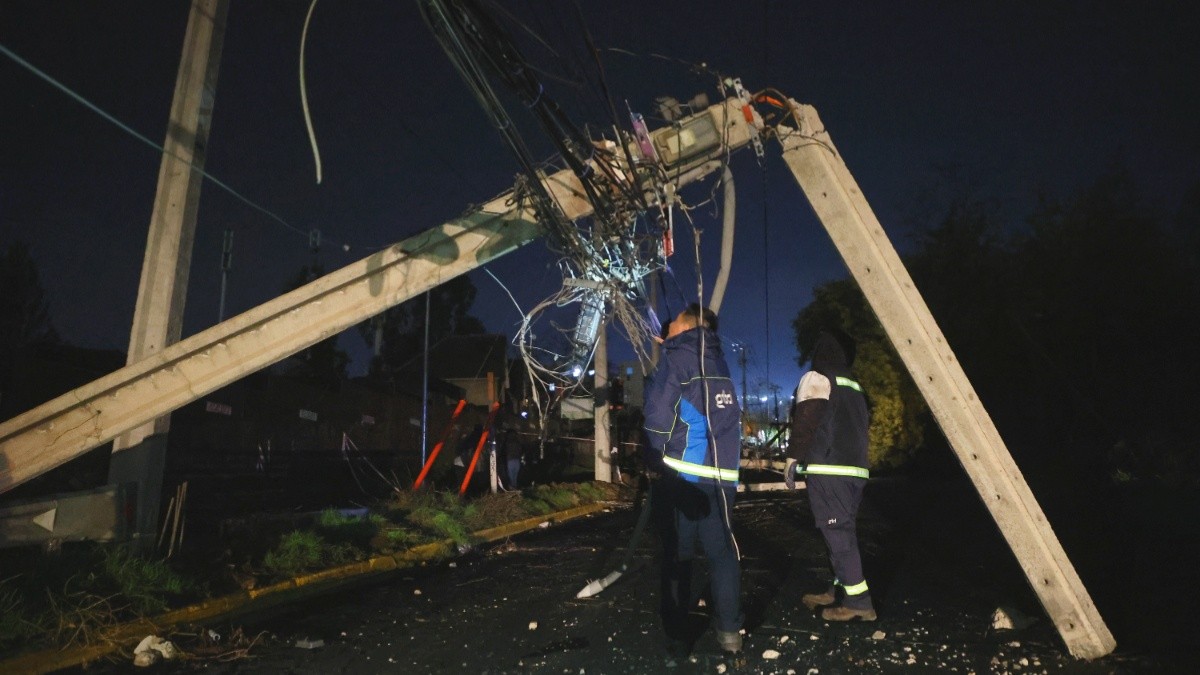
The 2nd Civil Court of Santiago has mandated the state to pay a compensation of $80,000,000 for moral damages to a mechanic who was arrested on March 6, 1974, at his workshop in Chillán by military personnel. He was taken to the 9th Infantry Regiment (as shown in the photo), where he was subjected to torture during interrogations.
Later, in November 1974, he was arrested again and tortured, this time by Carabineros from Chillán Viejo.
In its ruling (case number 6.230-2024), Judge Manuel Figueroa Salas dismissed the state’s arguments regarding «integral compensation and extinction by prescription,» determining that the victim was a target of a crime against humanity, which is not subject to prescription in either penal or civil contexts.
The court highlighted that the official recognition of Mr. J.C.B.R as a victim of political imprisonment and torture by the National Commission on Political Imprisonment and Torture (Valech Commission I) provides a sufficient basis to presume the existence of the claimed moral damage.
Furthermore, the ruling states that the victims’ qualification process conducted by the Valech Commission involved a thorough analysis of each individual case, including validation of information through documentary research, records from public organizations, human rights references, and, in many cases, follow-up interviews with the victims, all documented in the Commission’s own Report.
The court asserted that this institutional recognition necessarily confirms both the political nature of the detention and the occurrence of torture, which by their nature result in evident moral damage that does not require additional direct evidence.
Additionally, the ruling references a report on psychological damage and sequelae from the PRAIS Ñuble Program, noting that the plaintiff exhibits clear psychological aftereffects related to Post-Traumatic Stress Disorder, which has led to mental health issues directly tied to the traumatic events he endured during the dictatorship.
The report meticulously details the plaintiff’s symptoms, including feelings of nostalgia, distress when recalling the experience, nightmares, heightened startle response, hyper-vigilance, and long-standing episodes—all impacting his life with irritability and mood swings, constituting psychological sequences of subjugation and flashbacks where he re-experiences similar symptoms related to the traumatic event when confronted with uniformed individuals, alongside severe cognitive-emotional-behavioral complaints tied to the repressive actions he faced.
According to the court, the significance of this report stems from its origins in a state-run health reparations program (PRAIS), which adds considerable evidentiary value due to its institutional specialization in aiding victims of human rights violations.
The legal document elaborates that Chapter VIII of the Valech Commission Report describes, ‘the psychological impact of detention, imprisonment, and torture has profoundly affected the lives of those who have experienced them. The characteristics of these detentions produced significant impacts on the victims. The verbal abuse of unarmed individuals was widespread. The disproportionate use of force generated a deep sense of helplessness, vulnerability, abandonment, and uncertainty,’ noting that victims suffer from post-traumatic stress disorders, depression, anxiety, sleep disturbances, persistent feelings of pain, suffering, powerlessness, fear, shame, humiliation, and bitterness that endure over time.
These descriptions align closely with the symptoms diagnosed in the plaintiff by the PRAIS team, the ruling emphasizes.
Factors Considered
For determining the compensation amount, the court reviewed the following factors:
a) The severity of the experiences suffered by the plaintiff, including illegal detention, solitary confinement, physical torture through beatings, punches, kicks, and electric shocks, death threats, and inhumane conditions of confinement, resulting in permanent physical repercussions such as the loss of a dental piece and scars on his head.
b) The recurrence of repressive acts, as evidenced by a second arrest in November 1974 involving similar duress.
c) The prolonged persecution and surveillance following his release, which forced him to close his mechanic workshop—his only source of family income—frequently change residences, move to another community, adopt a false name, and live in a constant state of alert for years.
d) Long-standing psychological sequelae documented in the PRAIS Ñuble report, manifesting in Post-Traumatic Stress Disorder with ongoing symptoms lasting more than 50 years since the events, including nightmares, hyper-vigilance, flashbacks, irritability, and severe cognitive-emotional-behavioral issues.
e) The impact on his labor, family, and social life trajectory, as he was compelled to abandon his independent economic activities, resulting in precarious work situations.
f) The plaintiff’s age at the time of the events (24 years) and his current age (75 years), having lived most of his life with the consequences of the trauma.
g) The fact that he has received reparative benefits under Laws No. 19,992 and No. 20,874 totaling $41,108,500 as of July 2024, along with a monthly pension of $264,897, which, while a governmental acknowledgment, do not constitute complete compensation for the specific damages suffered.
As a result, the court concluded that “taking into account all the enumerated factors prudently, especially the severity of the proven tortures, the recurrence of detentions, the prolonged persecution suffered, and the persistent psychological sequelae documented by the PRAIS program, it deems prudent to set the compensation amount at $80,000,000 (eighty million pesos) for the plaintiff.
Read the full ruling HERE
La entrada Civil Court Orders Compensation for Mechanic Tortured by Military and Police in 1974 se publicó primero en El Ciudadano.
🔥 Ver noticia completa en ElCiudadano.cl 🔥