El Ciudadano
Original article: Eliminar contribuciones: Ramis y Olmos alertan impacto en municipios
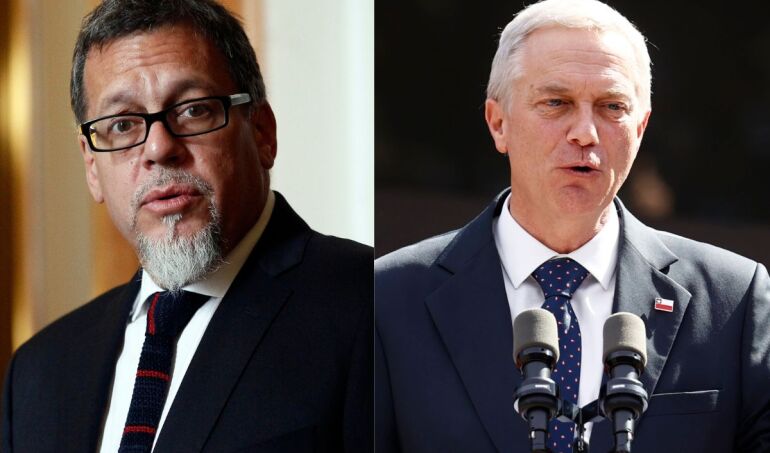
On Tuesday, April 21, a new episode of Sentido Común premiered, hosted by the director of El Ciudadano, Javier Pineda. In this episode, Pineda discussed with Álvaro Ramis, rector of the Academia Humanismo Cristiano University, and Joel Olmos, mayor of the Municipality of La Cisterna, about the implications of the proposed elimination of contributions on municipal governments.
“They take from the poor to give to the rich,” is how Javier Pineda opened the program, stating that this would be the outcome if the measure announced by José Kast regarding the removal of contributions on primary residences for seniors over 65 is approved.
Pineda elaborated that seniors earning less than $940,000 per month do not pay contributions on their primary residences, while those earning up to $2,100,000 only pay half. Thus, the measure would primarily benefit individuals earning over $2 million a month.
Additionally, the beneficiaries would mostly come from affluent areas of the country, such as Providencia, Las Condes, and Vitacura. Among them are several ministers, including Francisco Pérez, José García, Claudio Alvarado, Fernando Barros , and Jaime Campos.
The director of El Ciudadano highlighted that the chancellor’s residence is valued at over $2 billion, meaning that with this initiative, he could save nearly $23 million in contributions.
“Thus, other seniors like Andrónico Luksic and Eliodoro Matte would also be exempt from this property tax. The situation is such that even Pablo Longueira, who would benefit from this measure, has stated that some seniors should still be required to pay contributions,” Pineda explained.
Furthermore, he mentioned that while about 200,000 individuals would benefit, the amount at stake constitutes over 10% of what is collected from property tax, resources crucial for financing the Common Municipal Fund and the operations of many municipalities.
Therefore, he warned that without sufficient compensation, such reductions could lead to cuts in essential areas like public safety, maintenance of public spaces, health, and education. He indicated that the primary victims would be residents of low-income communes, who are more dependent on these resources.
Ramis Warns of Fiscal Loss and Impacts on Municipalities
For his part, Álvaro Ramis indicated that the projected figures reveal a much different landscape than the government is trying to present with its economic package.
“The projected fiscal loss amounts to $4.393 billion annually, or 1.2% of GDP. This money does not just disappear; it gets redistributed, and the direction of that flow determines everything. We are talking about a $4.393 billion loss each year, equivalent to 1.2% of GDP. The top 1% receives 80% of the benefit. Hence, the compensation to the Common Municipal Fund becomes diluted. The losses for municipalities are significant,” Ramis explained.
Ramis added that to offset the drop in revenue, the government is cutting public spending by $3.8 billion, which affects primary health, municipal education, housing, employment, and safety. He noted that the compensation to the Common Municipal Fund is only $170 million compared to a loss of $4 billion.
“That figure is purely symbolic. The poorest communes will be the most affected. The municipality receives less from the state while simultaneously seeing their tax base weakened due to increased costs for small and medium enterprises (SMEs). This creates a fiscal stretching scenario amid economic slowdown,” he said.
He also criticized the tax package, stating that it favors large corporations by reducing their taxes while increasing the burden on SMEs, which employ a significant portion of the local workforce, potentially threatening their sustainability, encouraging informality, and reducing municipal revenues.
He questioned the employment projections, stating that the main incentives do not require the creation of new jobs, which could lead to no real impact.
Additionally, he pointed out that the measures are regressive: the majority of benefits concentrate on the wealthiest 1%, while lower-income sectors receive minimal contributions with little effect on consumption or poverty reduction.
Regarding the impact on municipalities, he mentioned that mayors will see these effects reflected directly in their budgets. He warned of reduced transfers for primary health, weakening of the commercial base of the communes, and an increase in social demands, with more residents facing unemployment or difficulty paying their bills.
“They will see a weakened commercial base in their commune, witness increased inquiries from residents unable to find work or pay their bills, and they will have fewer tools than before,” the rector stated.
Olmos Warns of Direct Impact on Municipal Services
Meanwhile, the mayor of La Cisterna, Joel Olmos, stated that the government’s announcements could have direct effects on municipalities’ ability to deliver services, indicating it is a way of implementing public policy that reduces their capacities and affects daily life at the local level.
Olmos further explained how municipal funding works, using La Cisterna, a commune of nearly 100,000 residents with an approximate budget of 35 billion pesos, as an example. He contrasted this with communes like Vitacura, which has a similar population but over four times that budget, demonstrating significant inequality in resource distribution among municipalities. This difference is also apparent in infrastructure, particularly in the availability and quality of green spaces.
“Some municipalities manage poverty while others manage wealth. This happens because municipalities report or obtain resources through state contributions via the Common Municipal Fund and a mechanism related to their ability to collect taxes,” he noted.
Among the revenues mentioned by Olmos are contributions, business licenses, circulation permits, and, to a lesser extent, advertising.
He also indicated that not all homes pay contributions—only those with higher valuations—which limits revenue in communes with fewer resources, compounded by reduced commercial activity. Thus, municipalities like La Cisterna face structural constraints in increasing revenues.
Moreover, the mayor warned that the measures would lead to a sharp decline in revenue and cuts in public spending affecting areas like health, education, and safety. In this scenario, he claims that benefits are concentrated among higher-income sectors, while the most vulnerable see reduced access to essential services.
Conversely, Olmos expressed concern over the rising cost of living and the lack of effective measures regarding employment and safety. He also mentioned the need for collaboration between municipalities on issues like contributions and urban deregulation.
On this last point, he warned that increased densification could overwhelm basic services and worsen quality of life, which has already necessitated increased spending on safety at the expense of other areas. In this context, he warned of a deterioration of services and urban conditions.
“In the Socialist Party, a meeting was held to connect efforts among political parties, some deputies, and municipalities to align themselves and thus resist a common agenda,” he said.
Finally, Olmos questioned whether current policies benefit higher-income sectors and cautioned that this limits the State’s capacity to address social needs.
Below, watch the full interview with Álvaro Ramis and Joel Olmos on Sentido Común:
La entrada Experts Warn: Cutting Contributions Threatens Municipal Revenues and Essential Services se publicó primero en El Ciudadano.
🔥 Ver noticia completa en ElCiudadano.cl 🔥