El Ciudadano
Original article: De Libertad y Desarrollo a La Moneda: el perfil de María Paz Arzola
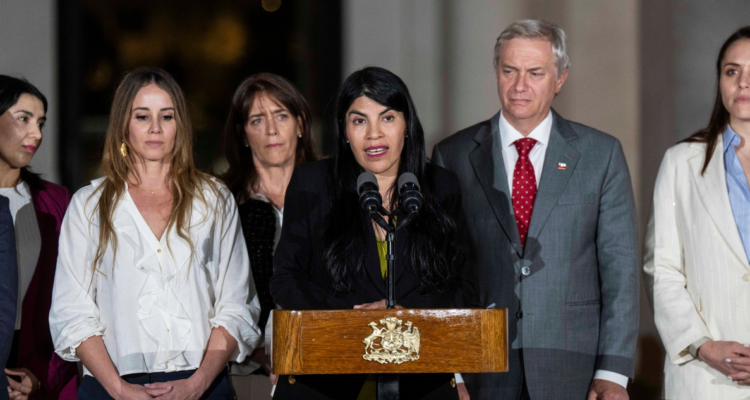
On March 11th, the administration of José Kast officially took charge at La Moneda along with his team of ministers and undersecretaries. The formation of the cabinet has drawn various reactions in political and public spheres. Notably, independent economist María Paz Arzola has been appointed to lead the Ministry of Education.
Education and Professional Background
Maria Paz Arzola González was born on December 5, 1986 (39 years old) in Santiago, Chile. She completed her primary and secondary education at Colegio Mariano de Schoenstatt in the province of Providencia, graduating in 2004. She later studied Commercial Engineering at the Pontifical Catholic University of Chile, where she also earned a Master’s degree in Economics. Subsequently, she pursued another Master’s degree in Political Philosophy and Ethics at Adolfo Ibáñez University.
In 2010, she joined the think tank Libertad y Desarrollo (LyD), where she spent nearly six years working in the research division focused on economic and social issues. During this time, she engaged in public policy analysis with an emphasis on education and social matters, participating in seminars, discussion panels, and media appearances on these topics.
A few years later, in 2013, Arzola took up a part-time academic position in the Department of Industrial and Systems Engineering at the Catholic University, a role she held until 2020, the same year she received the Teaching Excellence Award from the School of Engineering.
Additionally, in 2013, Arzola was part of the program team for the presidential campaign of Evelyn Matthei, representing the Independent Democratic Union.
After leaving Libertad y Desarrollo in 2016, she became the Chief of Studies at Wines of Chile, a trade organization aimed at promoting the international presence of Chilean wine. In March 2018, she returned to the think tank, where she served until January 2026 as the coordinator of the Social Program.
Criticism of Educational Reforms
In her public career, Maria Paz Arzola was part of the technical committee responsible for reviewing and evaluating the School Admission System (SAE) from 2024 to 2025. This initiative aimed to propose improvements to the functionality of this mechanism and promote its integration into the legal initiatives currently being discussed in Congress.
Her tenure at Libertad y Desarrollo has also been cited by critics as evidence of her close alignment with market-oriented education approaches. The think tank has been one of the main advocates for the role of private entities in the school system and has challenged several reforms implemented by previous administrations.
Media outlets have reported that Arzola has been particularly critical of one of the flagship reforms of Michelle Bachelet’s second term: the School Inclusion Law designed to gradually eliminate co-payments in institutions, restrict student selection processes, and prohibit profit-making by operators with educational system resources.
In an interview for Hilando Ideas, Arzola remarked that the prohibition of profit in education, in her view, stemmed from a rejection of private participation in the educational system. She argued that in the case of Chile, the development of the system has been strongly linked to the contributions from the private sector—including the Church—leading to the notion that the growth of private education harmed public education, a claim she deemed unfounded.
In 2024, the book «Failed: A Lost Decade in Education» was published, with Arzola serving as the editor. The document argues that while various reforms and laws in education have been enacted in recent years, they primarily focused on structural and institutional aspects of the system, with less attention to direct changes within the classroom.
These positions have faced scrutiny from sectors that supported educational reforms implemented over the last decade, particularly those aimed at reducing profit motives and selection processes in schools. Critics argue that reversing these policies could exacerbate educational inequalities.
School Admission, Funding, and CAE
In 2025, along with María Teresa Romero, Arzola conducted a study titled “Considerations and Proposals for Improving the School Admission System,” questioning the operation of the SAE, which they believe has failed to achieve one of its primary purposes: to reduce socioeconomic segregation. The report indicates that the system generates dissatisfaction among families by not accounting for students’ academic performance in the admission process.
The same publication asserts that the system has limitations in addressing the diverse situations that arise during applications. According to the report, the SAE operates with constrained criteria and insufficient levels of transparency, restricting direct communication among involved parties, which complicates the resolution of process-specific issues.
In an interview with Líbero, Arzola expressed her hope that the heads of prominent high schools would receive support to address and resolve incidents of violence, thus restoring excellence.
“This will not only depend on providing them with the necessary tools, but also on the commitment of those communities to enforce the law and isolate those who threaten it,” she added.
Moreover, Arzola emphasized the importance of increasing resources and equalizing funding per student, which she believes is currently unequal based on the type of institution. She also noted that one of the new government’s main tasks is to evaluate the system for distributing available slots: “I hope reform will be made to the admission system to incorporate aspects currently excluded and to provide greater flexibility during the process,” she asserted.
Regarding the CAE, Arzola told the same media outlet about the urgency of restructuring the collection process:
“This can already be done as 55% of the debts have been acquired by the Treasury following the execution of its guarantees. Additionally, we should advance towards an income-contingent credit system with more effective collection mechanisms, which will require support from all political forces (…). Higher education has received the largest increases in public funding in recent years, and this trend cannot continue.”
On January 20, 2026, she was announced as the future head of the Ministry of Education by President-elect José Kast. With this appointment, she will succeed Nicolás Cataldo and begin her role on March 11, 2026, when the leadership transition and new cabinet take effect.
It is noteworthy that Arzola was a member of the team that formulated Kast’s educational proposals and represented him in forums and panels. Regarding the new administration, Arzola stated to El Líbero:
“There is nothing in the (President-elect’s) government plan that undermines education and the future of students. On the contrary. So if such an event were to happen (an increase in violent manifestations), it will be demonstrated that the origin lies in political instrumentalization, and the public will be able to judge it.”
In her initial weeks in office, Arzola presented to the Education Commission of the Chamber of Deputies the public policies and legislative priorities that the government will pursue in education, outlining the main lines to be addressed.
During the session, the minister stated that changes in the SAE are being evaluated and emphasized two key elements—according to her—that are lacking: the absence of a space to recognize academic merit, along with the rigidity that limits school directors in addressing contingencies and resolving issues throughout the admission process.
On another note, regarding SLEP, she indicated that some municipalities need to transfer educational services, while others are meeting educational plans, which is why she declared that the calendars will be reviewed and the transfer of the remaining SLEP will be evaluated.
Arzola’s appointment as Minister of Education has been interpreted by various sectors as a signal of the educational approach the new administration may adopt. Her stances are marked by criticism of reforms implemented over the last decade and a defense of the role of private entities in the school system.
Now, she will need to translate those ideas into public policies from one of the most sensitive ministries in the country. Her administration is expected to be characterized by debates surrounding funding, school admissions, and the direction education will take under José Kast’s government.
Below you can review Catalina Lufin’s analysis of Arzola’s appointment to the ministry in the new El Ciudadano program «Common Sense»:
La entrada From Libertad y Desarrollo to La Moneda: Maria Paz Arzola’s Profile se publicó primero en El Ciudadano.
🔥 Ver noticia completa en ElCiudadano.cl 🔥