El Ciudadano
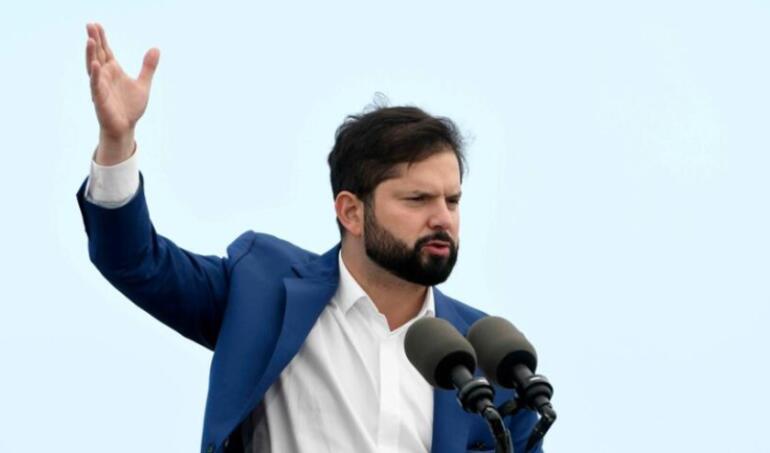
During his first State of the Union address, President José A. Kast announced plans to reform the Indigenous Law 19.253, which would allow leases and mortgages on ancestral lands. This measure, framed as part of a policy aiming to provide «freedom,» addresses a highly sensitive issue in the historically tense relationship between the State and indigenous peoples: land rights.
The president aims to eliminate current restrictions on the use of these territories, arguing that many allocated lands remain unused.
It is important to remember that Indigenous Law 19.253, enacted in 1993, established the National Corporation for Indigenous Development (Conadi) and created mechanisms to protect indigenous lands.
According to constitutional and international mandates, any reform would require the implementation of legally mandated consultations with ancestral communities.
Kast, in his State of the Union address, indicated that his administration would seek to modify the consultation process established under ILO Convention 169, stating his intention for it to be «legitimate and free of interference.» However, this proposal raises alarms over the potential weakening of collective land protection for indigenous territories and their entry into market dynamics.
In a statement shared on social media, Mapuche lawyer and human rights defender, Natividad Llanquileo Pilquiman, expressed her vehement opposition to the measure, asserting that protecting land is synonymous with preserving life, emphasizing that these territories are fundamental for the survival of their peoples.
«To attack these lands is to attack life itself. We cannot allow them to strip us of what little we have left. Selling or mortgaging our land not only impoverishes us but also threatens the existence of our customs and traditions,» stated the Mapuche jurist.
In this context, Llanquileo criticized the presidential discourse directly: «They come with their metaphors. We are left with just a few territories. I hope that when we open our eyes, we are not left with mere metaphors while they take away what little we have left.»
Colla Community: «Indigenous Lands Are Not a Commodity»
Cindy Quevedo, president (curaca) of the Colla community at Finca el Chañar and of the National Council of the Colla People, expressed her community’s deep concern regarding the announcements aimed at modifying the protection of indigenous lands in Chile.
«Our territories are not merely economic goods; they are the foundation of our culture, spirituality, memory, and way of life,» Quevedo affirmed, emphasizing the temporary stewardship role that communities play over their territories.
«The land inherited from our grandparents does not solely belong to us; we are its temporary guardians for future generations,» she explained. She warned that any measures facilitating the loss, fragmentation, mortgage, degradation, or exploitation of indigenous lands jeopardize not just the heritage but also the existence of indigenous peoples.
«Indigenous lands cannot be sold, mortgaged, or negotiated. They are part of our history, our identity, and our future,» emphasized the Colla representative.
Mapuche Women’s Network: “Kast Threatens Wallmapu”
Meanwhile, the Mapuche Women’s Network published an extensive analysis on their social media titled «Kast Threatens Wallmapu,» questioning the foundation of the proposed presidential reform.
The organization reminded the public that restrictions on indigenous lands are not a privilege; rather, they were instituted because the Chilean State recognized a historical reality: for over a century, indigenous peoples were dispossessed of their territories through legal, economic, and administrative means.
The Network noted that the Indigenous Law 19.253 of 1993 was enacted following prolonged Mapuche struggle and resistance after the dictatorship, aiming to «halt the expansion of winka» into ancestral territories by establishing a special protection regime to restrict the sale, burden, embargo, and transfer of lands.
Subsequently, this protection was reinforced by international law, as ILO Convention 169 acknowledges that for indigenous peoples, land is more than an economic asset; it is an essential element of their cultural, spiritual, social, and collective identity.
In this context, the indigenous organization posed a direct question to the government: «Should the State eliminate protections created specifically to prevent further territorial dispossession?»
They also challenged the portrayal of this reform as a measure of equality, arguing that equality does not mean ignoring historical differences but recognizing them to prevent injustices from recurring. Therefore, they cautioned that this proposal raises serious constitutional doubts and contradicts the international obligations assumed by Chile regarding indigenous rights.
Representative Ñanco: «Debate Must Involve Communities, Not Exclude Them»
Finally, Representative Ericka Ñanco expressed profound concern regarding Kast’s announcements related to indigenous matters, asserting that measures presented as freedom could ultimately undermine protections that took decades to establish.
The parliamentarian concurred that indigenous lands possess value that transcends the economic and are integral to the identity of indigenous peoples.
«Indigenous lands are not merely economic assets; they hold cultural, historical, and collective value,» emphasized the legislator, who also questioned how the consultation process with indigenous communities would be carried out.
For Ñanco, such decisions should not be made prior to dialogue: «If the government wants to push through changes to the Indigenous Law or the land system, that debate must be constructed alongside the communities, not over them,» asserted the representative.
Continue reading on this topic:
We will continue to provide updates.
La entrada Indigenous Communities Strongly Reject President Kast’s Proposal for Reform of the Indigenous Law Regarding Ancestral Lands se publicó primero en El Ciudadano.
🔥 Ver noticia completa en ElCiudadano.cl 🔥