El Ciudadano
Original article: Entrevista con «Boston Round Face» (Zephyr): Cómo los medios occidentales eligen informar o difamar a China, honestamente, me importa muy poco
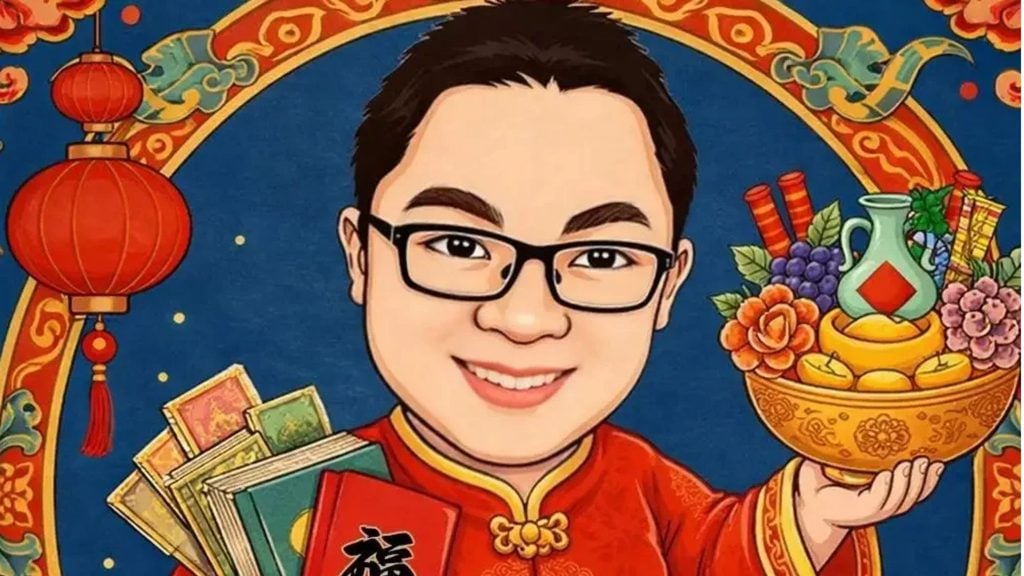
Some people view the world from the comfort of their desks, entranced by the hypnotic blink of pixels on a screen. In contrast, Zephyr navigates it from the road, fishing rod in hand and a map of vast China as his compass. Boston Round Face (Zephyr) is an international political analyst residing in Shanghai; however, his spirit transcends the towering skyscrapers. His life embodies a delicate balance between thoughtful expression and the contemplative pause of a fisherman, bridging a recording studio and the boundless freedom of a van traversing the ancient paths of the Asian giant.
We found him in his recording studio, near friends at the China Academy. Warmly, he welcomes us, aware that genuine dialogue requires no flags. He hands me a microphone, and before I can ask my first question, he turns the spotlight on me for his channel. It’s a mirror game, a duel of gazes where the interviewer becomes the interviewee, and time seems to freeze. As the conversation flows, the young man sheds layers; he emerges not only as a sharp analyst dissecting power and geopolitics but also as a traveler finding certainties in the ebb and flow of international politics.
As I bid farewell to China, I realized that the pending dialogue couldn’t linger in the air. From a distance, I wrote to him. With the generosity of someone who understands that ideas have no borders, he agreed to respond. This young intellectual, who already commands over 5.5 million followers on Bilibili and nearly 200,000 on YouTube, breaks through media barriers each week with deep analyses of our contemporary reality. He does not shy away from delving into waters that others prefer to avoid; he casts a line into the river of the present, pulling truths from depths where others bury them in forgetfulness. Today, we peek into his universe, one that defies being told through a singular voice and rises from the Global South.
By Bruno Sommer
-Let’s Talk About Your Origins. What Did Boston Mean to You? How Did That Academic Experience Shape Your View of the World and Your Choice to Dedicate Yourself to Communication and Geopolitical Analysis? Why Did You Choose the Nickname «Round Face»? Did It Come from You, a Friend, or Elsewhere?
-My channel is called ‘Boston Round Face’. To understand why I chose that name, we need to go back to 2019. At that time, the United States was shaken by massive civil rights movements—especially Black Lives Matter. However, while that was happening, my classmates, my friends, and many other Asians in the U.S. faced relentless racial discrimination.
It became violent. One of my classmates was attacked in the street with a beer bottle, left bloodied. Yet the police downplayed it, claiming there were no cameras, and some classmates told us we shouldn’t expect police help—we had to fend for ourselves. We realized how crucial it was to find our own voice. The media was already saturated with protests; our small voices were not enough to get attention amidst the momentum of the BLM movement. It was a strange paradox: BLM was the absolute ‘political correctness’, yet discrimination against Asians was somehow deemed acceptable.
In the midst of that helplessness, I found a brave YouTuber named ‘Tokyo Long Face’, a PhD student in Tokyo. He had a very elongated face, and I was deeply inspired by his content. So I modeled my account after his and called it ‘Boston Round Face’.
There were two reasons for this. First, I wanted to emulate his success. Second, I felt this naming convention had a powerful pop quality. It allows ordinary people to raise their voices for justice while protecting their privacy from those who might misuse it or even dox them for sport. It was a call to the common people. In fact, after I launched my channel, hundreds of other channels appeared worldwide using the format ‘City + Face Shape’.
My years of study in Boston were marked by almost daily protests. Being in a major political center, immersed in civil rights struggles, taught me a harsh lesson: no right is granted without a struggle. However, the academic environment of a university city also allowed me to truly hear the stories of people from around the world—their hardships and the very impotence I felt. That’s what drove my conviction to keep this channel going: to provide my audience with authentic frontline voices and contribute to the dream of global solidarity.
-It Is Said That Your Motivation Arose from Witnessing the Discrepancy Between What Old ‘Western Intellectuals’ Used to Say and the Reality You Experienced in the U.S. Can You Share That ‘Revelatory’ Moment That Led You to Create Your Channel? What Is the Dichotomy Between One Narrative and Another?
-Of course, moving from a gradual buildup of frustration to a complete perspective change took time. But if you ask me what the trigger was, the most unforgettable turning point was a course I took on genocide. My professor repeatedly insisted, again and again, even on chapters unrelated, that the Nazi Holocaust was ‘uniquely singular’ and incomparable to any other atrocity in human history. When I spoke up and mentioned the massacres committed by Japan against the Chinese people, my professor visibly became impatient. He dismissively told me to speak with him privately after class. But when I did, he snubbed me again, saying he simply had no time.
I vividly remember the moment I stood up to question him. Just moments before, my classmates had been crying over the Holocaust. Yet while I stood, I looked around and saw them hunched under their desks, scrolling through Facebook, looking for lunch options or the best restaurant coupons.
The Japanese aggression against China during World War II caused at least 35 million casualties. However, some of the most horrific war crimes, such as the Nanking Massacre and the human experimentation of Unit 731, remain severely under-studied and overlooked in global scholarship. Japanese troops treated Chinese civilians as animals, officially labeling them as Maruda (logs), slicing open pregnant women’s bellies to study unborn fetuses, spraying anthrax and plague from aircraft to maximize civilian deaths, and locking mothers and children in slowly heating iron cages, just to observe how long a mother would try to protect her child from flames. Unlike Germany, the Japanese government has never issued a formal, official apology for these atrocities to this day. Instead, it has promoted revisionist school textbooks and actively funded media and academics worldwide in an effort to erase this history from global memory. That’s not only disrespectful to the victims; it’s a danger to historical truth itself—important not just for the victims of Asian countries but for people worldwide who wish to uphold justice and accountability for humanity.
I’ll never forget that feeling: I was there, staring into the eyes of my professor, the wave of fury rising from the base of my spine to my head; the looks of confusion and even resentment from my classmates as they turned to look at me; and that strange sensation of my body burning as I broke into a cold sweat. It’s a moment etched in my memory forever.
-Outside of China, There’s a Widespread Stereotype That Claims There’s No Freedom of Expression in China. However, You Produce International Political Commentary Almost Daily from Within China, with a Strongly Critical Focus on the West. Do You Believe Your Work Is Living Proof That This Stereotype Is False? What Are the Real Limits and the Space for Maneuver That a Communicator Like You Finds Within the Chinese Digital Ecosystem?
-Mao once said: ‘The sun doesn’t rise because the rooster crows.’ In that same spirit, I do not see myself as a kind of ‘living proof’—because proof implies a subject and an object, and my existence as an independent Chinese content creator does not need to serve as proof for anyone else.
Regarding how Western media choose to inform or defame China, honestly, I care very little. After decades of struggle, if people haven’t learned anything, their obvious double standards and hypocrisy are on full display: look how they’ve minimized Gaza while whitewashing Netanyahu’s war crimes. There’s an old Chinese saying: ‘The people who harm you know better than anyone that they’ve harmed you.’ So why should we, the Global South, waste our energy pleading for a better future? They will never ‘have mercy’ and give us one.
And I know quite a few veteran journalists from major Western media. To be fair, many of them are decent people. But beyond them are editors, and above the editors are news chiefs, and above them, editor-in-chiefs, directors, managers, and owners. Even when these journalists want to tell the truth, they simply cannot get it out. So my opinion is this: we in the Global South must unite and ally with conscientious media and everyday people in the West who are deeply dissatisfied with the status quo—to produce real, factual information and get it out to the world.
Of course, the challenges are many. First, we all feel it: the overload of tragic news has caused widespread information fatigue. After a long, exhausting day of work, hearing about how many more children the IDF has killed in a distant place simply numbs people. Over time, many choose to look the other way.
Second, the global economic recession, Trump’s isolationism, and the technocratic forces represented by Peter Thiel and Elon Musk—who not only fund transnational organizations like Turning Point but also intervene directly in elections worldwide—have led many to feel that changing the system is a far-off goal and that it’s easier to let these oligarchs act as they please.
Third, the global political shift to the right—extreme nationalism, resurgent Nazism, anti-intellectualism, and conspiracy theories—threatens science and international cooperation. We saw this during COVID with the anti-vax movement, and we see it now with climate deniers and skeptics of modern science. In the long run, this is a destructive apocalyptic challenge for human society. I firmly oppose these forces and fight against them openly. But the results so far have been rather bleak, to be honest, I still haven’t found a good answer. None of us have.
-Bilibili Has Recognized You on Several Occasions. What Do You Think Is the Reason for This Official and Community Recognition? Who Is Today Your ‘Face Friend’ (as You Call Your Followers)? What Is the Profile of Your Audience in General?
-I believe this primarily reflects Bilibili’s effort to encourage China’s younger generation, especially well-educated youths, to embrace the world in a better, more comprehensive, and higher quality way. And that aligns perfectly with the Communist Party of China’s vision and the government’s goal of seeking higher-quality openness and advancing the concept of a community with a shared future for humanity.
Regarding my own content, without the support of the large number of well-educated young Chinese, I simply would not have garnered so many views and plays. More importantly, even if they are well-educated, if they did not have an interest in unity among people worldwide or in speaking up for the oppressed everywhere, they would never bother to watch my videos. Thus, the fact that my content is well-received on some Chinese platforms reflects the intellectually curious Chinese youth: their curiosity, passion, and genuine love for the world.
-You Are Famous for Reading and Dissecting Original English Texts from Outlets Like The New York Times or CNN. In an Age of Information Overload and Deepfakes, How Do You Verify If a Source Is Reliable? Have You Ever Come Close to Falling into an Information Trap?
-A relatively low-cost and efficient method is cross-referencing. If there is only one source, even from a major outlet like The New York Times or The Washington Post, I wouldn’t give it a very high credibility rating. Secondly, once you become skilled in cross-referencing, you gain an increasingly clearer understanding of each outlet’s own biases and their angles and positions on different issues. You also become aware of the professional backgrounds and political inclinations of their authors and columnists. This gives me a mental expectation when they publish similar content later, and I can somewhat anticipate where they may present misinformation or disinformation on certain topics, which greatly helps me avoid falling into information traps. Of course, unless you go there and report in person, it’s largely impossible to avoid information traps completely. This is particularly true for an independent Chinese commentator on international affairs, as we must take into account China’s historical and political media environment. The audience here has very high demands for authenticity, reliability, and depth of political information, but at the same time expect such information to be free. As a result, investigative journalism in major Chinese media is rapidly diminishing. I too face the challenge that producing in-depth content cannot be sustained without losing too much money.
«The true bias, in my opinion, is pretending that neutrality exists.».
«Boston Round Face» (Zephyr)
-You Say: ‘I Am Rational and Objective, but Never Neutral.’ How Do You Explain That Equation? Is It Possible to Be True to the Facts While Maintaining Such a Strong Political Position Without Falling into Bias?
-When I say I’m rational and objective but never neutral, I mean that rationality and objectivity are about methodology: I verify sources, check facts, cross-reference accounts, and avoid logical fallacies. That’s how I remain true to the truth. Neutrality, on the other hand, is a political stance—it means refusing to take sides, often equating the aggressor with the victim, or the oppressor with the oppressed. I choose not to be neutral because some issues are not morally symmetrical. When you see civilian massacres, live-streamed genocides, illegal occupations, or blatant double standards in international affairs, neutrality becomes complicity.
Now, can you be true to the facts while maintaining a clear political stance without falling into bias? Absolutely, if you define bias as distorting the facts to fit a narrative. My political stance comes from my values, but those values do not dictate the facts; they inform how I interpret them. For example, I can criticize U.S. interventionism while acknowledging its technological achievements; in fact, I deeply admire the efforts of many American scientists and their selfless fight against global anti-science populism. I can condemn Israel’s actions in Gaza while also pointing out the provocations from Hamas.
The true bias, in my opinion, is pretending that neutrality exists. Every media outlet has a viewpoint—the Western ones too. The difference is that I am honest about mine, and I invite my audience to verify my data. I also correct myself when I make mistakes. So yes, I believe I am true to the facts precisely because I don’t hide my position. I put it on the table and let the evidence speak—but I never pretend that the evidence speaks without a voice. That voice is mine, and it comes from a place of justice, not from a place of prejudice. Frankly, sometimes that stance is so ‘offensive’ and rare in Chinese social media that I occasionally face criticism from some Chinese right-wingers for clarifying some conspiracy theories or fake news that currently lack clear evidence to support them and are quite popular among anti-intellectuals worldwide, such as ‘Professor Hawking went to Epstein Island to sleep with girls’ or ‘Trump died today’. There are Chinese anti-intellectuals making a living by repeating fake news like ‘The commander of IDF’s Brigade 401 was killed today by an Iranian missile.’ Even with millions of views across multiple platforms, pointing out that they are fake news often gets me criticized as ‘not patriotic enough’ or ‘making a mountain out of a molehill.’
-You Cover Wars Such as Russia – Ukraine or What Has Happened in Gaza. But Beyond These Dramatic Events, What Do You Consider Is the Structural or Underlying Conflict That Is Truly Redefining the International Order Right Now?
-I believe that the intensity and speed of current change in the international landscape have far exceeded what ordinary people around the world can assimilate and also far exceed the resources they are willing to commit to forge a new set of international rules. That’s quite deadly. In other words, it’s relatively easy to point out that the U.S.-led unilateral architecture, or any form of hegemonic order, simply cannot sustain itself anymore. But answering the question of what the new rules will be, what comes next, is an enormously important subject that very few people are actually talking about. Many scholars I know have been sounding the alarm, warning that we could be heading toward a rule-free era altogether. To some extent, a world without rules is scarier than a world with bad rules.
-Increasingly, Surveys Show a Rise in Positive Perception of China in the Global South. What Do You Attribute This Phenomenon To? Is It Due to Economic Achievements, or Has China Learned to Tell Its Own Story Better to the Global South?
-It has less to do with the world suddenly falling in love with China, and much more to do with a massive collapse of the global image of the United States.
The biggest driver here is the foreign policy of the Trump administration. When you push ‘America First’, threaten trade wars, and dismiss traditional global partnerships, it makes our long-time friends in Europe and Asia very nervous. Previous Pew reports had already laid the groundwork for this, showing just how negative international reviews of Trump really are. The actual catalyst that completely sank the moral standing of the United States, especially in the Global South, is the handling of the Gaza conflict. The New York Times highlighted a staggering number: 76% of respondents disapprove of how the administration has managed Gaza. When you combine that with a highly aggressive stance in the Middle East, like pushing for conflict with Iran, it simply infuriates the global audience. People see a blatant double standard, and that absolutely caused American favorability to plummet.
Then you have the underlying contrast: reliability. The world is suffering from whiplash from U.S. policies that do a 180-degree turn every time a new administration takes office. On the other hand, you have China. It’s not that Western countries have lowered their geopolitical guard against Beijing. But in a highly volatile 2026, China offers predictability. They have longstanding policy consistency and stable economic output.
The major factor here is the distancing from the U.S. Unilateralism and global anger over Gaza drove American numbers into the ground. The lesser factor is China’s stability.
«The current system is not only unbalanced; it is actively deceiving.».
«Boston Round Face» (Zephyr)
-You Are a Strong Advocate for Breaking the Information Monopoly. Why Do You Think It Is So Urgent and Necessary to Consolidate a Network of Media and Communicators from the Global South? What Advantage Would It Have Over Major Western Agencies?
-The global information landscape remains overwhelmingly dominated by a handful of Western agencies; each day, 95% of the information we receive comes from the West. They set the agenda, frame the narrative, and decide what the world sees and what it ignores. The current system is not only unbalanced; it is actively deceiving. We have seen this repeatedly: in Gaza, in Ukraine, in the so-called ‘rules-based order’. Western media applies completely different standards to different conflicts, routinely downplaying or whitewashing the actions of their allies while demonizing their adversaries. That isn’t journalism; it’s propaganda dressed as objectivity. And as I mentioned before, many honest journalists within those same organizations want to tell the truth but are blocked by layers of editors, directors, and owners. So the system itself is structurally biased.
Secondly, the Global South: our stories are told through foreign lenses. Our perspectives, our stories, and our aspirations are ignored or reduced to stereotypes. That’s not only unjust; it’s dangerous because when people from the Global South do not have their own voices, they are easily manipulated by narratives that serve the interests of other powers. We need a network that allows us to speak among ourselves and to the world directly, without filtering everything through New York, London, or Paris. I am not politically or academically inclined enough to throw grand elevated ideas at you about what happens afterwards, but I am sure that what we need to do now is crucial and is the absolute cornerstone for whatever we want to do next.
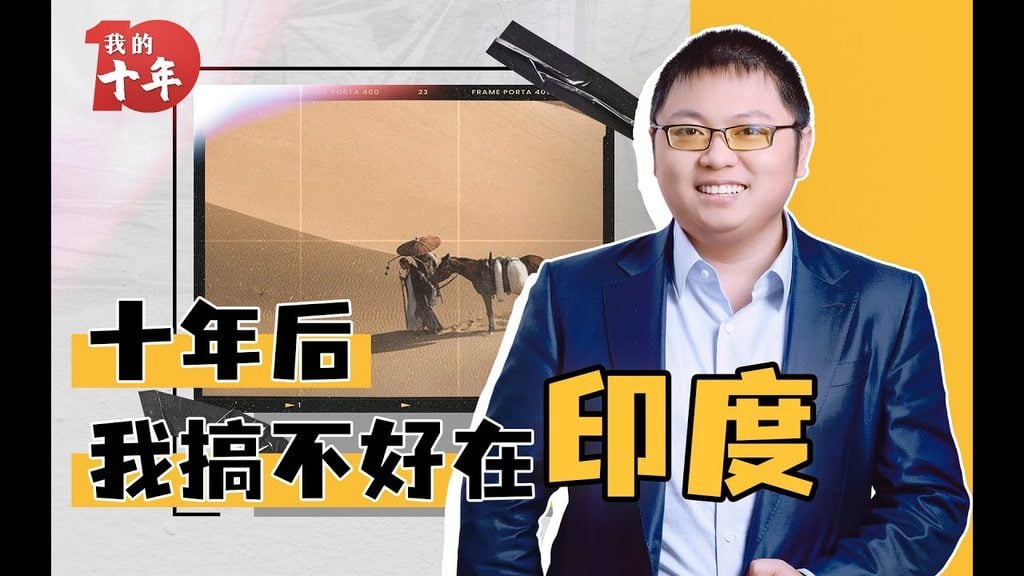
-Being a Polarizing Figure Attracts Much Praise but Also Fierce Attacks, Both Inside and Outside China. How Do You Manage the Pressure, Mental Exhaustion, and Personal Criticism to Maintain Your Publishing Pace?
«As for how to deal with online harassment and how victims can legally protect their rights, that’s a common challenge worldwide, and China is no exception. To a large extent, there truly is no effective and entirely legal way to protect yourself from online abuse and all kinds of threats to me or my family. Gathering evidence is extremely difficult and time-consuming; the courts are unfamiliar with and unaware of the harm and suffering to victims, laws are lax, and in many cases, you have to publicly disclose your personal information just to defend your basic rights. For most cases, it’s essentially challenging for me to legally protect my privacy. That said, I believe China has made progress in combating online harassment, and I believe the future is promising.
Personally, the good news is that while my content reaches a large audience, I’m not an intensive internet user. I spend only about a third of my day online creating content; the rest of the time I have other interests and responsibilities. That probably helps a lot—unlike some influencers whose entire lives are consumed by online harassment, I have a life outside the screen, which keeps things in perspective.
-In Conclusion, with Over 1,500 Videos and 5 Million Followers, What Would You Like People to Say About ‘Round Face’ in Your Country in 20 Years?
-That he never deceived us» «That he gave it his all.».
Ping Pong:
Mao: Idol.
Peter Thiel: Machinator.
Putin: Meh.
Elon Musk: He Will Die on Mars.
Jack Ma: Inflated Sense of His Own Importance.
Palestine: We Stand with Palestine.
Latin America: Too Close to the United States, Unfortunately.
Japan: Suicidal Policies of Takaichi.
Follow the channel: 波士顿圆脸 (Boston Round Face)
By Bruno Sommer
Founder El Ciudadano
La entrada Interview with ‘Boston Round Face’ (Zephyr): The Discerning Lens on How Western Media Choose to Inform or Defame China se publicó primero en El Ciudadano.
🔥 Ver noticia completa en ElCiudadano.cl 🔥