El Ciudadano
Original article: Inversión no es desarrollo: ¿Qué Coyhaique queremos construir?
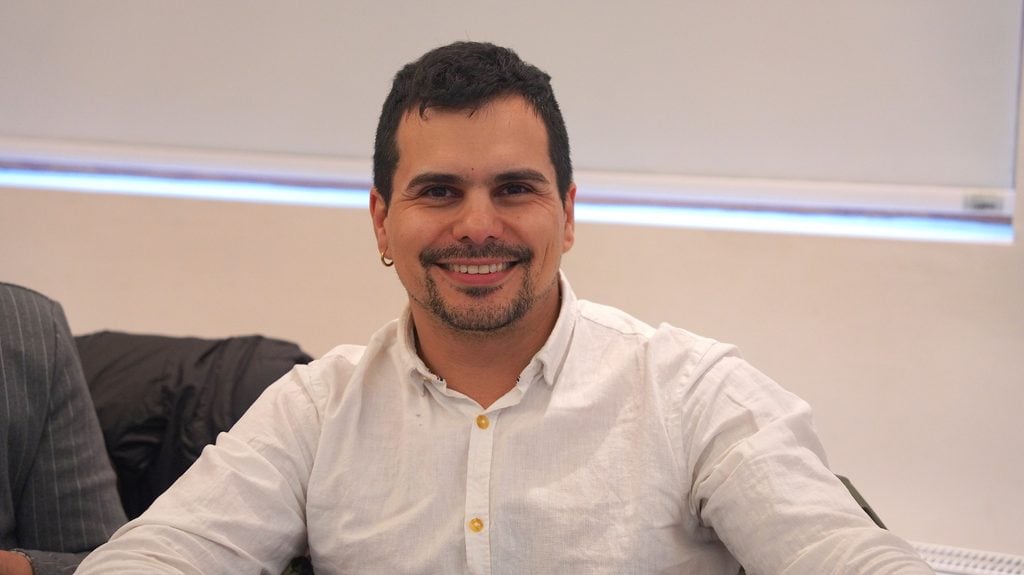
By Benjamín Infante, Regional Councilor of Aysén
Whenever a new investment is announced in Coyhaique, the same debate emerges: proponents celebrate it as progress, while skeptics question its value, suggesting that they oppose growth. This is a false dichotomy.
Coyhaique certainly needs investment. The critical question is what kind of investment we need, what problems it will address, and how much value it effectively brings to our territory. Because investment and development are not the same thing.
Data helps illustrate the challenge. Coyhaique had a population of 57,818 in 2017, which barely changed to 57,823 according to the 2024 Census: there has been virtually no population growth.
At the same time, the number of residents aged 65 and older increased from 5,148 to 7,192. We are witnessing a city that is not growing rapidly, but is aging and must think more carefully about its long-term priorities.
A new supermarket, a shopping mall, or a large retail store can provide benefits: increased supply, new services, price competition, and jobs. To deny this would be irresponsible. Yet, it is equally flawed to assume that any monetary investment automatically results in development.
A large commercial retail space mainly enhances our consumption capacity. In contrast, investments in energy, knowledge, health, productive infrastructure, or innovation can also increase our capacity to produce. This distinction matters.
Coyhaique is home to thousands of small businesses, shops, and family-run enterprises that make up its economic and social infrastructure. When a large chain enters a small market, it does so with economies of scale, financial capacity, centralized logistics, and bargaining power that a local SME can hardly replicate.
Thus, it is not enough to simply ask how many jobs an investment claims to create. We must also consider the quality of those jobs, how many existing jobs might be displaced, where supplies are sourced, how much value remains in the community, and where profits are reinvested.
It is not about demonizing large companies, but understanding that different investments have different territorial impacts. This leads to the real political discussion: Do we want an economy whose main strength lies in consuming what others produce, or a region capable of producing, innovating, and increasingly determining its own development?
If we aim to attract strategic investment, we must first look at our structural problems.
Energy is a clear example. An extreme region with high costs and isolated systems requires more local generation, storage, efficiency, and energy security. Such investments improve the competitiveness of households and businesses, positively impacting the entire economy.
The same applies to health. An aging population necessitates more diagnostics, specialists, preventive care, and assistance, gradually reducing our reliance on transport outside the region.
Education is also key: we must strengthen public education, technical training, our regional university, applied research, and the human capacities needed to diversify Aysén’s economy.
This highlights the difference between growth and development: the best investment is not always the one that inaugurates the largest building, but the one that leaves the most significant capacity built within the territory.
Coyhaique can welcome supermarkets, shopping centers, and new businesses. No one is suggesting closing off the community to private initiative. However, a development strategy cannot simply celebrate every investment announcement.
The market decides where to find profitability. The State, municipalities, and the Regional Government must also determine where social needs exist and which activities are strategic for the future.
We need a State that is not just a spectator of the market, but is capable of directing investments, strengthening local businesses, supporting cooperatives, generating knowledge, and building public infrastructure.
The real discussion is not whether to support or oppose private investment. It is about deciding what kind of city we want to build and what capacities we want to leave for future generations.
Because developing Coyhaique cannot merely mean having more places to spend money: it means building a territory capable of generating knowledge, producing energy, creating decent jobs, strengthening its local economy, and providing opportunities for its own people.
Benjamín Infante, Regional Councilor
La entrada Investment vs. Development: What Kind of Coyhaique Do We Want to Build? se publicó primero en El Ciudadano.
🔥 Ver noticia completa en ElCiudadano.cl 🔥