
El Ciudadano
Original article: Criminal agresión a la República Islámica de Irán: Su derecho al enriquecimiento de uranio y al uso pacífico de la energía nuclear
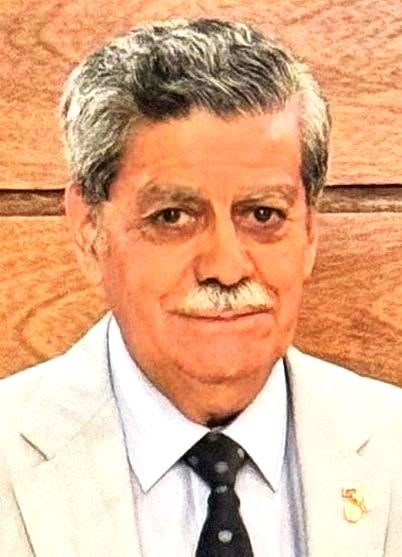
By Jorge Vera Castillo, International Analyst, former diplomat of Chile, and ex-consultant for the United Nations (ECLAC and UNCTAD)
The ongoing aggression against the Islamic Republic of Iran, its authorities, and its people by the Zionist State of Israel and the United States has been a widely recognized and reported phenomenon since early on Saturday, February 28, 2026. This aggression violates all standards of International Law, human dignity, and the fundamental moral principles of modern international relations, mockingly disregarding diplomacy.
In addition to a steadfast condemnation of this aggression and the use of force, it is essential to focus on a crucial aspect summarized in the right of the Islamic Republic of Iran mentioned in the title of this commentary.
However, those of us privileged with specialized knowledge must share relevant data, facts, and milestones associated with this topic to understand the irreversible condemnation of this aggression.
Chile-Iran bilateral relations date back to 1942. The diplomatic representation in Santiago was reestablished in 1991, with the current ambassador, Mohammad Ali Ziaei, recently celebrating the 47th anniversary of the Islamic Revolution’s triumph (February 11, 1979). Chile reopened its embassy in Tehran in 2015, currently led by Chargé d’Affaires ad interim, Sergio Toro Mendoza.
This multifaceted tension surrounding the Islamic Republic of Iran has been escalating in the 21st century, challenging the legitimate rights and sovereign national interests of its people.
This is not about having personal grievances or affections towards a political regime, its citizens, their cultural customs, or their sovereign defense policies and foreign policies.
It concerns the culture, dignity, history, identity, and independence of a millennia-old Persian nation, which has faced assassinations of its specialized scientists; attacks on its critical infrastructure; political and social destabilizations; everyday ideological and psychological warfare; infiltrations by foreign agents; commercial, economic, and financial pressures; and various sanctions outside the purview of the UN Security Council, all in violation of International Law.
This scenario starkly contrasts with the idea of legitimately holding diverse cultural, spiritual, political, and religious perspectives on any of the 193 Member States of the United Nations without the right to intervene in their internal matters or threaten their highest spiritual, legislative, military, and political authorities.
In summary, accepting different social and political systems under these conditions contradicts the Purposes and Principles of the UN Charter and its international organs and agencies.
Now, I turn to the main subject of this research, noting that the Islamic Republic of Iran had an estimated population of 92,420,000 by the end of 2025, with a nominal GDP per capita around USD 4,075 and an adjusted GDP per capita (PPP) projected to exceed USD 16,000.
Furthermore, geographical visualization is indispensable: Iran shares northern borders with Central Asia, specifically Turkmenistan (over 1,100 km); to the east with Afghanistan (close to 900 km); southeast with Pakistan; to the west with neighboring countries Iraq and Turkey; and to the south, it faces the Persian Gulf, with the strategically vital Strait of Hormuz, crucial for maritime transport.
Relevant geostrategic and geopolitical backgrounds of its international insertion must be well-studied: the Islamic Republic of Iran and the Russian Federation signed a Comprehensive Strategic Partnership Treaty for 20 years on January 17, 2025, while relations with the People’s Republic of China, its main oil importer, are based on a Comprehensive Strategic Partnership Agreement signed on March 27, 2021, valid for 25 years.
The Islamic Republic of Iran has been developing its current nuclear program since the 1990s and early 2000s, having initially begun in 1957 with US support (the «Atoms for Peace» program). It also boasts significant missile production capabilities, demonstrating continuous advancements not only in power and variety but increasingly in innovative technologies and contemporary drones.
Iran does not seek to acquire, build, or possess nuclear weapons. In this regard, it complies with the Treaty on the Non-Proliferation of Nuclear Weapons (NPT), signed on July 1, 1968, and in force since 1970. Initially agreed upon for 25 years, it was extended indefinitely in 1995. However, nuclear countries India, Pakistan, and Israel have not signed it. The Democratic People’s Republic of Korea acceded in 1985 and withdrew in 2003 (exercising its sovereign right under Article X.1) while possessing nuclear weapons. Chile adhered to the NPT on May 25, 1995.
The International Atomic Energy Agency (IAEA) has been supervising Iran’s compliance since 1979, headquartered in Vienna. Iran maintains official ties with the IAEA for collaboration purposes but has faced periods of tension due to some misconduct by the agency in declarations, inspections, or silence regarding attacks on Iranian nuclear facilities.
Chile was elected to the Board of Governors, consisting of 35 members, from 2025 to 2027 during the 69th General Conference on September 19, 2025.
Additionally, the crucial Joint Comprehensive Plan of Action concerning Iran’s nuclear program (JCPOA) was concluded in Vienna on July 14, 2015, through efforts by the EU (France, Germany, and then the United Kingdom), the Russian Federation, the People’s Republic of China, the United States, and the Islamic Republic of Iran.
The UN Security Council resolution S/RES/2231, dated July 20, 2015, reaffirmed the agreements made by Iran and the E3/EU+3 coalition. Key stages followed: Adoption Day, legislative reviews in the US and Iran on October 18, 2015; Implementation Day, verified by the IAEA regarding Iran’s commitments on January 16, 2016. However, the Transition Day, anticipated for 2023, did not materialize. Numerous changes in the international landscape occurred, including the US’s withdrawal from the JCPOA, decided by Donald J. Trump in his first presidency on May 8, 2018. Thus, the Termination Day, initially envisioned for 2025, has not occurred as we know, with the current date being March 2026.
The right to uranium enrichment and the peaceful use of nuclear energy belongs to all NPT member states that pursue it sovereignly and voluntarily, provided they do so in a declared, informed, rigorous, secure, and transparent manner.
The 33 CELAC member countries are also NPT parties. For this sensitive topic, good-faith debates and dialogues with mutual respect are essential, free from threats of force or coercion, lies, and sanctions. Diplomacy must prevail in honest and sincere negotiations, conducted in good faith, and not based on deceit.
Article IV of the NPT is explicit and obligatory: «1. Nothing in this Treaty shall be interpreted as affecting the inalienable right of all Parties to the Treaty to develop research, production, and use of nuclear energy for peaceful purposes without discrimination and in accordance with Articles I and II of this Treaty.»
And: «2. All Parties to the Treaty commit to facilitating the widest possible exchange of equipment, materials, and scientific and technological information for peaceful uses of nuclear energy and have the right to participate in such exchanges.»
Therefore, the Islamic Republic of Iran, as a party to the NPT, has the inalienable right to uranium enrichment and the peaceful use of nuclear energy.
The outrageous discriminatory stigmatization against the Iranian people disrespects International Law and the equality among states. The sought change of its political regime by a world power—an openly declared and recognized objective—is unacceptable, indefensible, and condemning.
It would reflect the audacity of a leadership whose only limit is its morality in wielding power, violating International Law and peace in an inevitably multipolar world.
Today, the legitimate defense of the Islamic Republic of Iran against this treacherous aggression—deceptively, falsely, and misleadingly justified as ‘preventive’, which would not withstand rigorous analysis according to International Law and the United Nations Charter—is completely justifiable and valid ethically, legally, politically, and militarily.
The martyrdom of Ayatollah Ali Khamenei and all those accompanied him in those final moments of physical departure and spiritual commitment, murdered by their brutal aggressor, will surely guide the enduring actions of the entire Iranian people, their Armed Forces, the Islamic Revolutionary Guard Corps (IRGC), and popular Islamic solidarity.
Jorge Vera Castillo
La entrada Iran’s Nuclear Enrichment Rights and Peaceful Energy Use: A Response to Aggression se publicó primero en El Ciudadano.
🔥 Ver noticia completa en ElCiudadano.cl 🔥