Publicidad
¿Quieres publicar aquí?
Sólo contáctanos
El Ciudadano
Original article: José Antonio Kast y el plan oculto de la derecha chilena
Beneath the pledges to combat crime and foster development, the economic plan of the Republican candidate involves a severe fiscal adjustment of approximately $21 billion. Economists warn that this figure represents about 8% of Chile’s GDP, which could lead to a significant slowdown across the entire production chain.
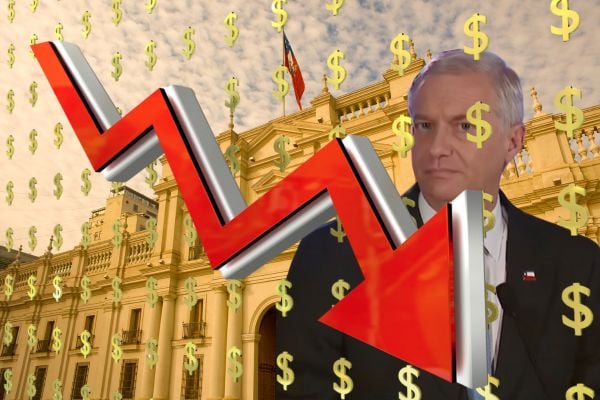
Media portrayals refer to it as «a program without complexes»; José Kast’s campaign is built on two main pillars: security and development. Kast’s plan states: «After over a decade of economic and social decline, we can call our proposal ‘the takeoff.’ It emerges with a sense of urgency and without qualms about its implementation.
Its fundamental pillars are three: deregulation, reduction of the tax burden, and rationalization and adjustment of public spending. All three to significant degrees and without any qualms whatsoever.»
In terms of security, Kast offers the old prescription of a heavy-handed approach amidst rising public alarm over crime—especially violent incidents, which have dominated morning television shows and news broadcasts over the last four years. The Republican candidate’s model parallels that of Nayib Bukele in El Salvador, known for his high-profile interventions in prisons and promoting his country as an exporter of prisons, all of which has received generous media coverage.
Kast has visited El Salvador twice to observe Bukele’s model prisons, where the latter proudly rents out his jails to Donald Trump to accommodate migrants detained in the United States. This has given rise to a new economy in El Salvador—penitentiary investment with clients beyond its borders.
One of Bukele’s proudest achievements is the construction of the largest prison in Latin America, the Center for Terrorist Confinement (Cecot), inaugurated on January 31, 2023, with a capacity of 40,000 inmates under a regime of isolation and no family visits. Initially aimed at gangs, in February 2025, Bukele offered slots in his pride of a prison to U.S. Secretary of State Marco Rubio, with the first importation of 300 individuals, mostly Venezuelan migrants, in exchange for $6 million.
Reports from people who managed to be released and spoke to European media outlets, such as BBC and Deutsche Welle, describe experiences of beatings and torture. Despite these accounts, Kast has had no qualms about meeting with El Salvador’s Minister of Justice, Gustavo Villatoro, from whom he seeks to replicate the mega-prison model. Their latest meeting took place in July 2024 at the Conservative Political Action Conference (CPAC) in the beach resort of Camboriú, Brazil.
What drives this emphasis on security policies across the continent?
Elvin Calcaño, a political scientist with a Master’s in Political Theory from the Complutense University of Madrid, discussed with El Ciudadano that Latin American states today face «an incapacity in coordinating social structures due to their ceding of governing capacities to the private sector. Consequently, they are compelled to deepen their coercive nature in managing the consequences of inequality, which primarily manifests in crime and insecurity issues in these countries. Simultaneously, they confront populations increasingly receptive to disciplinary and punitive right-wing discourses, which are being normalized media-wise today.»
Calcaño added that «this has weakened states in their capacity to govern and ensure social rights. Yet at the same time, it has reinforced the state’s role in the coercive sphere, creating conditions for the normalization of punitive discourse aimed at securitizing the consequences of inequality. On a cultural level, all this leads to a loss of historical political-ideological references, which existed in a labor world that no longer exists. This is compounded by the emergence of social networks and the communicative paradigm they impose.»
DISMANTLING OF THE PUBLIC SECTOR AND THE ONCOMING RECESSION SHOCK
A recurring rhetoric in Kast’s campaign is the dismantling of the state. The playbook mirrors that of Milei’s chainsaw in Argentina and the failed state spending reduction program implemented by Elon Musk during his time in the United States government.
In January 2025, Musk created the Government Efficiency Department (DOGE) with 20 employees in the White House and a task of cutting a promised two trillion dollar reduction of U.S. state spending, according to the Tesla magnate. Trump announced that the spending reduction program would conclude on July 4 of the following year, coinciding with the 250th anniversary of the signing of the American Declaration of Independence.
However, four months later, at the end of May 2025, Musk left the Trump administration, citing serious challenges in implementing the cuts. Although he claimed to have saved about $175 billion, in practice, the cuts did not exceed $30 billion, according to independent analysts.
In Argentina, promising similar fiscal cuts symbolized by a chainsaw, Javier Milei assumed the presidency, which, according to the 2024 figures from the National Institute of Statistics and Censuses (Indec), resulted in a 9.4% drop in industrial activity, with construction entering recession at -27.5%. By 2025, a projected $17.3 billion exited the financial system, and the United States announced a $20 billion bailout, all while President Donald Trump acknowledged, «The president of Argentina is doing the best he can, but people are dying.»
The narratives developed in Trump’s campaigns in the United States and Milei’s in Argentina are being reproduced by Chile’s far-right candidacy. Leveraging the discrediting of the public sector and the austerity policies enacted in recent years, the campaign from the Chilean Republicans presents an unprecedented gamble: to sell the promise of reducing public investment. The initially ridiculed promise of tax cuts, met with disapproval from rightist candidate Evelyn Matthei during the first forum on a television channel, turned into an outrageous game of escalating the stakes. Jorge Quiroz, Kast’s chief economic advisor, raised the proposed cut from $6 billion to $21 billion over the next four years, should they win the election.
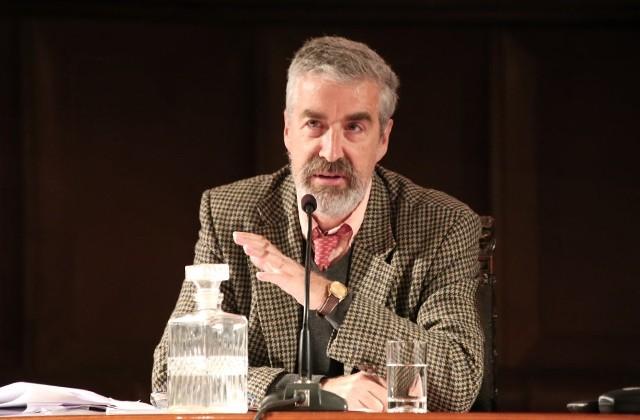
“The rationale behind this cut remains unclear. Chile has fairly orderly public finances; there is no runaway inflation like in Argentina.”
Andrés Solimano, Ph.D. in Economics from the Massachusetts Institute of Technology (MIT)
Andrés Solimano, a Ph.D. in Economics from MIT and founder of the International Center for Globalization and Development (CIGLOB), told El Ciudadano, «The rationale behind this cut remains unclear. Chile has fairly orderly public finances; there is no runaway inflation like in Argentina. Inflation in Chile is not rampant, hovering at an annual rate of 3-4%. Public debt, at 45% of GDP, is low compared to the Latin American region and developed countries.»
Solimano also expressed surprise at the promises of significant fiscal adjustments. «Cutting public spending by $21 billion would amount to 8% of Chile’s GDP. A cut of that magnitude hasn’t been seen in our country since the shock treatment of 1976 implemented by the dictatorship,» he noted.
The cuts are also being criticized by Guillermo Larraín, an economist and academic at the University of Chile, who warned in an interview with El Mostrador that if enacted, they would have serious negative effects on economic activity.
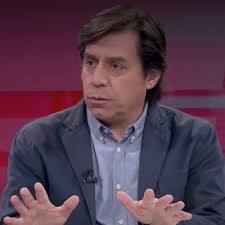
“The proposed fiscal cut package will decelerate the economy and may eventually lead to recession.”
Guillermo Larraín, economist and academic at the University of Chile
Larraín highlighted that the first promised reduction of $6 billion within the first 18 months equates to withdrawing approximately 2.6% of the national GDP, which would practically result in a «very severe negative demand shock,» with immediate effects on employment, consumption, and productive activity.
“The proposed fiscal cut package will decelerate the economy and may eventually lead to recession,” Larraín added, emphasizing the multiplier effect that fiscal expenditure has on the country’s economy and especially on private activity since stopping hiring and cutting purchases of goods and services affects the entire production chain.
The reduction in public investment paves the way for allowing private entities to commercialize public functions. «For the country to grow, we need to give more space to the private sector,» argues Quiroz.
When Quiroz was introduced as Kast’s economic brain in early October, in a clear anti-state strategy, he reduced the problems that have stalled the economy to three: «overwhelming regulations, tax burden, and adjustment and rationalization of public spending.»
Staying true to the rhetorical style of this new right, he stated that it was time to act «with all the courage» and «without complexes,» because «this is where we are headed, to deregulate, lower taxes, and adjust public spending and debt.»
At the end of September, during a forum held by the Chilean North American Chamber of Commerce, he lashed out against environmental regulations, stating, «Chile needs a management shock, not more paperwork. If we want to grow at 6%, we need to unblock the permits, believe again in private initiative, and restore confidence in the country’s ability to execute.»
In an interview with Ex-Ante in July 2025, Quiroz stated that Kast’s government would seek to deregulate «substantially and without complexes,» reduce taxes, and change labor legislation to stimulate employment. The hidden agenda within this strategy is to eliminate severance pay for years of service. Quiroz obscures the ultimate objective by claiming it aims to «favor labor formality by reducing the costs of being formal.»
Solimano calls for questions to be raised about why such a drastic reduction of the public system is pursued, suggesting it aims to «adapt the tax cut for businesses. Basically, this is a very pro-business program, reducing taxes on profits, which in practice implies cuts in expenditures on housing, health, and culture. This can be better explained through their intention to lower taxes for large companies and offset that with a reduction in public investment.»
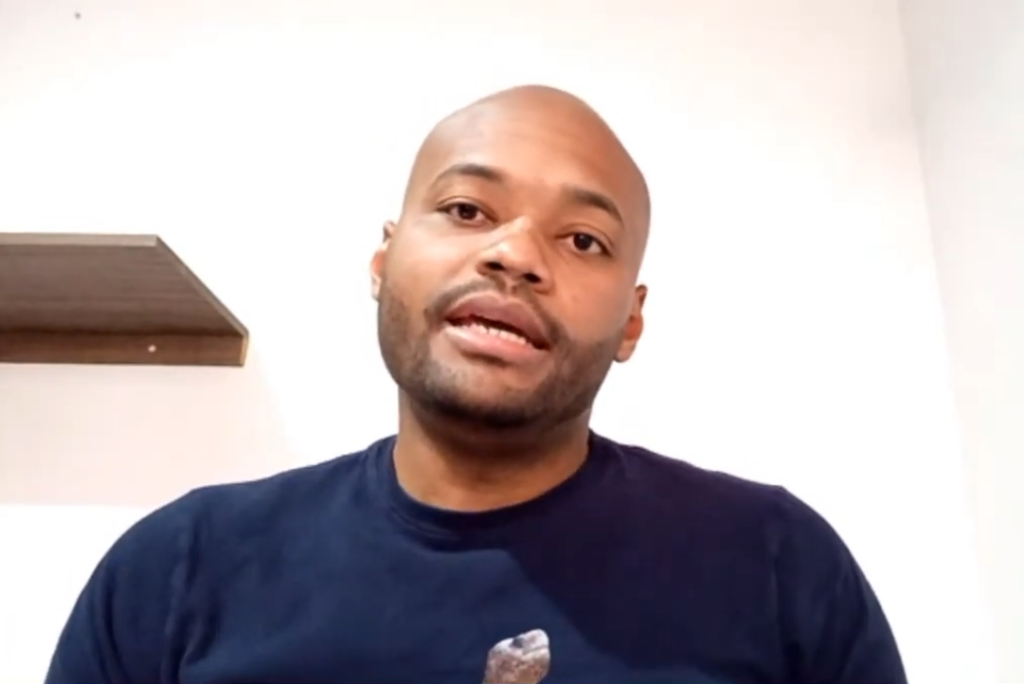
“Behind these proposals lies nothing but concentrated neoliberalism. These are not new ideas but proposals from authors of that doctrine, such as Mises, Hayek, and Friedman.”
Political Scientist Elvin Calcaño
Political scientist Elvin Calcaño remarked, «Behind these proposals lies nothing but concentrated neoliberalism. These are not new ideas but proposals from authors of that doctrine, such as Mises, Hayek, and Friedman. The ethical-political conception that underlies them is the property ownerism of the 19th century where the property rights of the wealthy property-owning class opposed democracy. For them, freedom is understood as the rich being free from state regulation of their actions.»
The radical nature of Kast’s proposals could pose significant problems for the Chilean economy, economists warn. «The proposal gives an economic radicalism character to Kast’s candidacy, which could have grave implications for the stability of the Chilean economy. Consider that the state plays a redistributive role and corrects inequalities. Severing that role could lead to social imbalances,» emphasizes Solimano.
He also identifies three areas that could be sources of conflict. First, he notes that «the reduction of taxes on corporate profits is a very regressive social measure.» Secondly, «it would meet with significant resistance from officials and state unions, opening the door to social conflict,» which «could result in prolonged recession or slower growth due to a lack of aggregate demand stimulation.»
Solimano concludes that any cuts would need to be compensated with increased private investment; however, given the rent-seeking nature of Chile’s large businesses, this is very unlikely. «There’s a need for common sense and prudence. Even Matthei and Jara agree on this point.»
On the other hand, Guillermo Larraín is skeptical of the private sector’s ability to fill the void left by the reduction of the public apparatus. According to him, «that investment boom would need to be practically 5% of GDP,» which is rather improbable.
By Mauricio Becerra Rebolledo
La entrada José Antonio Kast and the Hidden Agenda of the Chilean Right se publicó primero en El Ciudadano.
Ver noticias completa