El Ciudadano
Original article: Marcelo Acevedo, vocero Festival MUDA: «Cuando la memoria es atacada, la cultura se vuelve una línea de defensa democrática»
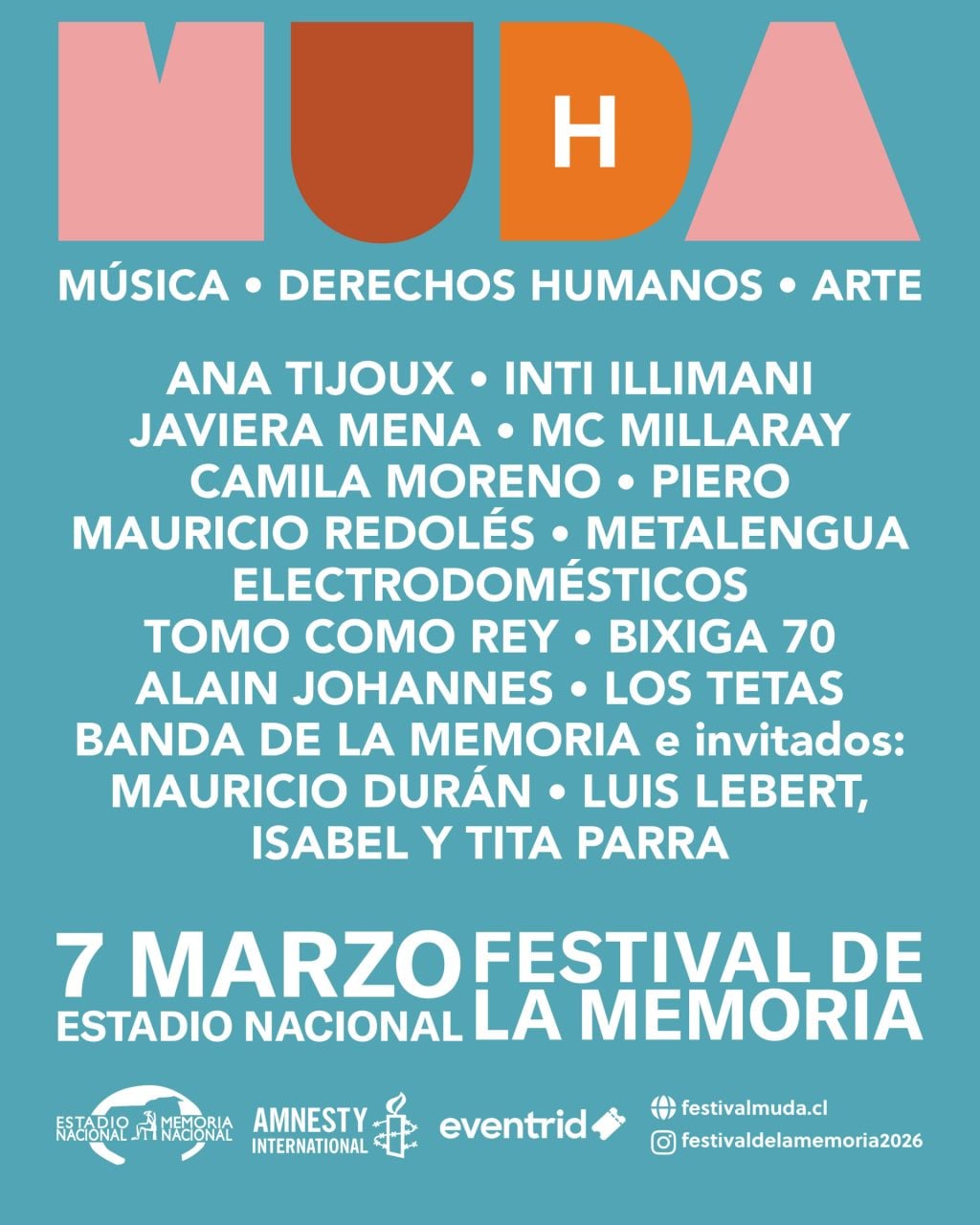
MUDA, the Memory Festival, is counting down to an unprecedented event: a unique and historic opportunity to experience an exceptional constellation of artists on one stage, aiming to highlight the importance of memory and human rights. A portion of the proceeds will be allocated to support various Sites of Memory.
Marcelo Acevedo is the president of the National Stadium National Memory Corporation, responsible for organizing this event sponsored by Amnesty International. In an interview with El Ciudadano, he explains why MUDA will be so significant for the Chilean cultural landscape.
-MUDA isn’t just any festival. Where does it originate and what is its goal?
MUDA emerges from the National Stadium as a Site of Memory and from the conviction to reaffirm the value of democracy and human dignity. In recent months, we have witnessed how memory has come into question again, even facing cuts and debates about Sites of Memory in the discussion over the 2026 Budget.
Therefore, we felt it was the moment to respond with culture, connection, and community—not with trenches. It seeks to be both a massive and intimate space, meaning to fill the National Stadium and inhabit it differently, transforming a place that was a symbol of horror into a vibrant space for art, reflection, and future. This is done with a universal message that human rights should be the common ground of society.
-Why insist on human rights today, when some claim «that issue has passed»?
Today, we see very worrying signs of democratic deterioration. There is fatigue, distrust, and an openness to authoritarian rhetoric. In Chile, more than two-thirds of people express dissatisfaction with the functioning of democracy. In Latin America, 41% would be willing to accept authoritarian alternatives. These figures are not abstract; they represent fertile ground for denialism.
Discussing human rights today is not about revisiting the past but addressing the present and certainly the future. It is about defending freedom of expression, dignity, and the right to live without fear. That’s why we say that «Never Again» is an ongoing task. Therefore, we hold MUDA, for when memory is under attack, culture becomes a line of defense for democracy.
-The National Stadium is a potent symbol. What does it mean to reclaim it in this way?
The National Stadium encapsulates one of the most painful memories of the country, yet it also possesses immense potential. Filling the stadium is a cultural and political statement. It shows that terror did not win, that the space still belongs to those of us who believe in democracy, allowing the community to gather there to celebrate and rejoice in our unity, without forgetting the past. MUDA does not diminish the historical weight of the Stadium; rather, it activates it, transforming it into a space where memory dialogues with the present and projects a future through music.
-The festival takes place four days before the change of government. What significance does that hold?
It carries powerful symbolic value because it reminds us that democracy is a commitment that must be renewed every day, not just on a date or through a government. It is no secret that the political sector taking power on March 11 has a certain disdain for memory and the defense of human rights in our country, additionally leading some openly denialistic movements that aim to divide us.
Thus, the significance of this festival occurring four days beforehand lies in its role as a massive and universal reminder that those of us who believe in democracy also stand for a minimum standard that should not be relativized. Its timing underscores something essential for us: beyond political cycles, human rights are non-negotiable, and memory must not be curtailed.
-Part of the proceeds will go to Sites of Memory. What do you aim to achieve with this?
Part of the revenue will directly fund the work of the National Stadium National Memory Corporation, while another portion will go toward a solidarity fund that, through a transparent and universal committee, will preferentially support sites currently lacking funding.
This does not replace the obligations of the state; it serves as parallel support, a concrete political sign of assistance. MUDA seeks to convey the message that through joy, culture, and reflection, we can actively promote the work of memory.
-If you had to condense the festival’s message into a single idea, what would it be?
Because we have memory, we have a future. Democracy is not sustained solely by laws, but also by culture, respect, and community. The Memory Festival is essentially a simple invitation: to come, to feel, to connect. MUDA wants people to leave the National Stadium with the shared certainty that without human rights, there is no democracy, and without democracy, community is impossible.
I am convinced that participating in MUDA is taking a stand. And today, even choosing not to attend is a political decision.
El Ciudadano
La entrada Marcelo Acevedo on MUDA Festival: «When Memory is Under Attack, Culture Becomes a Line of Democratic Defense» se publicó primero en El Ciudadano.
🔥 Ver noticia completa en ElCiudadano.cl 🔥