El Ciudadano
Original article: Krassnoff, a quien Kast ha defendido públicamente, vuelve a ser condenado y amplía su historial de más de mil años por violaciones a los DD.HH.
Miguel Krassnoff Receives New Sentence Expanding His Human Rights Crimes Record to Over a Thousand Years
The former Army brigadier and ex-agent of the National Intelligence Directorate (DINA), Miguel Krassnoff Martchenko, was once again convicted for crimes committed during the civil-military dictatorship led by Augusto Pinochet. This time, the Seventh Chamber of the Court of Appeals in Santiago issued a 12-year prison sentence against him for aggravated kidnapping and the torture of two members of the Central Committee of the Revolutionary Left Movement (MIR).
With this verdict, the historical face of repression—who has been publicly defended by José Antonio Kast—now has a record that spans over 80 cases related to crimes against humanity, with a total sentence exceeding one thousand years in prison.
The chamber, consisting of judges Hérnan Alejandro Crisosto, Mauricio Rettig (s), and attorney Paola Herrera, convicted both Krassnoff and Pedro Espinoza Bravo—who served as the subdirector of intelligence for the DINA and was in charge of the detention center “Villa Grimaldi”—to 12 years of medium prison for their roles in the aggravated kidnapping of MIR members Cristian Mallol and Héctor González, crimes committed between December 1974 and September 1975.
Meanwhile, José Aravena Ruiz, a second sergeant in the Carabineros, received a seven-year sentence solely for his role in the aggravated kidnapping of Mallol.
This ruling sees the capital appeals court uphold the verdict issued in September 2025 by the extraordinary visiting minister of the Santiago Court of Appeals, Paola Plaza.
While the families of the victims continue to push for cases that have lingered for decades, attorney Carolina Vega from Caucoto Lawyers praised the sentence, stating that “after decades of impunity, we finally confirm the conviction against those responsible for brutal torture.”
“The families have carried the pain and aftermath of these crimes for years,” she indicated, as cited in a press release.
According to the legal expert, both the State and the Judiciary have a debt to them that has been paid off little by little, suggesting that while the appellate court’s ruling “does not erase the suffering, it marks a turning point in addressing a historical debt that remains unfulfilled.”
Kidnapped and Tortured During the Dictatorship
Both MIR militants were detained and brutally tortured while imprisoned in various clandestine DINA detention centers.
The investigation led by judge Paola Plaza established that Cristian Mallol Comandari, a MIR member who was 26 at the time, was arrested on December 7, 1974, at his residence in Ñuñoa by four agents. During the operation, he was shot: a fragment struck his head and he was shot in the leg.
He was taken in critical condition to the DINA’s Detention Center, known as Villa Grimaldi, where he was greeted with kicks and punches and was interrogated as soon as he arrived, despite being in agonizing and unconscious condition.
Later, he was taken to a clinic but did not receive any treatment and returned to the detention center until April 1975, suffering electric shocks while chained up. He went through Cuatro Álamos, Tres Álamos, and Puchuncaví before regaining his freedom and leaving for France in November 1976.
In the case of Héctor Hernán González Osorio, records indicate he was detained in central Santiago on December 6, 1974, by an armed DINA group, blindfolded and taken to Villa Grimaldi. There, he was beaten and interrogated, receiving electric shocks on various parts of his body on what was known as the “grill,” a metal cot designed for this purpose.
He was also subjected to constant blows to his ears, face, feet, and other areas of his body and had his head submerged in water.
He spent six months at Villa Grimaldi before being moved to Cuatro Álamos, and in September 1975, he was freed under the condition that he leave Chile, which he did at the end of that year heading to Spain.
Operation “Press Conference”
It is worth noting that on February 20, 1975, four MIR leaders, including Mallol and González along with Humberto Menanteau Aceituno and José Hernán Carrasco Vásquez, who were then detained at Villa Grimaldi, were forced by the DINA to participate in a press conference where they were compelled to present a false list of leaders and members of the MIR who were allegedly dead, detained, or exiled. The dictatorship’s goal was to suggest a supposed defeat of the Movement and justify a call to “lay down arms and surrender.”
During the event, both Miguel Krassnoff and the then DINA agent, Marcelo Morén Brito, were seated and mixed among the group of journalists attending the press conference.
Subsequent investigation confirmed it was a setup, as the four MIR members were detained and had been coerced into participating in the media event through torture.
The “Press Conference Operation” was orchestrated by Pedro Espinoza—who also faces multiple convictions for his role in the disappearances and executions of opponents to the dictatorship—and aimed to establish a larger goal of preparing the way for Operation Colombo, through which 119 Chileans were made to appear as dead abroad while they were held captive in Chile to absolve the DINA of responsibility.
At the time, the Rettig Report stated that “the DINA succeeded in disseminating false information about the detainees through the victims themselves, thereby making them forced participants in the repressive machinery.”
Although the four MIR leaders coerced into attending the press conference were released in September 1975, Cristian Mallol and Héctor González fled the country; Humberto Menateau and Hernán Carrasco were murdered that December.
Their mutilated bodies were found in the Chada area of Paine.
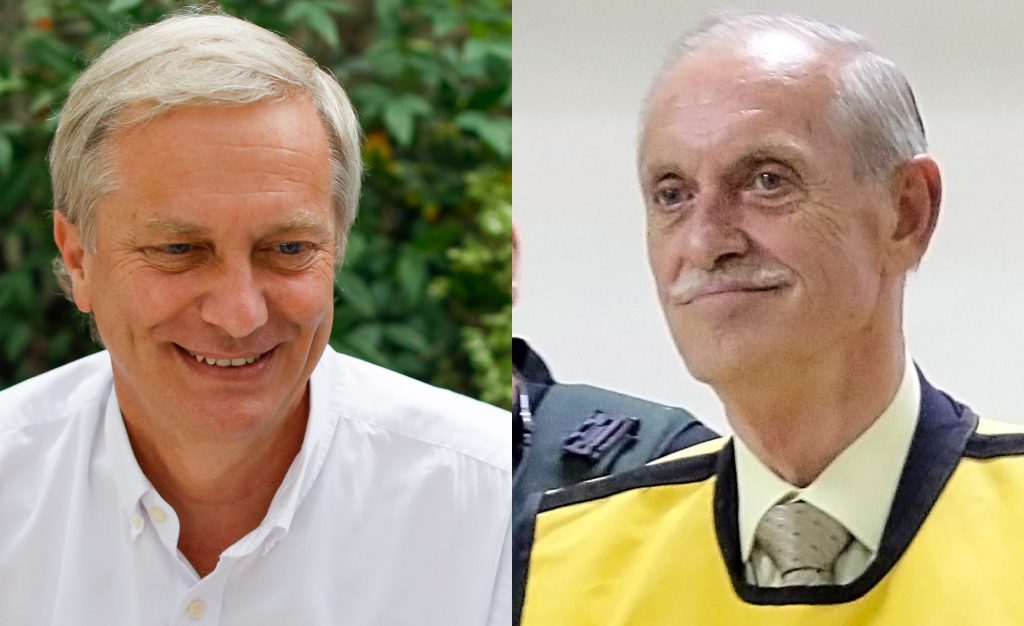
Public Defense of Krassnoff by Kast
Krassnoff, known as “The Russian,” is serving his over 1,000 years of prison time at the former Punta Peuco—now Til TIl prison—and despite multiple sentences against him, he has never acknowledged his involvement in crimes committed under the DINA during Pinochet’s regime.
In a show of support—or rationalization—by sectors of the right towards the dictatorship’s repressors, in 2017, during an interview with T13 Radio, José Antonio Kast described the crimes for which Krassnoff has been convicted as “things that are said about him.”
“I have been to Punta Peuco twice, and on one of those visits, I met him. He gave me his book and presented his version of events. I know Miguel Krassnoff, and having seen him, I do not believe all the things that are said about him,” he stated in an attempt to validate the former military’s account.
“I do not question that crimes were committed, human rights violations; I do not dispute that. What I question are the prosecutions,” he added.
The statements from the current President of Chile resonate strongly in the context of this new conviction against Krassnoff and the call for justice from the victims of the dictatorship and their families.
La entrada Miguel Krassnoff Receives New Sentence Expanding His Human Rights Crimes Record to Over a Thousand Years se publicó primero en El Ciudadano.
🔥 Ver noticia completa en ElCiudadano.cl 🔥