El Ciudadano
Original article: “No hay recursos asegurados para la reconstrucción este 2026”: alcalde de Coquimbo pregunta qué negociaron Walker y Gahona para aprobar la megarreforma
No Guaranteed Resources for Reconstruction in 2026: Coquimbo Mayor Questions Walker and Gahona’s Deal to Pass Mega-Reform
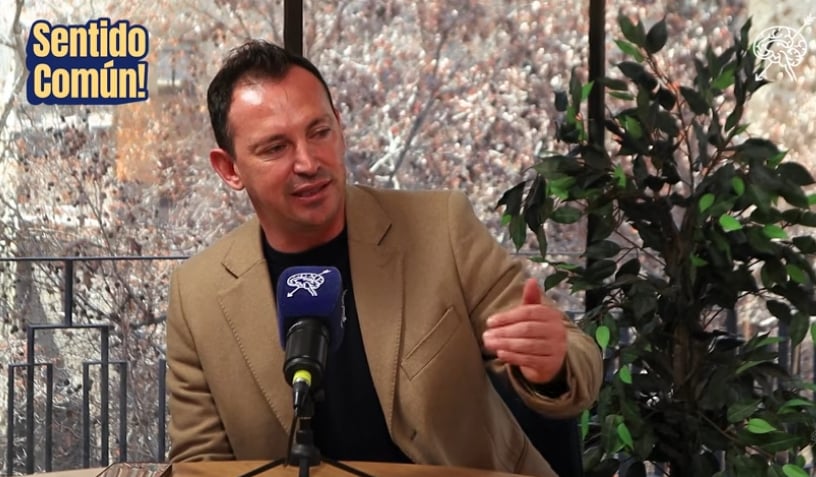
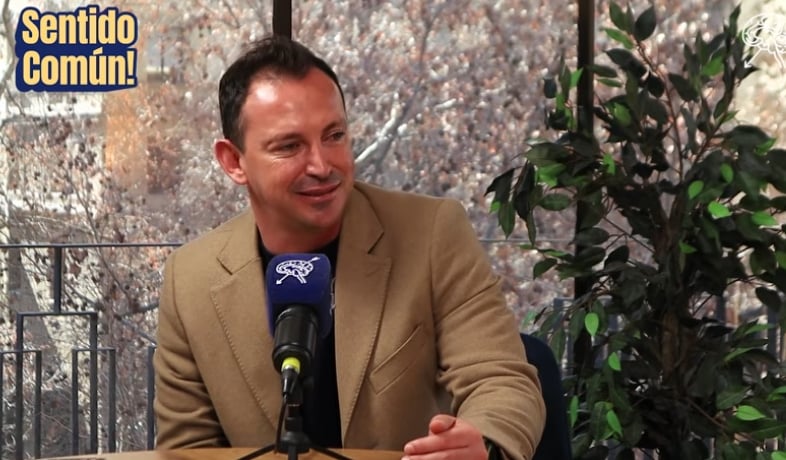
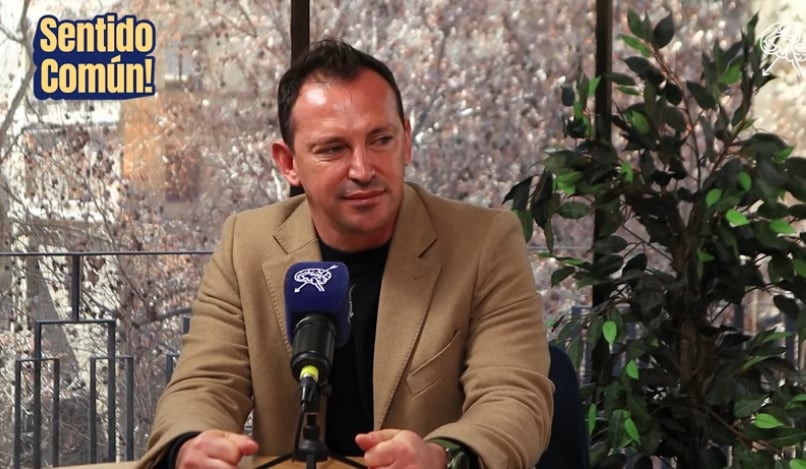
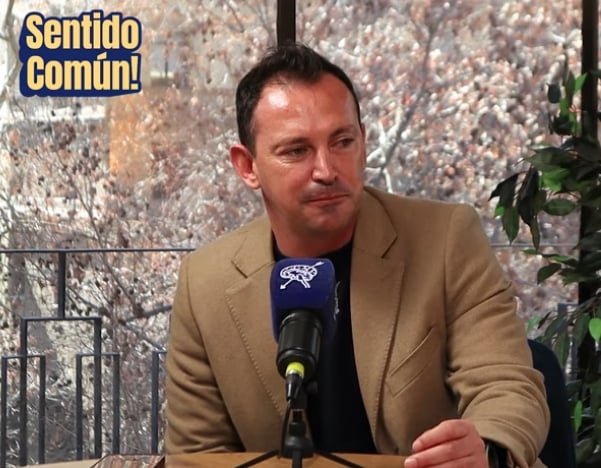
In a recent interview on the program Sentido Común!, hosted by El Ciudadano’s director, Javier Pineda Olcay, the mayor of Coquimbo, Alí Manouchehri, provided a detailed analysis of the current political and financial situation facing his municipality and the region after the climatic catastrophe.
The mayor not only addressed the controversial exemption from property taxes and the distribution of funds from the Municipal Common Fund but also criticized the management of José Antonio Kast’s government and the roles played by Senators Matías Walker (Democrats) and Sergio Gahona (UDI) in the approval and dispatch of the economic-tax mega-reform pushed by the far-right president after signing a protocol with Finance Minister Jorge Quiroz hours before the Senate voted on the final article of the project.
In this regard, the mayor stated that both senators must answer «what they negotiated and what protocol they used to condition their support» for a reform that has been rejected by many mayors across Chile.
The main focus of the interview revolved around unfulfilled promises and the lack of assurance for reconstruction. Manouchehri emphasized that there are no guaranteed resources for 2026 and that the process is contingent on next year’s budget discussion, implying action won’t occur until 2027.
This issue, coupled with the suspension of the traditional «Fiesta de la Pampilla», highlights the severe crisis the region is undergoing and the urgent need for concrete responses from La Moneda, which, according to the mayor, have not yet materialized.
Below is the interview with Mayor Alí Manouchehri:
Javier Pineda (JP): I would like to ask you, we also discussed this with other mayors the other day, but how do you in Coquimbo view the discussion about the exemption from property taxes for the elderly, considering the deficit that the revenue will generate and the government’s criterion of financing wealthier municipalities with taxes from everyone? Tell us: what is your perspective, what conversations did you participate in, and how do you view the outcome of this week’s vote in Congress?
Mayor Alí Manouchehri (AM): I think that in Chile, the discussion of how we can create a more equitable country, with better distribution, wherein resources are not only centralized in a few municipalities, has been part of what the government has proposed today. The government told us, «look, we want no Chilean to pay property taxes,» and when they refer to no Chilean, they include those earning 20, 30, 40, or even 100 million pesos.
What we mayors propose is: okay, let those who cannot pay not pay, we agree, elderly people and individuals with incomes below one and a half million to three million pesos, but the rest must contribute to the development of the municipalities with fewer resources. That response was completely negative, and we confronted a government that did not listen to us, that was not interested in our opinion and that carried out a more ideological program that is linked to the fact that today, through taxes, this ends up funding three or four of the wealthiest municipalities in this country.
And we return to the initial discussion; we all like visiting Las Condes; it seems like another country, but we would also appreciate visiting a municipality that may have beautiful things to show but lacks the resources to maintain it.
«No Guaranteed Resources for 2026»: Rejecting the Negotiation by Walker and Gahona
JP: And how do you view one of the two votes that were in question, due to this project supposedly being for the reconstruction when we already know what happened in the regions of Coquimbo and Atacama, specifically, Senator Matías Walker and Senator Gahona said they would make efforts and even conditioned their vote in this last vote on the reform to negotiate good conditions for the financing of reconstruction in the Coquimbo region, which is the area they represent. What was the final result achieved by these senators? Did they leave with some good news or was it rather a smokescreen to initially justify the vote?
AM: I think we are undoubtedly talking about a justification to approve something that they had contemplated approving, because if one looks at the practical terms of what this negotiation with the finance minister for reconstruction could mean, there is nothing—there are no guaranteed resources for 2026—and we return to the starting point where the minister and the president tell us, in the municipality of Coquimbo and in the region of Coquimbo, that reconstruction will depend on the budgetary discussions of 2026 with execution in 2027.
So I believe they have to answer at some point about what they negotiated and what protocol they used to condition their support for a reform that many mayors in this country also do not approve.
«We Lost Four Days»: Critique of the Government’s Response to the Emergency
JP: Quantifying the damage caused by this climatic event, what figures do you have for the municipality of Coquimbo and your knowledge of the entire region? What is the impact in terms of tragic lives lost, despite Minister Iván Poduje initially denying this, as well as the destruction of homes and commercial areas? How is Coquimbo recovering after this catastrophe?
AM: We divided the emergency into three stages. The first was all about prevention against what could be faced, and science gave us the chance to anticipate it. I believe that was very poor, a true disaster, and the first days of the emergency, when the winds, high tides, and rainfall came, activating the ravines, we practically lost four days where the municipalities in the region were completely alone, facing the emergency of our neighbors and friends. This was not just mine; many resonate with this sentiment, as the mayor of La Serena (Daniela Norambuena), who’s with Renovación Nacional, mentioned, as did the regional governor of Coquimbo, Cristóbal Juliá, from Evópoli, and mayors of Salamanca (Carlos Lillo) and Ovalle (Héctor Vega), who are in the alliance as well. There was a delay and a lack of leadership defined which greatly affected the residents in the first four days of an emergency that resulted in loss of life and affected more than 20,000 Coquimban households like mine, as well as damaging homes, isolating people, and during almost 10 days lacking basic services like water and electricity.
The truth is that it was a catastrophe that left us with significant lessons. Where are we now? Reactivation and reconstruction. I believe both processes must happen in parallel, as we need to bring the Coquimbo region back on its feet, reconnect, rebuild bridges, and figure out how to reactivate the impact this disaster had on houses, businesses, restaurants, fishing coves, and productive sectors that are today affected, but we have to get them back on their feet.
Suspension of La Pampilla and the Hope for a Reactivation Celebration
JP: One of the announcements that gained national significance was the suspension of the large «Fiesta de La Pampilla», to redirect those funds to the emergency. Is it possible to recover the Pampilla celebration, and what conditions need to be met for everyone to celebrate as they have for decades in Coquimbo?
AM: My first point is that I defend the decision, as some have questioned it and said it was more political than grounded in reality. My strongest defense is to ask if anyone can refute what the President of the Republic said.
The President stated that reconstruction will occur in 2027 and that the budget needed for that reconstruction will only be discussed in Parliament then. What we pointed out is that if there are no fresh resources for the reconstruction of Coquimbo, the municipality cannot hold a festival and must allocate those resources for immediate reconstruction actions.
Today, the possibilities are there—given the fact that it has been suspended—because many people suggested, «let’s hold the festival, I’m willing to participate, even television channels that aimed to run the event say, well, let’s organize something charitable! And as a municipality, we are in touch with culinary guilds, hospitality businesses, and fishing cove representatives, and everyone is on board to examine a possibility. We are analyzing it as a municipality considering the limited time we have left, but it would be wonderful to hold a Pampilla, not necessarily a solidarity one, but certainly an economic reactivation one, which is so needed in Coquimbo.
JP: So there’s still hope.
AM: There is hope for us to dance at La Pampilla.
JP: Another discussion where the mayors have played a major role is security policy, as Coquimbo is a large and complex municipality. Thus, I would like to ask how you evaluate the measures from the government that were supposed to solve this issue. Have you seen any changes in Coquimbo or the region regarding the paradigm the government claimed to bring? Additionally, how are you addressing local security policies, and where do you think the focus should be, especially considering the announcements made yesterday by President Kast concerning security?
AM: The truth is that when one hears so many promises regarding such a critical matter for the neighbors, as the top priority for residents has been security, which has persisted over the years, it was a concern under President Boric’s government, and it remains essential now.
Yet, after so many security assurances yielding the same results—which is consistent since nothing fundamentally has changed as the ministers themselves have stated—there’s no significant plan to vary from the prior government, which understandably causes us concern.
I was the president of the Security Commission of Chile’s mayors, and I had the opportunity to see and implement new technologies, linking up with an area that local governments often overlook, which is beyond daily operations. However, what we’ve observed are identical interventions yielding the same outcomes. This was highlighted by the statements of the Mayor of Puente Alto (Matías Toledo), who confronted the presidential delegate (Germán) Codina, but it’s a justified stance.
If we’re not here for mere show, or for any performing activities with respect to communication, we know our municipal risk areas well, we know where the hot spots are. If the government aims to conduct an operation, they should carry it out where the drug traffickers are, in places where residents fear leaving their homes. That is what we need. Afterward, there’s also the discourse around local municipality authorizations, how we can equip our inspectors, give them more supplies, introduce taser weapons, increase powers and abilities; that is under discussion in Chile. But we’re clearly at a point where we are engaging with a government that appears uninterested in granting more resources while questioning the ones we already fought hard to secure.
JP: This leads to further discussions around decentralization, particularly regarding financial aspects. How do you believe we should navigate this decentralization debate? What powers do you wish municipalities had today that they currently lack? What hopes do you have, however few, in the discourse from José Kast’s central government?
AM: We must revisit the Revenue Law, striving for the resources’ distribution to become more equitable. I reiterate: it’s very nice to visit Santiago, being in Las Condes, being in Vitacura, but to maintain a municipality like Coquimbo, the resources are grossly insufficient given the size we manage, spanning 1,400 square kilometers.
It’s disproportionate to compare the budget of a municipality like Coquimbo’s with the 90 square kilometers of Las Condes. Often, in those municipalities, being mayor is easier because they have resources to innovate or implement various programs. In more remote municipalities, we must revisit the discussion.
I preside over the association of municipalities with port cities, where we are putting forward a historic discussion regarding port royalties. This conversation must be reignited; it cannot be that in a port like Coquimbo, generating significant national income through port activity, we only receive 50 or 60 million for a permit while we bear all the issues associated with having ports without sharing in the income the port companies earn. This is earth shattering and must be discussed; financing municipalities and oversight should also be intertwined.
No one will criticize us when we exert oversight over municipalities. In Chile, we ranked among the most corrupt municipalities, saw mayors sentenced for corruption, and now even face mayors under investigation for corruption. Today, we are one of the nine most transparent municipalities in Chile, and it has meant that people have begun to approach their municipality again. This is a national example we support. Then, for those that do not comply, we need rapid investigations and immediate consequences, not placing individuals under house arrest as demonstrated by Joaquín Lavín Jr., but rather ensuring offenders experience incarceration; that sends a frightening message to deter corruption in our country.
Role of the Chilean Association of Municipalities
JP: In light of this discussion, you mention several topics like the Municipal Revenue Law and the interests of port cities. These would ideally bring a unified position from municipalities rather than an ideological one. However, we’ve seen a fracture in the Chilean Association of Municipalities due to this role. The other day, the mayor of Zapallar, Gustavo Alessandri, promised unity to avoid division by any government but then ended up aligning ideologically with the government. How do you view the role of the Chilean Association of Municipalities and what do you hope for regarding this association’s future?
AM: I believe Chile is very ideologically marked within politics, but perhaps not among citizens. The citizens have observed how much has shifted over the last decades from Michelle Bachelet to Piñera, back to Bachelet, then to Piñera again, then to Boric’s government, and today Kast’s ultraright regime. However, the Association has historically provided a venue where we unite, transcending political colors, rallying around municipal needs. Today, this unity is fracturing. Why? Because discussions regarding funds from the Municipal Common Fund prioritize wealthier municipalities at the expense of those with less funding, which for me is utterly absurd.
In essence, let the mayors perhaps from the wealthier, more affluent municipalities endorse a letter but not mayors representing communities complaining about insufficient revenue, fighting for greater budgets, supporting the distribution of 15 or 40 million to three of the richest municipalities while neglecting those in need.
I’m uncertain how they will respond to their communities when they demand investments, stating ‘No, we do not have resources,’ after having the opportunity to advocate for proposals that allowed for a better and fairer distribution of resources.
JP: Were those mayors straightforward with you during the internal discussions?
AM: No, I believe Chile has transformed into a nation where many speak their mind freely, but questions soon dissolve, as we’ve seen in public statements and attitudes. So, I think each individual, when laying their head down to rest at night, should possess the assurance of their actions and also the capability to voice their concerns when necessary. It will ultimately remain on them; however, a notable scar shall mark the association: many mayors who face financial challenges today, who have fought for larger budgets, chose to endorse an ideologically charged letter that allowed 40 million to bypass the poorest 50 or 60 municipalities to support the wealthier ones.
JP: Final thoughts, Mayor: what message would you convey to President José Kast from Coquimbo, especially in light of the hardships endured in previous weeks?
AM: Coquimbo has contributed greatly to this country through mining, fishing, and agriculture, and today this region, severely impacted, requires immediate actions—not for 2027. As we approach September and the summer season where many Chileans choose to visit our region for leisure, we need a boost in resources to help Coquimbo rise again and reconnect the region to better tackle the challenges surrounding economic reactivation. Furthermore, we expect that his commitment translates into real actions regarding reconstruction.
We hope to see what steps will be taken towards reconstruction and that it will be a genuine reconstruction for all the residents of the region.
Below, you can watch the interview with Mayor Alí Manouchehri on Sentido Común!;
La entrada «No Guaranteed Resources for Reconstruction in 2026»: Coquimbo Mayor Questions Walker and Gahona’s Deal to Pass Mega-Reform se publicó primero en El Ciudadano.
🔥 Ver noticia completa en ElCiudadano.cl 🔥