El Ciudadano
Original article: Crisis en Prodemu: trabajadores denuncian impacto por déficit
A financial deficit at the Foundation for the Promotion and Development of Women (Prodemu) – which offers workshops, support, and training processes aimed at women – has raised alarm bells within the Ministry of Women.
According to information from La Tercera, sources close to the Ministry of Women indicated that shortly after Judith Marín took office as minister, she received a management delivery report from the organization. The document outlined the activities conducted, services provided, the number of employees, and a financial status report that caught Marín’s attention.
The report revealed a debt that the foundation has been carrying since 2017, resulting from cost overruns and rejected financial reports that total $477,591,566. This figure does not include other outstanding obligations.
Among the identified debts is an unpaid bill for telecommunications services. Furthermore, it was noted that an application for a $500 million loan is underway to address the accumulated debt.
The document also mentioned the signing of collective contracts with Prodemu’s Unions 1 and 2, both dated December 27, 2024, outside of the budgetary framework. These agreements, linked to contracts with SernamEG and Indap—agencies under the ministry—were seen as unprofitable, leading to anticipations that both institutions would reject their financial accountability for the 2025 period. Initial estimates suggest that the amount related to this potential rejection could reach $422,876,068.
In this context, the report published by La Tercera states: «the accumulated debt from 2017 to 2024, along with the projected component for the 2025 period based on the financial analysis provided, corresponds to a total of $1,501,688,660. This situation places the institution in a state of financial and operational impossibility, primarily due to the lack of substantial and stable revenue streams to maintain liquidity and address this deficit. The structure of its operating income, program execution, and other operational expenses relies on recurring and capital transfers with tailored returns.»
Officials from the previous administration indicated that the issue was discussed during the transition, and former minister Antonia Orellana claimed to have left a detailed account of the actions taken. They maintained that since 2025, Prodemu has faced a challenging sustainability scenario—both financially and operationally—marked by changes in the criteria for public fund management.
It is noteworthy that this situation stems from a new interpretation by the Comptroller’s Office regarding which personnel expenses can be financed with transfers, thereby excluding collective agreement benefits that were previously covered. Additionally, the increase in rejected expenses has compounded a debt dating back to 2017 and introduced new labor obligations lacking budgetary support.
In response, the former minister initiated actions such as requesting a statement from the Comptroller and consulting with Dipres to clarify the accountability of these expenses in 2025. However, no response was received that year. The former officials argue that this decision is crucial for the foundation’s future, suggesting that it is not an isolated incident as other departments are encountering similar issues.
Current minister Judith Marín described the situation as concerning, calling for an urgent board meeting and asserting that measures will be taken to mitigate the financial risk, which she indicated stems from the previous administration.
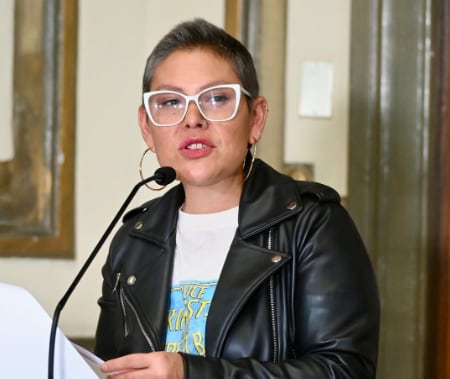
In conversation with El Ciudadano, Fabiola Cayla, president of the Prodemu Union, stated that the financial crisis facing the foundation directly impacts its employees. She explained that it generates uncertainty regarding job stability for over 460 workers at Prodemu. Additionally, she noted that this situation is compounded by delays in payments and a deterioration of working conditions.
Regarding the programmatic aspect, Cayla commented, «This situation jeopardizes the continuation of workshops, territorial coverage, and training processes, especially affecting the most vulnerable women in the country, who are the foundation’s target audience and rely on these spaces to enhance their economic autonomy.»
The leader clarified that they plan to work with 50,000 women over the year, plus an additional 3,000 from the rural women’s program, making the crisis significantly impactful for the participating women. Cayla firmly stated, «This is not just an institutional problem; it’s a profound social impact.»
Regarding the collective contracts, the union firmly rejected placing responsibility on the workers, emphasizing that decisions rest with the administration.
«The collective agreements are the result of legitimate and historical negotiation processes between the workers and the institution. Our collective contract has a 29-year history, thus it is neither a new nor an unexpected element within the functional framework of the Foundation,» Cayla added.
In this context, the leader explained that these are basic labor rights developed over time and officially recognized. For Cayla, if there are budgetary discrepancies, they should be analyzed from the perspective of institutional management and funding mechanisms, rather than as a critique of the exercise of collective rights.
Furthermore, the union emphasized the importance of clarifying that both unions’ current collective agreements were signed by the then-administration amid awareness that the execution agreement with SernamEG, for the first time, excluded the possibility of reporting these benefits within the budgetary framework. This indicates that an administrative decision was made with full knowledge of labor commitments acquired.
When questioned about whether the responsibility lies with the previous administration or if it is a structural issue, the organization acknowledged responsibilities on both fronts:
«There may be administrative responsibilities that need investigation, but there is also a structural problem: the funding model of public foundations like Prodemu is unstable outside the structure that originally supported it (Socio-Cultural Directorate of the Presidency), leading to recurrent uncertainty and crisis scenarios due to the absence of an appropriate transfer,» they stated.
In this context, Cayla emphasized that during the last administration, political decisions directly impacted the foundation’s current situation: «In particular, the termination of the Socio-Cultural Directorate of the Presidency, prompted under Irina Karamanos’ leadership, resulted in Prodemu being transferred to the Ministry in a process that, from our perspective, lacked any institutional preparation,» she indicated.
The leader explained that the transfer was executed without effective planning, prior administrative adjustments, timely validation or approval of programs, or a transition period or ‘pilot run’ to allow for real integration.
«As workers, we are deeply concerned that the new government, despite our union’s insistence, has simply not opened dialogue to address this situation we have been warning about for quite some time. Now, for the first time in 35 years, the first institution in Chile since the return to democracy to work with women finds itself without salaries for its workers and without resources to execute its programmatic offerings,» she added.
Finally, the union demands full payment of salaries and respect for the rights acquired in current collective negotiations. They also insist on not interrupting programs for women, warning about the impact on the most vulnerable and their autonomy.
«As workers with over 35 years of history at Prodemu, we are deeply concerned about our inability to provide what we know is necessary for their autonomy and development,» Cayla stated regarding the matter.
Additionally, the union considers it crucial to have effective participation from workers in all restructuring processes of the foundation: «No one knows the operation, territory, and impact of the programs better than those who execute them daily.»
In closing, the union demanded that the state guarantee the continuation of the public role of the foundation, ensuring that the institution continues fulfilling its historical function in promoting women’s autonomy.
La entrada Prodemu Crisis: Workers Report Severe Impact from Financial Deficit se publicó primero en El Ciudadano.
🔥 Ver noticia completa en ElCiudadano.cl 🔥