El Ciudadano
Original article: Estado de Catástrofe en Ñuble y Biobío por incendios forestales: Numerosas viviendas han sido afectadas por el fuego y miles de evacuados
State of Emergency in the Ñuble and Biobío Regions
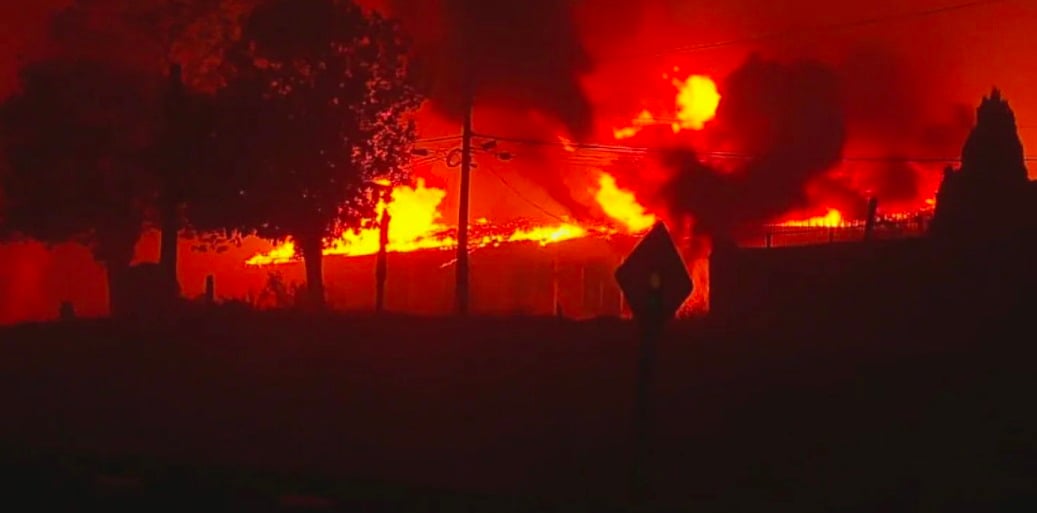
In response to a catastrophic emergency, President Gabriel Boric declared a State of Emergency in the Ñuble and Biobío regions early Sunday morning, January 18, 2026.
This measure, enacted due to the simultaneous escalation of severe wildfires, aims to mobilize all state resources to tackle a crisis that has necessitated mass evacuations and poses threats to homes, critical infrastructure, and public safety. In his statement, the president emphasized: “Given the severe ongoing wildfires, I have decided to declare a state of emergency in the Ñuble and Biobío regions. All resources are available” (Agencia Uno). This exceptional legal framework accelerates interinstitutional coordination and enhances operational and logistical deployment.
The declaration, grounded in the Constitution, grants the government special powers to appoint a Chief of National Defense in the affected areas. This role is essential for coordinating military support to police and civil authorities in maintaining public order, protecting critical facilities, and managing logistics. As an immediate consequence, Rear Admiral Edgardo Acevedo has been named Chief of National Defense for the Arauco-Biobío and Concepción provinces, as confirmed by the Presidential Delegation in Biobío to Radio Biobío. Presidential delegate Eduardo Pacheco explained that this military deployment had already been coordinated and is activated to bolster the response effort.
One of the most significant effects of the state of emergency is the expedited use of public resources, reducing administrative procedures for a more efficient response. This allows for urgent hiring, swift mobilization of brigades, heavy machinery, aircraft, and humanitarian aid. Furthermore, as detailed in a report by T13, the regime empowers officials to “temporarily limit certain freedoms, such as movement or gatherings, when necessary to ensure people’s safety, organize evacuations, or control access to risk areas”, always aiming to protect the population and contain the emergency.
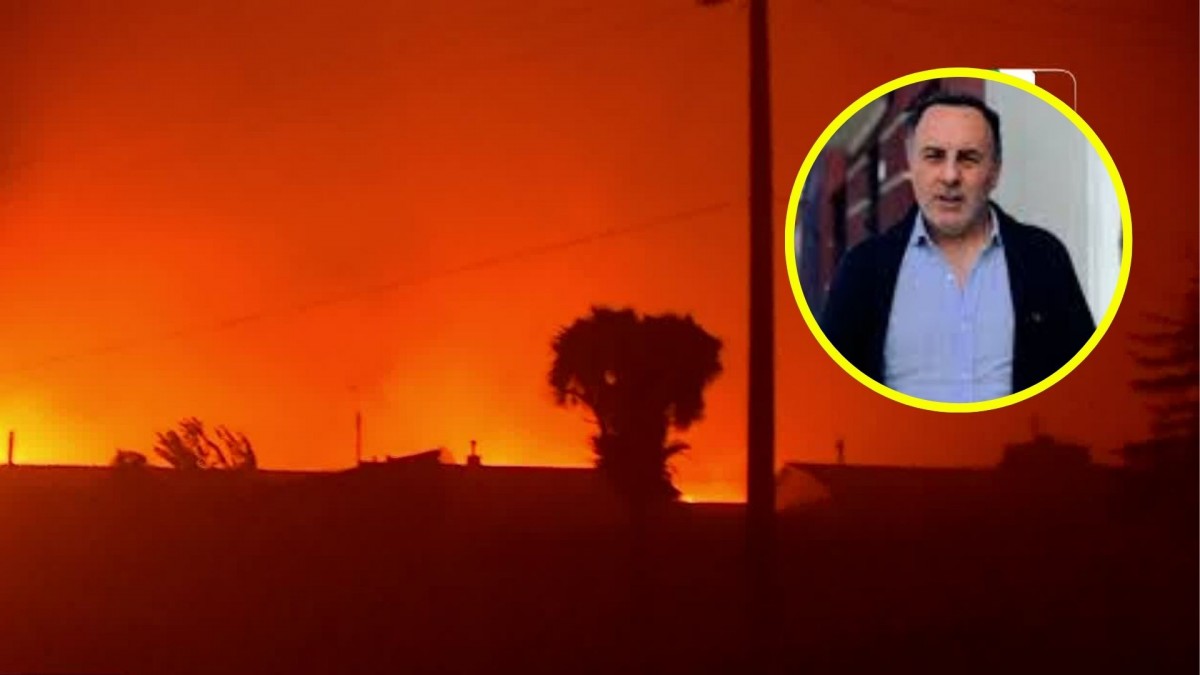
On the ground, the extent of the devastation is apparent, with the commune of Penco reporting dramatic damage. Its mayor, Rodrigo Vera, provided a stark assessment to Diario Concepción: “Today, in the areas we have reached, we are nearing the Lirquén sector, around 9,000 homes are reported to be affected. And the number of people who have been evacuated exceeds 15,000”. The mayor also confirmed incidents of looting, making an urgent call to restore the rule of law and ensure supplies in shelters for displaced families.
Authorities have made it clear that, despite the measures in place, the situation is far from controlled. Presidential delegate Eduardo Pacheco warned, in statements to Diario Concepción, about the extremely challenging conditions: “This emergency is not under control. We are facing very complex conditions regarding wildfires: high temperatures and winds reaching up to 50 km per hour”. He added that dozens of destroyed homes are being assessed, and preliminary reports of fatalities are being investigated while the central government deploys interior and defense subsecretaries to oversee operations.
Establishment of the National COGRID

This morning, the national and regional COGRID was established, as reported by SENAPRED.
CONAF also reported the COGRID
AHORA
Director ejecutivo de CONAF, Rodrigo Illesca, en COGRID Nacional, liderado por el ministro del @min_interior Alvaro Elizalde, junto a otros ministros y autoridades nacionales, quienes coordinar acciones y recursos con los equipos de respuesta de Ñuble y Biobío. pic.twitter.com/15Q1sr7AYv
— CONAF – Corporación Nacional Forestal (@conaf_minagri) January 18, 2026
The government emphasizes that the enforcement of the state of emergency will be limited in time and subject to constant reviews, depending on the evolution of the incidents.
CONAF REPORT: 24 FIRES CONTINUE TO BE COMBATED
#BALANCE | Hasta las 09:30 horas, 24 incendios forestales se mantienen en combate por parte de CONAF y equipos de emergencia de otras instituciones.
Las cifras sobre superficie afectada podrían variar durante la mañana, luego de los sobrevuelos que realicen los equipos… pic.twitter.com/JlHCWDDMBj
— CONAF – Corporación Nacional Forestal (@conaf_minagri) January 18, 2026
As of the cutoff date for this report, CONAF brigades and emergency teams from other institutions are actively combating a total of 24 wildfires across four regions of the country. The information regarding the affected area of these incidents is preliminary and subject to change throughout the day once the scheduled technical evaluation flights are completed. The most critical situation is concentrated in the Ñuble and Biobío regions, which maintain a Red Alert, while other outbreaks require attention in the Metropolitan Region and La Araucanía.
In the Ñuble Region, under Red Alert, nine fires are reported to be active. The most significant preliminary incidents include the fire “Perales Biobío” in the commune of Ránquil, affecting 2,200 hectares; the fire “Monte Negro” in Quillón, affecting 1,500 hectares; and the fire “Rahuil Bajo”, also in Ránquil, affecting 500 hectares. Other active outbreaks are located in the communes of El Carmen (40 ha), Bulnes (5 ha), Coelemu (1.6 ha), Pinto (80 ha and 36.2 ha), and San Nicolás (361 ha). In the Biobío Region, also under Red Alert, three active fires are showing significant preliminary areas: “Trinitarias” in Concepción (2,136 ha), “Rancho Chico” also in Concepción (737 ha), and “Rucahue Sur” in Laja (1,000 ha).
In the Metropolitan Region, only one active fire is recorded: “El Tapihue” in the commune of Til Til, with a preliminary area of 840 hectares and under Yellow Alert. In the La Araucanía Region, two fires have their communes on alert: the fire “Santa Cruz” in Collipulli, affecting 500 hectares, and the fire “Rucalleco” in Lumaco, affecting 60 hectares, both under Red Alert. Authorities reiterate that all the area estimates are preliminary and pending technical confirmation.
La entrada State of Emergency Declared in Ñuble and Biobío Due to Devastating Wildfires: Numerous Homes Affected and Thousands Evacuated se publicó primero en El Ciudadano.
🔥 Ver noticia completa en ElCiudadano.cl 🔥