
El Ciudadano
Original article: Estudio detectó impacto en movilidad tras alza de los combustibles: Caída promedió 5% a nivel nacional y Santiago registró la menor variación del país
A month and a half after the historic fuel price increase in Chile, its effects are visibly manifesting on the streets of regional capitals, according to a study conducted by City Lab Biobío based on data from Waze across 16 cities.
Results indicate a national average decrease of 5% in vehicle congestion between March and April 2026.
City Lab Biobío explained that the analysis «compared three periods: before the fuel price increase, immediately after its implementation, and four weeks later. The results show a widespread reduction in traffic across all cities analyzed, although with significant variations depending on location and time of day.»
Fernando Pérez, director of the laboratory, noted that «we are observing a consistent signal of adjustment in mobility patterns. While the data does not allow for direct causality attribution, it does indicate that the rise in the cost of driving coincides with decreased congestion in most cities across the country.»
Copiapó, Valdivia, and Temuco Lead in Congestion Reduction
Among regional capitals, Copiapó saw the largest reduction, with a 10.4% drop in congestion levels—averaging across the three measurements—followed by Valdivia (-9.5%) and Temuco (-9.3%). La Serena (-6.8%), Antofagasta (-5.9%), and Concepción (-5.9%) also performed better than the national average.
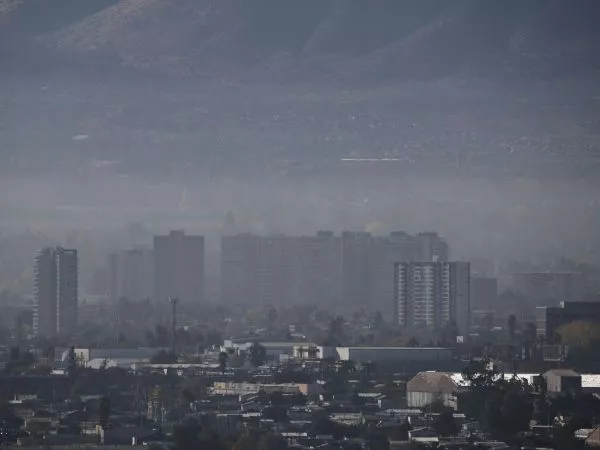
In stark contrast, Santiago exhibited the smallest variation in the country, with only a 0.4% decrease, closely followed by Rancagua (-0.6%) and Arica (-1.7%).
«This suggests that in large metropolitan areas, travel patterns are more rigid and less responsive to changes in fuel prices,» the study indicates.
Fernando Pérez added, «What’s particularly interesting is that this effect is notably stronger in mid-sized cities, where mobility decisions seem to be more sensitive to fuel prices. In contrast, in metropolitan areas like Santiago, travel patterns are much more rigid and challenging to modify in the short term.»
Another important finding is that the greatest decrease in congestion occurred between 6:00 AM and 8:00 AM, coinciding with peak commuting hours for work and educational institutions. This may correlate with adjustments in schedules, increased telecommuting, or greater use of public transportation.
The study also notes that Waze data serves as an indirect mobility indicator, measuring delays on congested roads rather than the exact volume of vehicles in circulation. However, the consistency of the trend across the 16 analyzed cities reinforces the hypothesis of a change in commuting habits following the fuel price increase.
For more details, check the full report HERE.
El Ciudadano
La entrada Study Reveals Impact on Mobility Following Fuel Price Hike: National Traffic Drops Average of 5%, Santiago Shows Smallest Variation se publicó primero en El Ciudadano.
🔥 Ver noticia completa en ElCiudadano.cl 🔥