
El Ciudadano
Original article: Entra en vigor Tratado de Alta Mar: Población única de ballenas azules entre sus primeras «beneficiarias» en Chile
The High Seas Treaty Takes Effect: Unique Blue Whale Population Among Its First Beneficiaries in Chile
On January 17, 2026, the United Nations Treaty on Marine Biodiversity Beyond National Jurisdictions (BBNJ) will come into force.
The primary aim of this global agreement is to establish area-based management mechanisms, including marine protected areas in international waters, and to conduct environmental impact assessments on human activities in the high seas.
Yacqueline Montecinos, Marine Conservation Coordinator and Ocean Policy Coordinator at WWF Chile, and also the coordinator of the Pacific Blue Corridor initiative, emphasized that this is the first legally binding international agreement dedicated to protecting biodiversity in waters that do not belong to any state and cover nearly two-thirds of the planet’s ocean surface.
«The BBNJ, also known as the High Seas Treaty, will facilitate the establishment of area-based management mechanisms, including Marine Protected Areas (MPAs) in international waters, and will allow for environmental impact assessments on human activities in the high seas while promoting scientific cooperation, technology transfer, and equitable access to the benefits of marine genetic resources,» Montecinos stated.
These instruments are vital for fulfilling global biodiversity and climate commitments, including the 30×30 goal of the Kunming-Montreal Global Biodiversity Framework, which aims to protect at least 30% of oceans and land by 2030.
«For WWF, the progress of BBNJ underscores the urgency to act for the ocean, for nature, and for the people who depend on it,» emphasizes Yacqueline Montecinos, who adds that for Latin America and the Caribbean, this international framework will also bolster key initiatives like the Pacific Blue Corridor, which aims to protect the migratory routes of large cetaceans in the region.
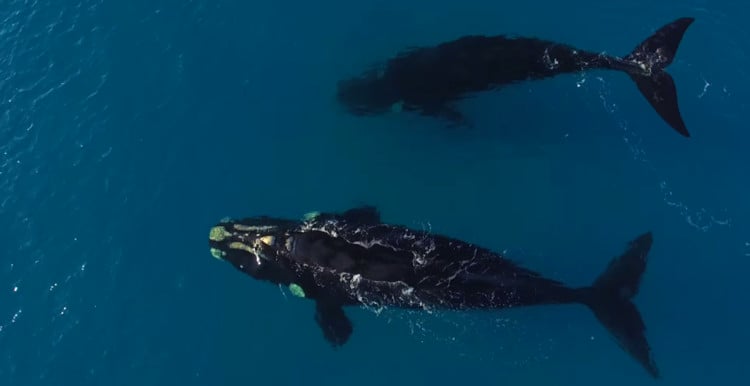
The First Beneficiaries
As the High Seas Treaty takes effect, a unique population of eastern South Pacific blue whales, the largest animals on the planet, may become one of the first «beneficiaries» of this international agreement.
«This population is endangered and faces threats such as vessel collisions, entanglements, and mortality in fishing gear, in addition to the impacts of climate change. Identifying critical habitats and understanding their movements is crucial for reducing these risks,» the NGO indicated.
In this regard, they reported that «WWF Chile is exploring strategies and actions to protect this unique population of whales that, after breeding in warm waters off Central America, migrate through the high seas to the southern coasts of Chile to feed; unlike other populations, they do not head towards polar waters. Another distinctive feature is that they have a unique type of song, recorded for the first time in 2020.»
Thus, with the implementation of the High Seas Treaty, there is an effort to safeguard their migratory route of approximately 10,000 kilometers, potentially creating one of the first MPAs under the new treaty.
«This could serve as a test case to evaluate whether global cooperation can save our ocean giants, as demonstrated after the commercial whaling moratorium established by the International Whaling Commission in 1982,» WWF officials pointed out.
«This milestone marks a before and after for the protection of the global ocean. The high seas are not owned by any state; they are a common heritage of humanity and essential for life on Earth. Highly migratory whales do not recognize geographical boundaries or political borders: they move between national and international waters without asking for permission. That is why they need well-designed and connected Marine Protected Areas. If we have more whales, we will have healthier and more productive oceans,» concluded Yacqueline Montecinos.
El Ciudadano
La entrada The High Seas Treaty Takes Effect: Unique Blue Whale Population Among Its First Beneficiaries in Chile se publicó primero en El Ciudadano.
🔥 Ver noticia completa en ElCiudadano.cl 🔥