El Ciudadano
Original article: Causa Molino Grollmus: Un caso paradigmático sobre la prohibición de condenar solo con testigos reservados
By Daniela Sierra, Attorney
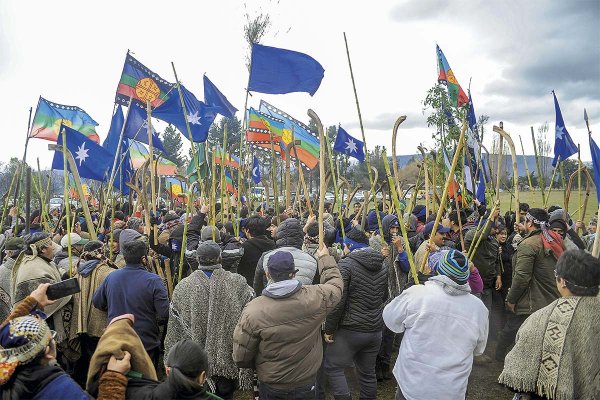
In the Oral Criminal Court of Cañete, one of the most significant trials in recent years concerning the prosecution of Mapuche community members is drawing to a close: the case related to the attack on Molino Grollmus, which took place in August 2022 in Contulmo.
The evidence against the accused relies heavily on protected witnesses—known as «MG witnesses»—whose identities are kept confidential even from the defendants. This raises a crucial question, echoing the recent changes in Chilean procedural law: is it permissible to convict someone based solely on this testimony?
What Article 226 U of the Criminal Procedural Code Says—and What It Does Not Resolve
Law No. 21.577, enacted in 2023, introduced Article 226 U to the Criminal Procedural Code. Its wording is concise yet definitive:
«The court shall evaluate the testimony of undercover agents, revealing agents, and informants according to the rules of sound criticism. Under no circumstances shall the court base a conviction solely on statements made by undercover agents, revealing agents, informants, or protected witnesses whose identity has been ordered to remain confidential.»
This provision clarifies what was previously a subject of doctrinal debate: it is not permissible to convict solely based on the merits of a confidential witness.
What remains unresolved by the law—and what recent scholarly interpretations have identified as the true interpretive challenge—is the meaning of the term «solely».
González Coulon and Vogt Geisse from the University of Chile argue in a 2025 article that the primary function of the norm is preventive, rather than epistemic: it penalizes the disproportionate use of identity protection by the prosecutor, rather than merely raising doubts about the reliability of the statements made.
From this perspective, a conviction is founded «solely» on anonymous testimony whenever other elements of evidence are insufficient, revealing a case built with an excessive focus on protected witnesses, at the expense of other available sources of proof.
The General Rule: Appearance and Cross-Examination as the Core of the Right to Defense
Article 226 U is not an isolated exception. It is part of a system that positions direct cross-examination (Art. 330, Paragraph 3, CPP) as the central guarantee of testimonial evidence, and mandates that every witness provide a «detailed account» of their statements, distinguishing between what they perceived directly or heard from others (Art. 309, Paragraph 2, CPP).
The reservation of identity—authorized exceptionally by Articles 307, 308, and 226 Letters N to S of the same Code—is itself a restriction on that right, tolerated only as long as the defense retains the ability to cross-examine on anything that does not compromise the protected identity (Art. 226 Letter P III CPP).
When this capability is eroded, and furthermore, the protected testimony becomes the sole or decisive foundation for a conviction, the entire system loses its justification.
The Conviction Chile Has Already Suffered: Norín Catrimán and Others vs. Chile
This is not a new or hypothetical issue. On May 29, 2014, the Inter-American Court of Human Rights condemned the State of Chile in the case Norín Catrimán and others—eight authorities and members of the Mapuche people prosecuted under the Anti-Terrorism Law—for, among other violations, breaching Article 8.2.f) of the American Convention: the right to defense to cross-examine witnesses.
It is essential to be precise about what the Court declared, as it forms the strongest argument, not a generalization: the Court did not treat the eight victims as a bloc. It examined each case individually.
Regarding Segundo Norín Catrimán, it found that his conviction was not based on confidential witnesses, and thus there was no violation concerning him. In contrast, the conviction of Pascual Pichún Paillalao was based «to a decisive degree» on the testimony of «protected witness No. 1», while other witnesses had only indirect knowledge—therefore, a violation did occur.
As for Víctor Ancalaf Llaupe, three of the four statements supporting his involvement came from witnesses with protected identities whom his defense never had access to, which the Court deemed assigning «decisive weight to that evidence as inadmissible». The issue is that in this case, the decisive weight is precisely the testimony of witnesses with concealed identities.
The Obligations That Derive From It: A More Diligent Public Ministry, Not a Shortcut for Evidence
The reparative measures ordered by the IACHR were not limited to the eight victims of the case. They compelled the State to clearly regulate identity confidentiality as an exceptional measure, subject to judicial oversight grounded in necessity and proportionality, and to ensure that this form of evidence is not used to decisively support a conviction.
Article 226 U is, in this regard, a late fulfillment of an international obligation entered into over a decade ago.
However, mere formal compliance with the law’s wording is insufficient if it lacks practical application. If the correct interpretation of Article 226 U is as proposed by scholars—penalizing the disproportionate use of confidentiality—then the norm imposes a burden on the Public Ministry: to exhaust other lines of investigation, rather than building the prosecution on the shortcut offered by a witness who cannot be confronted in full by the defense.
The severity of the investigated act does not exempt this burden. On the contrary: the more serious the crime, the greater the temptation to substitute individual participation evidence for the persuasive force of collective accounts of the incident. This is precisely what Norín Catrimán prohibits: the gravity of the facts cannot be conflated with proof of participation.
When Pressure Comes Not from the Process, But from Outside
There is an additional risk that neither Article 226 U nor the IACHR ruling directly addresses, as it pertains to another level: the independence of the court evaluating that evidence.
Article 76 of the Constitution and Article 8.1 of the American Convention guarantee an independent and impartial judge. This guarantee does not end in the courtroom; it also requires that there are no extrajudicial efforts aimed at determining the outcome of litigation before a verdict is reached.
In August 2026, the Seventh Guarantee Court of Santiago declared admissible a criminal complaint against lawyer Luis Hermosilla for influence peddling, bribery, and obstruction of justice, following messages from his own phone where—according to the complaint filed by the defense of Mapuche community member José Tralcal Coche—he allegedly arranged in 2018, through an intermediary, for a Supreme Court justice to influence the rejection of the nullity appeal that sought to review the convictions in the Luchsinger-Mackay case.
This is a separate case from that of Molino Grollmus: it should not be presented as the same. However, the same lawyer—who also represented, between October 2022 and late 2023, the Grollmus family’s complaint against the accused in that attack, until the family revoked his sponsorship amid the fallout from the Audio Case—recurs, in a different process, noted for interfering with the Judiciary to uphold a conviction against Mapuche community members.
The parallelism does not prove anything regarding the ongoing Molino Grollmus trial. However, it does illustrate, with names and facts, the concrete institutional risk that norms like Article 226 U and standards such as those established in Norín Catrimán aim to prevent: that the prosecution of publicized Mapuche cases is resolved through means other than the evidence presented in court, under pressure from outside.
Due Process, Not Impunity
None of the above implies denying the severity of what occurred in Contulmo, nor diminishing the legitimacy of the victims’ pain.
Instead, it implies something different and more fundamental: that criminal responsibility, when it entails the harshest penalties established by our legal framework, can only be established through evidence that the defense has had the opportunity to challenge under conditions of real equality, and not with the shortcut provided by the testimony of a witness who can never be confronted face to face.
Chile has already paid, before the Inter-American Court, the cost of failing to understand this principle. The question that the Oral Criminal Court of Cañete faces is not whether the attack on Molino Grollmus was serious—indeed it was—but whether, for each of the accused, there is anything more than the word of a witness whom no one can look in the eyes.
Betting on acquittal under those conditions is not advocating for impunity. It is demanding that the State fulfill, thirty years after the reform of the criminal process and twelve years after Norín Catrimán, the minimum owed to anyone being judged: due process.
Daniela Sierra
La entrada The Molino Grollmus Case: A Landmark Issue on the Prohibition of Condemnation Based Solely on Confidential Witnesses se publicó primero en El Ciudadano.
🔥 Ver noticia completa en ElCiudadano.cl 🔥