El Ciudadano
Original article: “Ellos mismos pueden causar nuestra muerte”: el crudo relato de estudiante detenido en marcha estudiantil
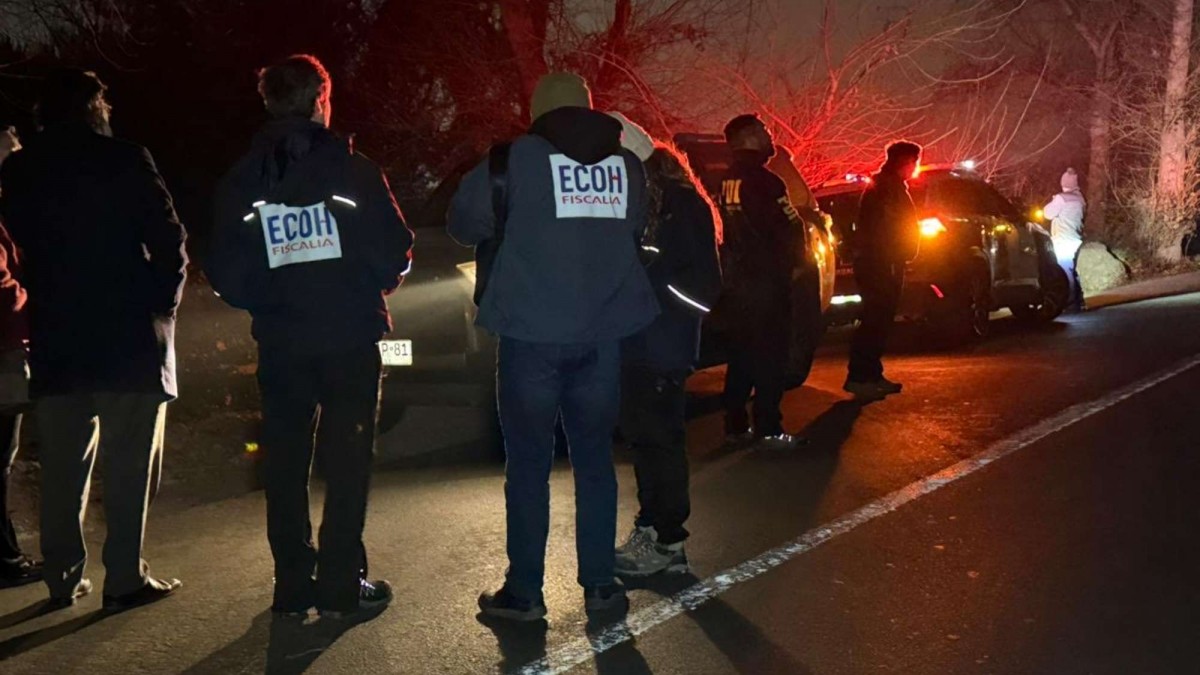
The recent march organized by ACES against government cuts announced by José Kast was marred by intense police repression against demonstrators.
El Ciudadano’s team spoke with one victim, Alejandro Díaz, an 18-year-old first-year psychology student, who reported excessive police force by Carabineros during the event.
«I Couldn’t Breathe»: The Moment of Arrest
Díaz stated that, until the violent incident, the march was peaceful. According to him, the protesters began to retreat as Carabineros pursued them with water cannons and tear gas without any prior provocation.
In that context, some protesters clashed with police, and Díaz claims that while he was trying to back away, officers grabbed him from behind and threw him to the ground, an arrest that was later captured in videos shared on social media.
The student added that he struggled to breathe due to the tear gas being deployed just meters away from him, mentioning he was close to losing consciousness from the situation.
«They pressed me against the ground; I couldn’t breathe, and they continued to throw tear gas right next to where I was. I was surrounded by tear gas and smoke, and I couldn’t breathe, which is why I couldn’t get up […] it was traumatic to think I might faint and what could happen to me,» he detailed.
In fact, he stated that at the time of his arrest, he had to be supported and moved by several officers, as he could not stand due to numbness and lack of oxygen caused by the constant exposure to tear gas.
Furthermore, he reported being dragged across the central strip before being taken to a police station. During this ordeal, he claimed he overheard officers making comments like they were «tired of these kids.»
Díaz also noted that once in custody, he overheard various conversations among police. One of the most shocking to him was a discussion about the presence of undercover officers at the protests. He further mentioned that one of his companions was even chased to his apartment.
Additionally, he claimed to have heard remarks implying a supposed drug use by some officers.
«The Experience Was Horrible»: Time at the Police Station and Prosecutor’s Office
Later, the student stated he was transported between various detention centers for almost two hours before finally being sent to a police station. He reported that upon arrival at the police facility, while the mistreatment stopped, the scorn from Carabineros continued.
On another note, he mentioned that while an injury report was conducted, he felt it was not thorough. He only noticed bruises on his back after he returned home, and he claimed he did not have access to the injury report or receive a copy.
Díaz explained that he struggled to breathe throughout the day, recalling that he had childhood asthma and that bruises remained on his back.
Following the injury assessment, he was taken back to the confinement area, where he remained until the next day for his detention hearing.
According to him, one of the most shocking aspects at both the police station and the prosecutor’s office was the restriction on using the restroom. He stated they were often denied access or made to wait over an hour to go. He even witnessed another young man being denied restroom access entirely.
Indeed, he reported that mistreatment continued, this time from Gendarmería personnel. He claimed that besides being denied restroom access, officers spoke to them with profanity, disrespect, humiliation, and constant offenses.
Furthermore, he recounted an instance where a female guard struck a female detainee simply for saying goodbye before leaving.

Forced Nakedness and Issues Accessing Legal Defense
Díaz also shared that he was particularly uncomfortable being forced to undress in front of several individuals during the proceedings. He stated that during this incident, an officer mocked him for not wanting to strip.
Another point of concern for Díaz was the lack of access to adequate legal defense. He recounted that when he tried to speak with a lawyer before the hearing, a guard informed the professional that she was running late and needed to hurry, which he believed hindered his ability to receive proper attention compared to other detainees.
The student claimed that an assistant told him his name was not on the list of individuals scheduled for legal consultation. However, Díaz asserted that he reviewed the list himself and confirmed he was included.
As a solution, the lawyer indicated that she could provide him with a shorter consultation later, which did occur when she approached him in his cell before entering the hearing. Still, he maintained that the consultation was much more restricted and informal than that received by other detainees.
During the hearing, the student was placed on monthly reporting for two months while the possibility of an investigation against him for public disorder and disturbance was being determined.
Díaz expressed that he felt he was now «profiled» and had the sense of being effectively prohibited from participating in protests again, although he clarified that there was no formal prohibition. Nevertheless, he asserted that after his experience, he would avoid marching again due to the psychological consequences it had left on him.
«I had a terrible time, I didn’t sleep. I froze there. I was isolated for about a day and a half. Even criminals who committed more serious offenses received better treatment than us […] they targeted us, the protesters […] the experience was horrific,» he said.

«They Can Cause Our Death»
Additionally, Díaz reported witnessing other forms of negligence, such as a cellmate having his nose broken and being held without being informed of the reason for his arrest, without rights being read to him or having to sign papers, and without being allowed to contact his family.
One of the most surprising aspects for the student was that officers allegedly informed him he was sent to the prosecutor’s office under a supposed directive imposed during Mario Desbordes’ administration, which mandated that anyone arrested in the context of protests must go directly to detention control.
Díaz asserted that this measure was presented as a means to discourage protests and suppress social participation.
Regarding the intense police repression, Díaz asserted that such situations pose a danger to the public. «Although they’re supposed to protect us as citizens, they can cause our death,» he warned.
He also questioned why those participating in peaceful protests face judicial consequences or reprisals, while, in his view, there are no proportional sanctions for police officers involved in aggression or injuries against demonstrators.
Finally, the student emphasized the importance of people knowing their rights to confront and reduce mistreatment during such encounters. However, he also acknowledged that ideally, one should avoid unnecessary exposure, admitting that one of his mistakes was attending the protest alone.
Alejandro Díaz’s case once again highlights the allegations against Carabineros and the treatment received by detained youth in social protests. His testimony underscores not just the physical violence during arrest, but also the subsequent detention conditions, alleged maltreatment, and the psychological consequences he claims stemmed from the experience.
While the student faces monthly reporting and the potential opening of an investigation against him, he maintains that what he experienced completely changed his view on protests. «You go out to march thinking you’ll return home,» he reflects. However, after what occurred, he now feels fear about participating in another student mobilization.
La entrada «They Can Cause Our Death»: A Student’s Harrowing Account of Police Brutality During Recent Protest se publicó primero en El Ciudadano.
🔥 Ver noticia completa en ElCiudadano.cl 🔥