El Ciudadano
Original article: La raíces de Gabriela Mistral que quisieron silenciar: Estudio revela orígenes Diaguita y Afro
Unveiling Gabriela Mistral’s Hidden Roots: New Research Reveals Diaguita and Afro Heritage
When Gabriela Mistral wrote «I know something, I hope, about myself«, she was not only defending her identity against those who mocked her claims of Indigenous ancestry, but also asserting a truth that academic research is only just beginning to fully uncover.
According to genealogical research conducted by historian Cristián Cofré León, the Nobel laureate «was of the land, with ancestral Indigenous blood and African roots from a Black woman who lived in the Huasco Valley«.
In Cofré’s publication: “Ancestors of Gabriela Mistral” (2025), it is noted that on her paternal line, through her father Jerónimo Godoy Villanueva, Mistral descended from Juana Godoy, «most likely mulatto», and from Paula Guanchicai, «an Indigenous woman entrusted to Don Antonio Zepeda», whose children were classified as mestizo in colonial records.
The poet herself confessed in her private writings that her father was «very ‘aindiado’» and that «my grandfather Godoy was pure Indian», also adding that he had «the Mongolian spot, something my mother told me».
These revelations, published in a work by Miguel de Cervantes University by Lorena Figueroa, challenge decades of representations that reduced Mistral to a Europeanized figure, ignoring her deep blood connection to the Indigenous peoples of northern Chile.
Far from being an anecdotal piece of information, this ancestral heritage became the core of her social thought and literary creation. Academic Lorena Figueroa states that «Gabriela sees the Indian as a natural part of racial mixing; it is the alpha of mestizaje, and as a component, it is worthy of rescue, appreciation, and valuing above the Spanish omega».
This belief didn’t originate solely from her Mexican experiences with José Vasconcelos, as is often claimed, but emerged from the intimate certainty that her ancestors had inhabited those same valleys she described with devotion in her work, Poema de Chile.
Leader Alejandra Riquelme from the Diaguita Tamaya clan expressed it forcefully and clearly in 2014: “This Diaguita people belonged to our first Nobel Prize in Literature, Gabriela Mistral Huanchicay, who was always proud of her origins, and today we reclaim her as one of ours«.
At the same event, during the formation of a Diaguita association in the Aconcagua Valley, young Simón Alfaro proudly declared: “This is a historic process, as my Tata used to say; we reclaim Diaguita tradition and also honor Lucila Godoy Alcayaga, Gabriela Mistral, who was a descendant of the Diaguita clan «HUANCHICAY» and never denied it; she always recognized herself as a mestiza, an Indian«.
The surname Huanchicay, long omitted in official historiography, now emerges as evidence of a connection that the poet never denied but that cultural elites preferred to silence.
ANDINIAN COSMOVISION IN MISTRAL’S WORK: DIAGUITA CHILDHOOD AS A CENTRAL POINT
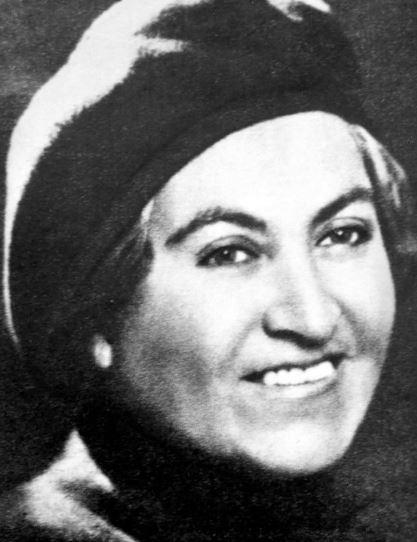
The land of the Elqui Valley was not just the geographical backdrop of Mistral’s childhood; it served as the cultural matrix that nurtured her sensitivity and commitment to the marginalized in America. In her poem «The Earth,» included in a publication by Miguel de Cervantes University, the lyrical voice directly addresses the Indigenous child with a tenderness that transcends aesthetics to become a political statement: «Indian child, if you are tired, / you lie down on the earth, / and the same if you are happy. / My child, play with her…» Here, the earth is not viewed as property but as a mother, as a «sacred back» that bears everything: «what walks, what sleeps, / what frolics and what grieves; / and carries the living and the dead / the Indian drum of the Earth».
This conception of American soil, so characteristic of Andean worldview, permeates all her literary production and reaches its pinnacle in Poema de Chile, a work where she constructs a day with a Diaguita child that allows her to traverse the country through a deeply Indigenous lens.
Historian Cristián Cofré emphasizes that in Mistral’s genealogy «diverse origins intertwined, so Chilean, so northern», merging the blood of Spanish conquistadors like Francisco de Aguirre with that of Indigenous and African individuals who inhabited the Huasco Valley.
This blend undoubtedly propelled her to develop an original thought about America, which Lorena Figueroa qualifies as «both particular and universal: particular because it produced a concrete model of thought for America, rescuing the fundamental values of our culture and leading them to a respectful proposal of origin; universal because it encompassed all areas of public and political reality».
When Mistral directly appealed to President Truman during a ceremonial meeting, urging him that a country as wealthy as his should assist the «little Indians» of Latin America «who are so poor, who are hungry, who have no schools,» she was not motivated by abstract compassion, but by the certainty that those «little Indians» were part of her own blood, of her own family history silenced for generations.
Research conducted by Lorena Figueroa, published in Miguel de Cervantes University, concludes that «her interest in the land encompassed a political and economic judgment; for the Indian, a political and social concern,» thus shaping a legacy that we only now, eighty years after her Nobel Prize, begin to understand in all its depth and relevance.
Alfredo Seguel
La entrada Unveiling Gabriela Mistral’s Hidden Roots: New Research Reveals Diaguita and Afro Heritage se publicó primero en El Ciudadano.
🔥 Ver noticia completa en ElCiudadano.cl 🔥