El Ciudadano
Original article: Globetrotter: Ataque a Venezuela y la guerra híbrida de largo aliento impuesta por los Estados Unidos
US, the Attack on Venezuela, and the Illegal Seizure of Its President
By Taroa Zúñiga and Vijay Prashad (*)
Source: Globetrotter
Shortly after 2 AM on January 3, 2026, local Venezuelan time, and in violation of Article 2 of the United Nations Charter, the United States launched an assault on various locations throughout the country, including Caracas, the capital. Citizens were awakened by heavy explosions, flashing lights, and the presence of large helicopters in the sky. Videos began circulating on social media, albeit without clear context, leading to confusion and rampant speculation on digital platforms.
See also / Bombing of Venezuela and Kidnapping of President Nicolás Maduro in US Military Operation
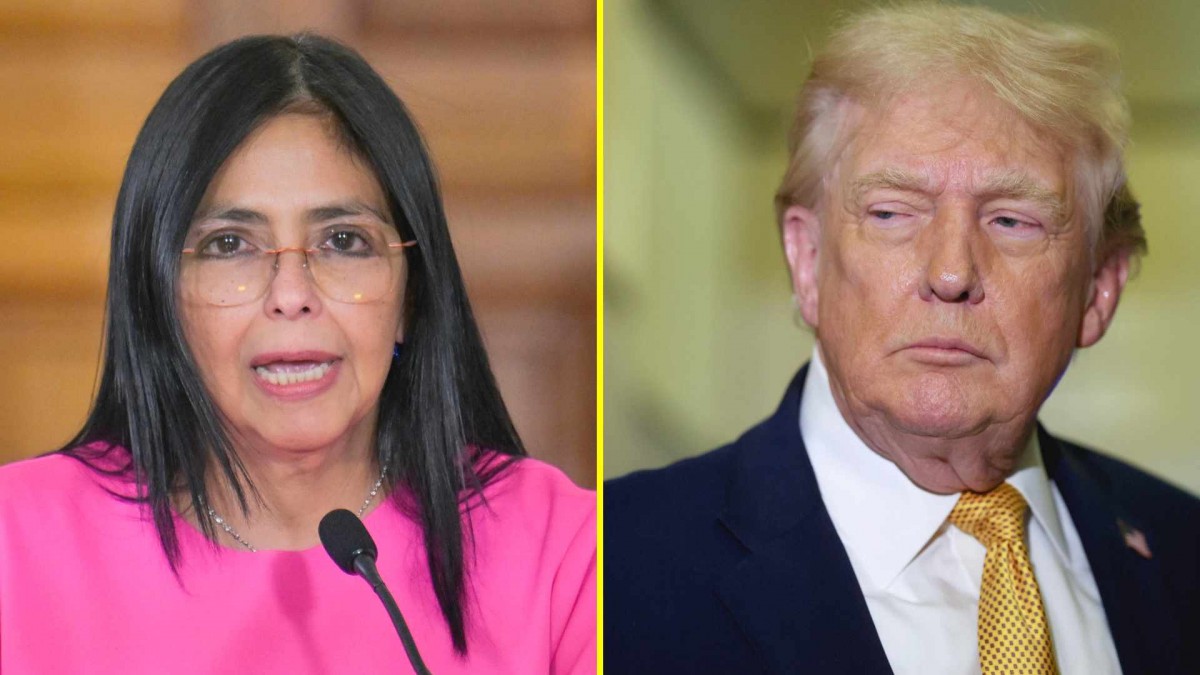
One hour later, the skies fell silent. US President Donald Trump announced that his forces had executed attacks on Venezuela and had captured President Nicolás Maduro and his wife, Cilia Flores. Shortly thereafter, Venezuelan Vice President Delcy Rodríguez confirmed that the whereabouts of Maduro and Flores were unknown. US Attorney General Pamela Bondi verified that Maduro and Flores were on US territory and had been charged with “narcoterrorism conspiracy.”
You may be interested / Political and Social Organizations Condemn Trump’s Imperialist Aggression in Venezuela
The aftermath of this attack remains uncertain. The Bolivarian government is still in control, even with its president abducted, and the populace is in a state of shock but remains defiant. It is unclear whether the United States will launch further attacks or if the US administration has a defined political plan for the aftermath of this offensive.
The War Against Venezuela
The January 3 attack is not the first against Venezuela. In fact, the pressure campaign began in 2001 when the Hugo Chávez administration enacted the Hydrocarbons Law, complying with the sovereignty provisions set forth in the Bolivarian Constitution of 1999. This campaign has included, among other actions (this list is illustrative, not exhaustive):
- 2001: US funding of anti-Bolivarian social and political groups through the National Endowment for Democracy and USAID.
- 2002: US involvement in the attempted coup d’état.
- 2002: Creation by USAID’s Office of Transition Initiatives of a specific program for Venezuela.
- 2003–2004: Funding and political direction to the group Súmate (led by María Corina Machado) to promote a recall referendum against Chávez.
- 2004: Development of a five-point strategy to «penetrate» Chávez’s social base, «divide» Chavismo, «isolate» the president, empower groups like Súmate, and «protect vital US business interests.»
- 2015: President Barack Obama signs an executive order declaring Venezuela an «extraordinary threat,» serving as the legal basis for subsequent sanctions.
- 2017: Prohibition of Venezuela’s access to US financial markets.
- 2018: Pressure on international banks and shipping firms to overact on illegal sanctions, alongside the seizure of Venezuela’s Central Bank gold reserves by the Bank of England.
- 2019: Establishment of an «interim government» through the «appointment» of Juan Guaidó as president recognized by the US; organization of a failed uprising; freezing of Venezuelan oil sales and confiscation of foreign oil assets.
- 2020: Attempted abduction of Maduro through Operation Gideon, coupled with a campaign of «maximum pressure» during the pandemic, including the IMF’s refusal to allow Venezuela to use its own reserves.
- 2025: Bestowing the Nobel Peace Prize to María Corina Machado, accompanied by a statement from the Nobel Committee urging Maduro to relinquish power.
- 2025–2026: Attacks on small vessels off Venezuelan coasts, deployment of a naval force to impose an embargo, and seizure of Venezuelan oil tankers.
The January 3 attack is part of a war that began in 2001 and will continue long after the engines of the Chinook helicopters cool.
The Eagle Is Angry
When the US government chooses to act unilaterally—whether against Iraq in 2003 or against Venezuela from 2001 to 2026—not a single force has succeeded in stopping it. In 2003, millions of people, including many within the United States, protested against the war, and most governments worldwide warned of its consequences. Nevertheless, the administrations of George W. Bush and Tony Blair proceeded with an illegal war.
This time, regional and global powers warned the United States that a war in South America and the Caribbean would be profoundly destabilizing. Leaders from neighboring countries like Brazil and Colombia, as well as powers like China, whose special envoy, Qiu Xiaoqi, met with Maduro mere hours before the US attack, made these warnings clear. If the world couldn’t stop the United States in 2003, it has similarly failed to halt its obsessive war for Venezuelan oil from 2001 to today.
The attack was timed so that Trump could present it before the US Congress on January 4, during his annual speech, as a major victory. However, there is no victory here. This is yet another episode of unilateralism that will not improve the global situation. The illegal US war against Iraq ended with its withdrawal after the deaths of over a million civilians; the same fate befell Afghanistan and Libya, nations devastated by the American eagle.
It is impossible to envision a different future for Venezuela if the United States continues the bombings and deploys ground troops. No good comes from these «regime change» wars, and it will not here either. It is no accident that Brazil and Colombia watch this attack with unease: they know the only outcome will be prolonged destabilization for the northern half of South America, if not all of Latin America. This is precisely what happened in North Africa; Trump’s bombardment of Nigeria is part of the remnants of the NATO attack on Libya in 2011.
Trump will receive a standing ovation in Congress, but the price has already been paid by hundreds of civilians dead in Venezuela and by millions struggling to survive the long-standing hybrid war imposed by the United States over the past two decades.
Biography of the Authors:
This article has been produced by Globetrotter. Taroa Zúñiga Silva is a writer and Spanish media coordinator for Globetrotter. She is the director of the publishing house La Trocha and a member of the cooperative Mecha, a project of the Communication Army of Liberation. She co-edited, along with Giordana García Sojo, the book Venezuela, Vortex of the 21st Century War (2020).
Vijay Prashad is an Indian historian, editor, and journalist. He is a member of the editorial board and chief correspondent for Globetrotter. He is the editor-in-chief of LeftWord Books and director of the Tricontinental Institute for Social Research. He has written over 20 books, including Darker Nations and The Poorer Nations. His most recent books include Struggle Makes Us Human: Learning from the Movements for Socialism, The Withdrawal: Iraq, Libya, Afghanistan, and the Fragility of US Power, and On Cuba: 70 Years of Revolution and Struggle (the last two co-authored with Noam Chomsky).
Source: Globetrotter
La entrada US Launches Attack on Venezuela: A Long-Standing Hybrid War Unveiled se publicó primero en El Ciudadano.
🔥 Ver noticia completa en ElCiudadano.cl 🔥