El Ciudadano
Original article: Mujer y discapacidad: La doble brecha que Chile necesita mirar
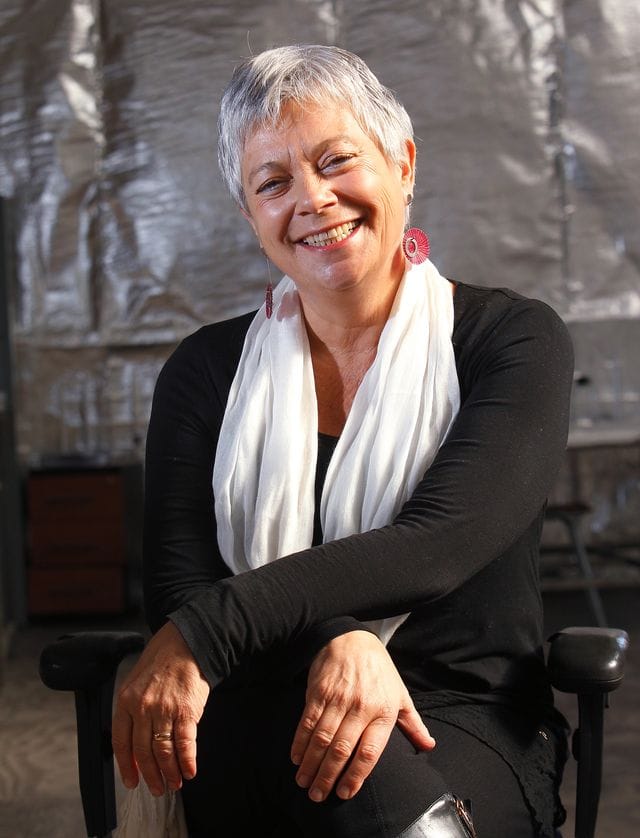
By Andrea Zondek, Founder and President of Tacal Foundation
Every March 8, we discuss wage gaps, political participation, and shared responsibilities. While these topics are essential, one significant inequality often overlooked in public discourse is that faced by women with disabilities—a gap within a gap, a layered exclusion.
In Chile, over 2.7 million adults live with disabilities, constituting 17.6% of the adult population. Among them, 21.9% are women, indicating that disability in Chile predominantly affects females.
Yet, when gender policies are crafted, this dimension is rarely included. Similarly, discussions about disability seldom incorporate a gender perspective.
The statistics speak volumes: only 36% of women with disabilities are employed, compared to 45% of men with disabilities. We already know that women without disabilities experience lower employment participation rates than men; the disparity widens further for women with disabilities.
These women face biases not only because of their gender but also due to their disability. They are often perceived as dependent, fragile, or incapable of handling job responsibilities. Tragically, this discrimination frequently originates within their families, who instead of encouraging them to work outside the home, assign them domestic roles, such as caring for younger siblings, cooking, and cleaning.
The traditional female role that women have fought against for years is exaggerated into a stereotype in the context of disability.
The same issues arise in higher education. Of the more than 2.7 million adults with disabilities, only 12,479 are currently enrolled in studies—less than 1 in 200. Meanwhile, among the non-disabled population, 1 in 10 accesses university education, making the likelihood of attending college more than 20 times higher for those without disabilities.
When university inclusion is an exception rather than the norm, future employment trajectories are inevitably affected.
Internationally, the trend is similar. According to the United Nations, women with disabilities face a higher risk of poverty, reduced access to formal employment, and significantly increased exposure to gender-based violence.
In Latin America, studies by CEPAL indicate that the combination of gender and disability exacerbates social and economic exclusion, particularly in informal labor contexts.
However, beyond the statistics, there is a cultural dimension we must confront. Historically, women with disabilities have been infantilized, overprotected, or rendered invisible. Their autonomy, decision-making capability, and rights to motherhood, sexuality, and leadership are often questioned. Decisions are made for them, and planning occurs without their input.
Implementing a gender perspective in disability issues isn’t just symbolic; it’s an ethical responsibility essential for development. This approach necessitates effective employment policies, inclusive education from early childhood, caregiving systems that don’t exclusively burden women, and legal frameworks that acknowledge the intersectionality of inequalities.
This also means listening. Women with disabilities must be included in decision-making spaces, boards, and public policy design—not as passive beneficiaries but as active participants.
At Tacal Foundation, we have witnessed that when adequate support, reasonable adjustments, and genuine opportunities are provided, women with disabilities not only engage but also lead, innovate, and transform entire work environments. Inclusion is not charity; it is social and economic intelligence.
This March 8, discussions about equality need to transcend mere abstraction. For a truly inclusive society, we must focus on the areas where inequality runs deepest. Women with disabilities cannot remain a footnote in the gender agenda.
There can be no real equality if we exclude those facing multiple barriers simultaneously.
Andrea Zondek
La entrada Women with Disabilities in Chile: Addressing the Overlooked Double Inequality se publicó primero en El Ciudadano.
🔥 Ver noticia completa en ElCiudadano.cl 🔥