El Ciudadano
Original article: Tijera a seguridad pública: Hacienda va por programa contra el crimen organizado de $67.034 millones
The budget cuts initiative led by José Antonio Kast and his Finance Minister, Jorge Quiroz, is set to drastically affect the Program Against Organized Crime (PNCO).
On April 21, the Finance Ministry issued a directive to all departments regarding a medium-term framework for the 2027-2031 period and the preliminary budget proposal for 2027, suggesting the discontinuation of various programs and budget cuts to others, citing a supposed «fiscal squeeze» as the reasoning.
The document, signed by Quiroz himself, instructs departments to draft their budgets with a restrictive mindset, incorporating fiscal adjustments already made in 2026 and operating under a maximum spending cap.
For the Ministry of Security, Kast’s budget cuts translate to a reduction of at least 15%.
The circular recommends discontinuing the PNCO, a program under the Subsecretariat of Public Security, which had a budget execution of $67,064,738 in 2025.
While this directive does not equate to the program being entirely eliminated, it does place it under scrutiny within the budget formulation process.
This initiative was established and enacted by the administration of former President Gabriel Boric to enhance state intelligence and institutional frameworks; dismantle the economic foundations of organized crime, and improve state responses in prevention, detection, prosecution, and seizure of benefits obtained through organized crime; reduce the firepower of criminal organizations, and enhance oversight of organized crime within penitentiary facilities.
Additionally, it aims to promote a legislative agenda to improve the detection, investigation, and prosecution of criminal organizations; update institutional equipment and technology; train personnel; and encourage international cooperation and coordination, among other measures to enhance security levels in Chile.
The Finance Ministry is also targeting the Streets Without Violence Plan. In the directive, Quiroz recommends discontinuing this program, which is also under the Subsecretariat of Public Security, with a budget execution of $26,015,491 in 2025.
This plan, also implemented during Boric’s administration, focuses on those communes that represent one-third of the national population and account for 50% of the violent crimes recorded in the country.
Resources allocated to Streets Without Violence primarily enhance the investigative and operational capacities of police forces and prosecutors, not only to prevent crime but also to effectively sanction it.
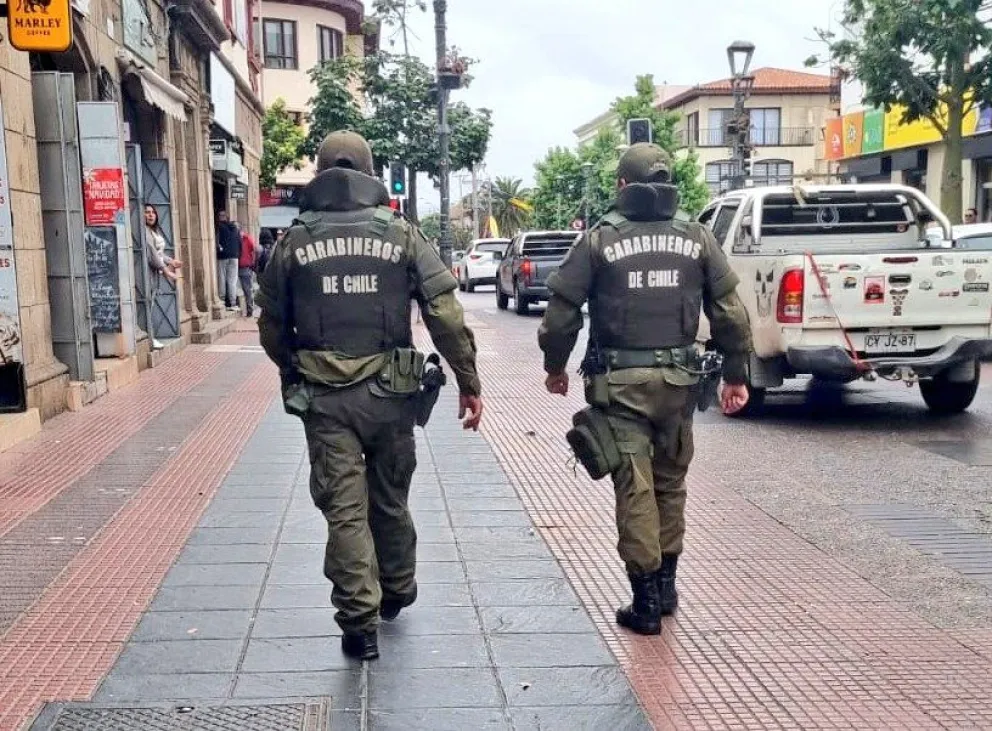
This initiative focuses on oversight in the areas being targeted; increasing patrols, large-scale operations, and checkpoints: identity checks, searches for illegal weapons, registration and oversight of migration matters, pending arrest warrants. It also includes additional staffing for Carabineros to fulfill these tasks and strengthen Organized Crime and Homicide Teams (ECOH).

According to the circular, the Subsecretariat of Public Security is also advised to adjust the budget for the Government of Chile’s International Cooperation Program for Foreign Uniformed Police (Ex CECIPU), which received funding of $298,148 in 2025.
Kast’s Campaign Promises Unraveled by Fiscal Cuts
The cuts to security budget represent yet another broken promise by Kast since taking office.
The far-right leader pledged that, if elected president of Chile, he would confront organized crime and increase annual spending on security, although he did not specify the amount.
Even in October 2025, during a presidential debate, Kast categorically stated: “We will not cut any existing social benefits”, which starkly contrasts with his actual fiscal cut policies aimed at discontinuing and reducing funding for essential security programs.
This situation mirrors the social sector impacts, including the closure of the School Feeding Program (PAE), PACE, the Public Education Support Fund, and the Vocational Teacher Scholarship, among others.
In healthcare, the cuts include more than 20 programs, including home hospitalization, mental health in primary care, suicide prevention, dental programs, and migrant care.
Moreover, as part of the budget formulation process for 2027, the Finance Ministry recommended «discontinuing» the Human Rights Program under the Subsecretariat of Human Rights, a crucial body for the execution of the National Search Plan.
La entrada Major Budget Cuts Impact Public Security: Finance Ministry Targets $67 Billion Organized Crime Program se publicó primero en El Ciudadano.
🔥 Ver noticia completa en ElCiudadano.cl 🔥