El Ciudadano
Original article: Alerta científica: Estudio revela que más de la mitad de los bosques de algas podría desaparecer de las costas de Chile y Perú para 2050
Study Projects Dramatic Decline of Kelp Forests by 2050
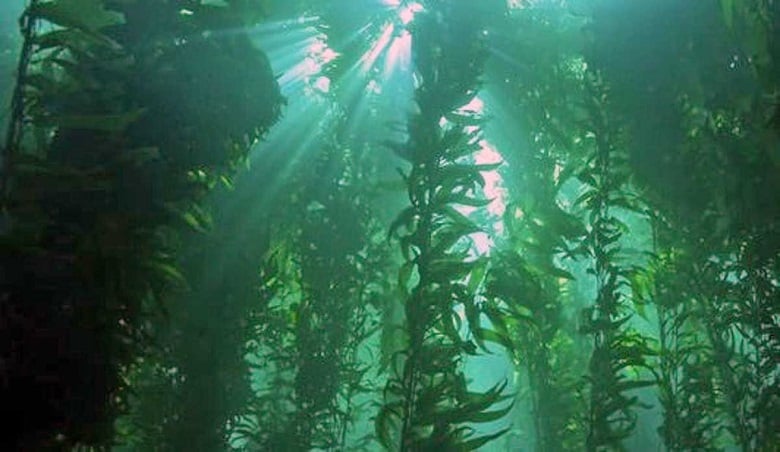
A new study published in the journal PLoS ONE warns that the kelp forests along the Pacific coast of South America are facing a severe contraction due to climate change. The study, titled «Kelp in Motion: Potential Future Distribution Areas under Climate Change along the Pacific Coast of South America,» predicts that by 2050, two fundamental endemic species could lose more than half of their current distribution area, leading to significant consequences for coastal ecosystems and the communities that rely on them.
The research team, led by scientists from the Austral University of Chile and the Catholic University of the North, modeled the future distribution of two species of brown algae from the genus Lessonia: L. berteroana and L. spicata. These species create extensive intertidal belts from Peru to southern Chile, providing essential habitat, coastal protection, and support for fisheries, with an estimated economic value exceeding $54 million annually (according to the original publication). The models, based on four greenhouse gas concentration scenarios (RCP), reveal that the main stressors will differ for each species: surface salinity for L. berteroana and water temperature for L. spicata (Duarte et al., 2025, Table 1).
The study’s findings, also reported by Mongabay Latam, are alarming. According to the consensus model presented in the study, by 2050, Lessonia berteroana may lose 60.6% of its current area, retaining only 31.6%. Its northern distribution limit would retreat about 10 degrees of latitude, from 14°S to nearly 24°S. Similarly, Lessonia spicata faces a potential loss of 58.6% of its current habitat, preserving approximately 58.2% (Duarte et al., 2025, Table 2). This massive contraction could lead to the local extinction of these species along an extensive coastal area between 14°S and 25°S, drastically transforming these ecosystems.
Although the models predict some areas of potential expansion toward more southern latitudes, these are limited and face ecological barriers. The study notes that the natural dispersal capability of these algae is low (generally less than 4 km) and they may face competition from other species, complicating the colonization of new areas (Duarte et al., 2025, Discussion). Therefore, the «retained areas» or climate refuges identified by the model—primarily between 25°-31°S for L. berteroana and 35°-41°S for L. spicata —become critical for the long-term survival of these underwater forests.
The authors emphasize the urgent need for science-informed management and conservation strategies. They highlight that currently, there are no marine protected areas with extractive bans that specifically safeguard these climate refuges identified for Lessonia. However, they propose that existing tools, such as the Multiple-Use Coastal Marine Protected Area of the Humboldt Archipelago and the system of Territorial Use Rights for Fishing (TURF), could be strengthened to implement strict protection measures, harvest rotation, and active restoration (Duarte et al., 2025, Discussion).
In conclusion, this research provides a solid scientific basis for proactive action. «Our modeling results underline the urgent need for informed management and conservation strategies for kelp forests, which serve as vital ecosystem engineers,» the authors state in the study’s abstract. Mitigating the decline of these kelp forests is crucial not only for marine biodiversity and carbon sequestration but also for the social and economic sustainability of coastal communities in Chile and Peru that have historically depended on this resource.
La entrada Scientific Alert: Study Warns Over Half of Kelp Forests Along Chile and Peru Coasts May Disappear by 2050 se publicó primero en El Ciudadano.
🔥 Ver noticia completa en ElCiudadano.cl 🔥