El Ciudadano
Original article: Sonidos que resisten: Realizan conversatorio sobre los ayekawe y la defensa del bosque nativo
Sounds that Endure: Conversational Forum on Ayekawe and Native Forest Protection
In Chile, the expansion of the forestry model has profoundly altered the landscape of the southern regions. The spread of monocultures of pine and eucalyptus has diminished native forests, disrupted water cycles, and led to a rising water scarcity in numerous areas.
This scenario not only impacts ecosystems but also threatens cultural practices that directly rely on them. One such practice is the creation of ayekawe, traditional Mapuche instruments that originate from the forest and carry the auditory memory of each territory.
Against this backdrop, a forum titled “Hydro-extractivism and the Resistance of Ayekawe” was held at the Gabriela Mistral Auditorium of the Faculty of Legal and Business Sciences at the University of La Frontera in Temuco.
The event was envisioned as an open nütxam, a space for collective conversation and listening to reflect on the current challenges faced by these ancestral instruments amid the advancing pressures of forest extractivism and the water crisis.
The gathering brought together kimches (wise ones) of ayekawe, musicians, researchers, and the general public, transforming the academic space into a venue where sound, word, and experience intertwined.
Throughout the day, demonstrations of instruments and dialogue sessions enabled participants to grasp the relationship between native forests, water, and cultural continuity through tangible practice.
“Today we organized a nütxam focusing on ayekawe and the challenges they face due to the forestry model in Chile. We wanted these instruments to receive more attention and to highlight the work of these individuals, with much kimün (knowledge),” explained geographer and academic Sarah Kelly, who has researched the impact of extractivism on ecosystems in the south of the country.
In her opinion, the forum successfully created a necessary space: “It was wonderful to share all that was shared. I believe it was another step in making these practices visible and honoring the wisdom of Mapuche culture, as well as recognizing the value of the native forest and all it provides us.”
Meanwhile, Mapuche musician and researcher Jaime Cuyanao (also known as Waikil) emphasized that the discussion cannot be separated from the territory.
“Mapuche instruments are closely tied to the Mapuche worldview, and they relate deeply to extractivism and forestry, as native forests, which are the source of the raw materials for ayekawe, continue to dwindle,” he stated. This reality became evident in the narratives shared by each presenter.
One such presenter was Alejandro Pinda, a kimche from Füta Warria, Santiago, who noted that the scarcity of materials has transitioned from a concern to a daily reality.
“There is increasingly less raw material to construct ayekawe,” he said. However, Pinda pointed out that despite this adverse scenario, “their aukiñ, sonorities, remain alive and present,” surviving through craftsmanship and the transmission of knowledge.
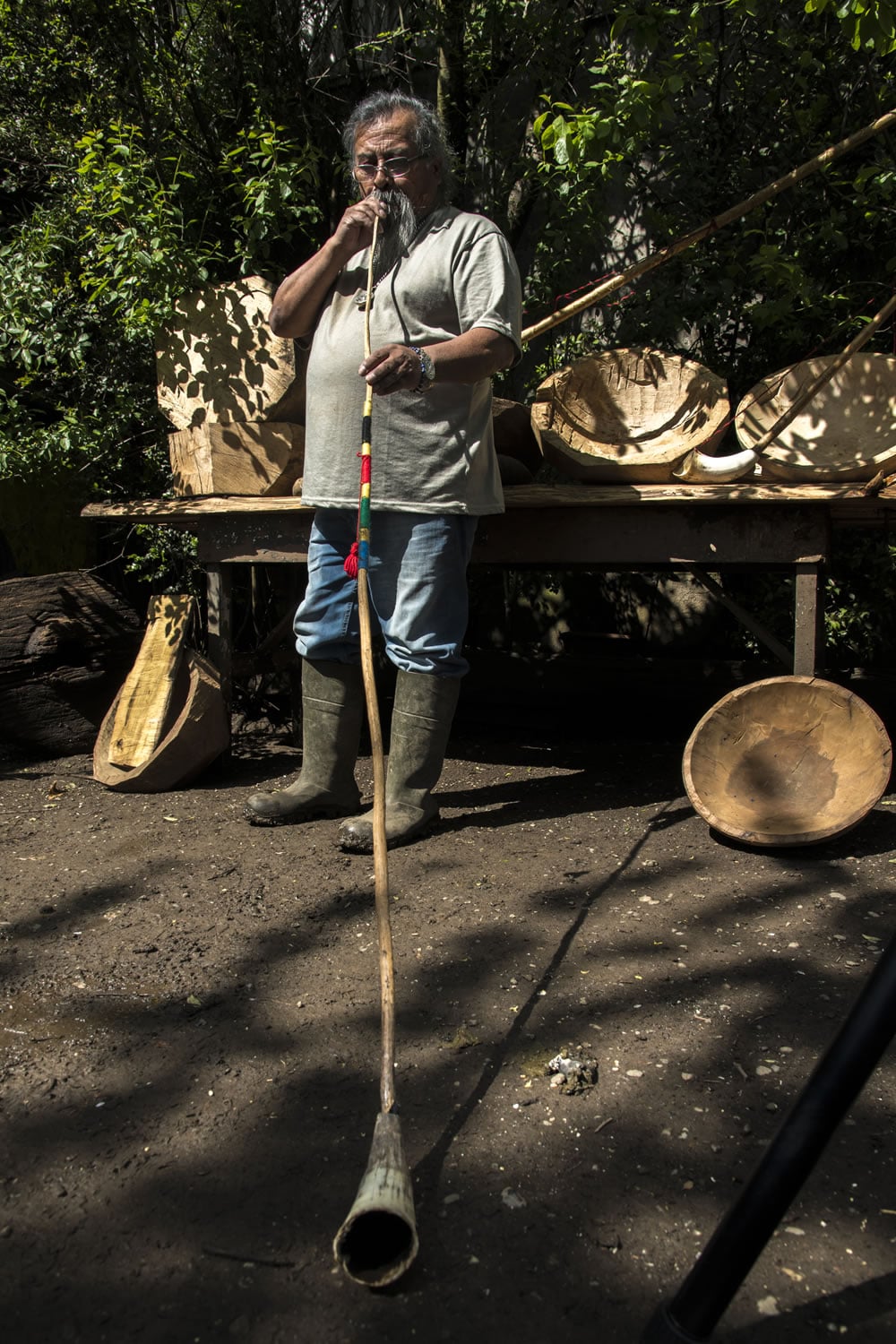
From Willimapu, Heriberto Hualaman shared his journey as a kimche and craftsperson, explaining how the work with instruments has adapted to the conditions of the territory.
“I started with the txutxuca, then the kultrun, and others were added over time. Recently, I’ve incorporated the macagua, pututu, and ñolkin made from cane, along with the pawpawen,” he recounted. His experience reflects both the richness of ancestral knowledge and the current challenges of sustaining it.
Empowering Communities
Beyond the technical exposition, the forum solidified as a space for community strengthening and intergenerational knowledge transfer.
For José Cayuqueo, a kimche from Pewenmapu, such instances are key for the continuity of the craft: “The knowledge one can gain here is crucial for continuing this küdaw, to ensure it is revitalized and not lost.”
Nonetheless, challenges continue to define the path forward. Heriberto Hualaman clearly articulated this: “The work is somewhat more complicated due to the territory and the lack of raw materials. But we are always working to ensure this does not end.” In this daily persistence lies a profound form of silent resistance against a model that has strained the balance between nature and culture.
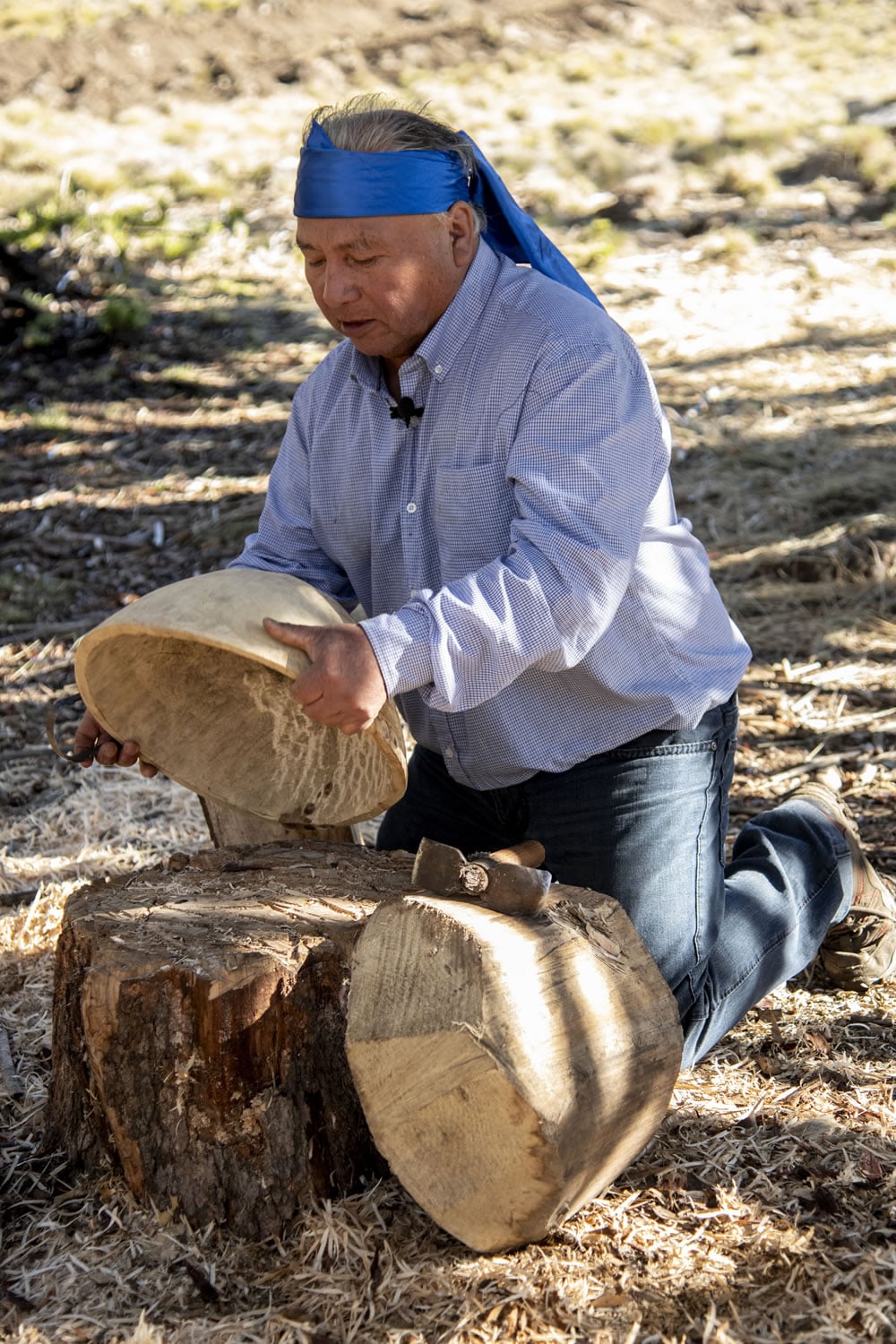
The event was part of a collaborative artistic research process initiated in June of this year, which has gathered manufacturers, musicians, researchers, and photographers in a collective effort aimed at highlighting the resistance of ayekawe against the threats posed by the forestry model and the water crisis.
In this tension between loss and persistence, the sounds of Mapuche instruments rise as an active memory, caring for the native forest, and striving for cultural continuity in times of transformation.
El Ciudadano
La entrada Sounds that Endure: Conversational Forum on Ayekawe and Native Forest Protection se publicó primero en El Ciudadano.
🔥 Ver noticia completa en ElCiudadano.cl 🔥